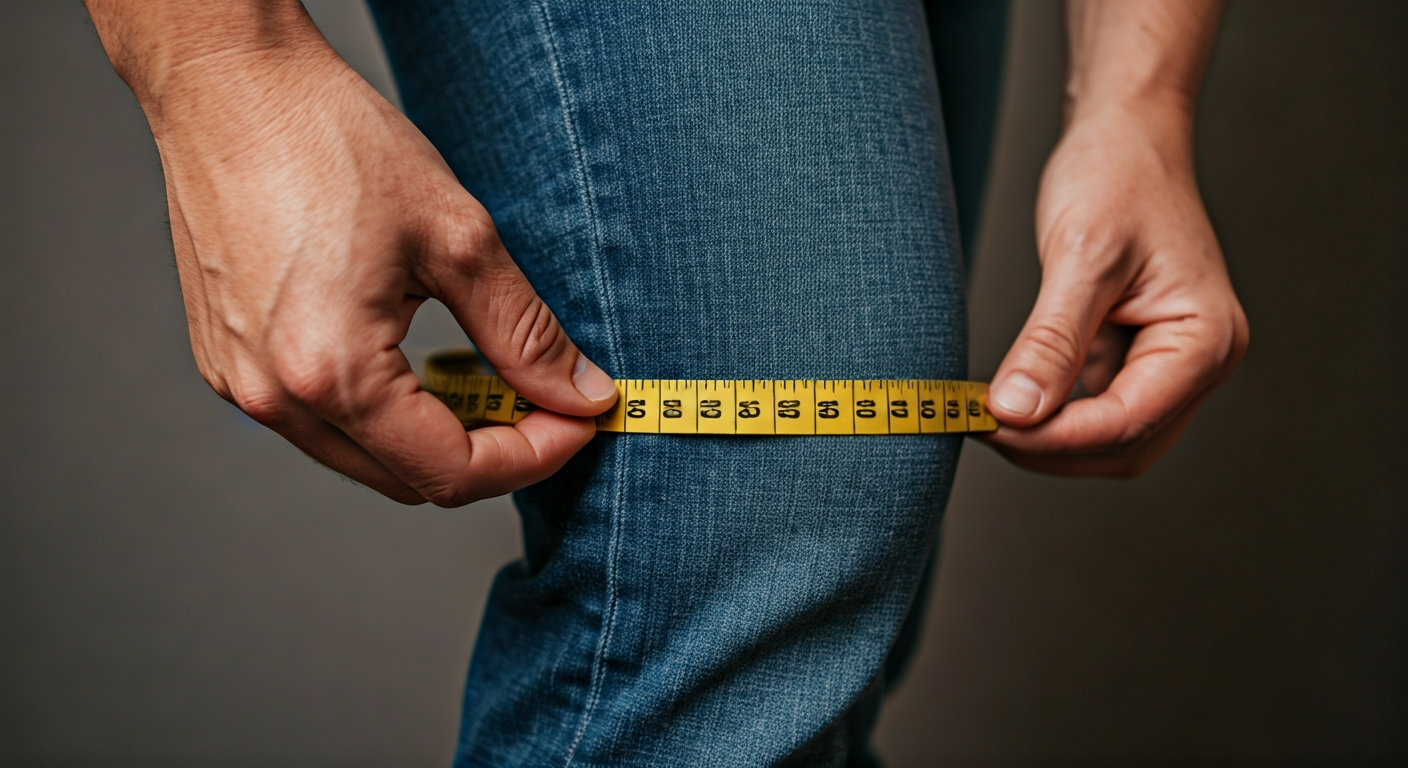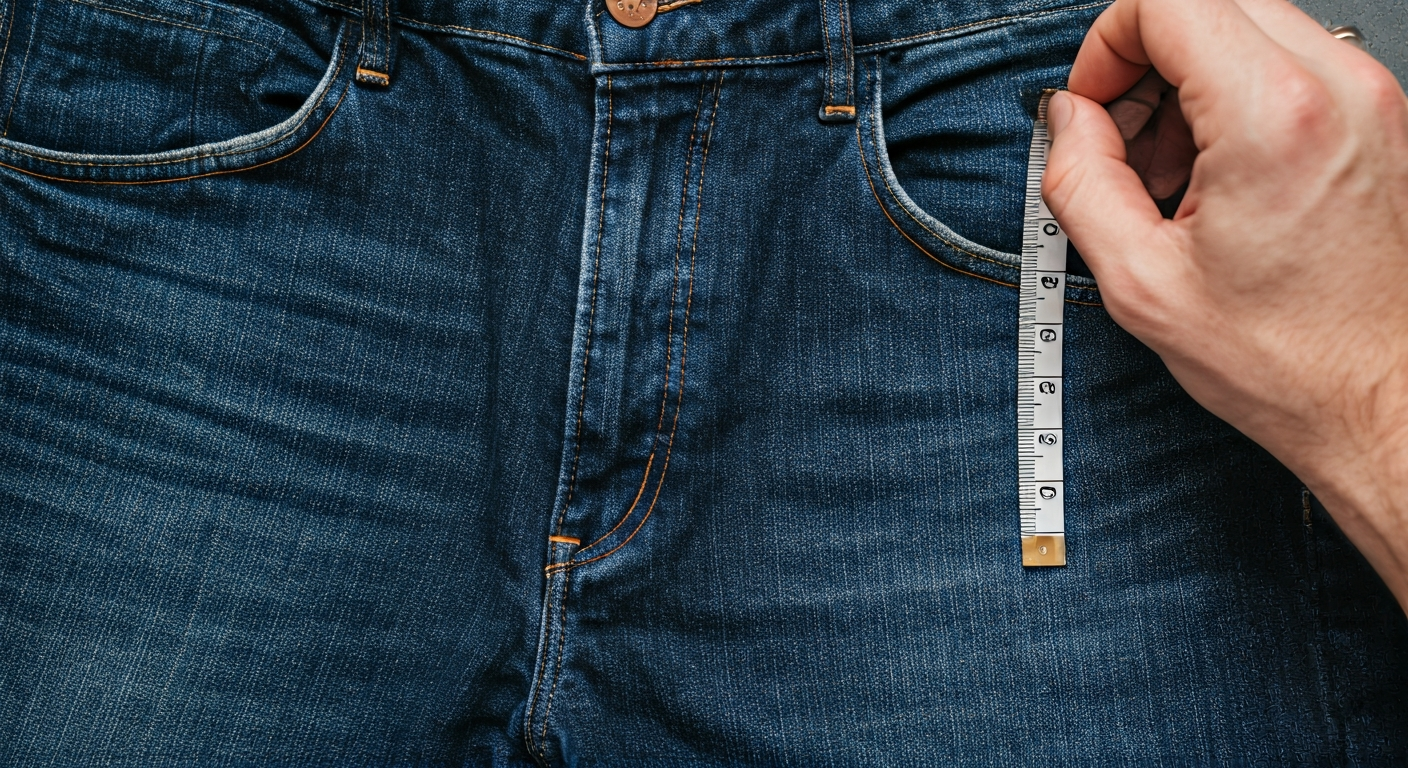
A close-up shot of a person accurately measuring the inseam of a pair of blue denim jeans laid flat on a neutral surface, with a fabric measuring tape stretching from the crotch seam to the bottom hem. The words 'INSEAM MEASURED' are subtly integrated into the image.
How To

Measuring Inseam from Existing Pants: Get Your Best Fit Without a Helper

A
Ali Hassan
Writer
The Answer
To measure inseam from existing pants, lay a well-fitting pair flat and smooth on a hard surface. Locate the crotch seam (where the four seams meet) and measure straight down the inside leg to the bottom hem, ensuring the fabric is not stretched or bunched. This provides an accurate inseam length, enabling you to replicate your preferred fit for new clothing purchases confidently and independently.
Finding the perfect fit for pants, especially when shopping online, can be a challenge. While body measurements are often recommended, they typically require a second person for accuracy. This guide offers an independent and highly accurate alternative: measuring the inseam directly from a pair of pants you already own and love. This technique is invaluable for replicating the comfortable, stylish fit of your favorite jeans, trousers, or slacks, ensuring consistency in your wardrobe. By precisely understanding how to measure pants length flat, you can confidently purchase new garments that meet your specific fit preferences, avoiding the guesswork and frustration of ill-fitting apparel. This method empowers you to maintain your ideal aesthetic without needing external help, making online clothes shopping a much more reliable and satisfying experience.

Step-by-Step Guide: Measuring Inseam from Your Favorite Pants

1

Step 1: Choose the Right Pair of Pants

Select a pair of pants that fit you perfectly and have your desired length. These should ideally be clean, dry, and not stretched out from wear. Make sure they are similar in style (e.g., skinny, straight, bootcut) to the new garment you intend to purchase, as different cuts can subtly influence where the hem naturally falls.
2

Step 2: Prepare Your Work Surface

Lay the chosen pants flat on a clean, hard, and level surface. A large table, a clean floor, or an ironing board will work best. Ensure there are no wrinkles, folds, or bunches in the fabric. The smoother the surface and the garment, the more accurate your measurement will be.
3

Step 3: Flatten and Smooth the Pants

Carefully smooth out one of the pant legs. Make sure the front and back seams of the leg are aligned, and the fabric is completely flat without any tension or stretching. It’s crucial that the inner leg seam you’re about to measure is straight and not twisted.
4

Step 4: Locate the Crotch Seam

Find the crotch seam. This is the central point where the four seams of the pant leg come together (the front rise, back rise, and both inner leg seams). This point is your starting reference for the inseam measurement.
5

Step 5: Begin Measurement with a Fabric Measuring Tape

Place the end of a fabric measuring tape (preferably not a metal one, as it can be less flexible) precisely at the center of the crotch seam. Hold it firmly in place to prevent it from slipping. For tips on general inseam measurement accuracy, you can consult resources like How to Measure Inseam Accurately.
6

Step 6: Measure Down the Inner Seam to the Hem

Extend the measuring tape straight down the inside leg seam, following the natural curve of the pant leg, all the way to the bottom edge of the hem. Do not pull the fabric taut; let the tape lie naturally along the seam. Read the measurement at the very bottom edge of the pant leg.
7

Step 7: Record and Double-Check the Measurement

Note down the measurement immediately. For increased accuracy, consider repeating the entire process on the other pant leg and taking an average if there's a slight difference (which can happen due to wear or manufacturing). This ensures you have the most reliable number for your future purchases.

Why Measuring from Existing Garments is a Reliable Method

Measuring the inseam directly from an existing pair of pants offers several advantages, making it a highly reliable method for achieving consistent fit. Firstly, it eliminates the variability inherent in body measurements. Factors like posture, the way the measuring tape is held against the skin, and even breath can cause slight discrepancies when measuring a human body. By measuring a stable, inanimate object like a pair of pants, these variables are removed, leading to more precise and repeatable results.
Secondly, this technique allows you to replicate an already proven fit. You're not just getting a number; you're capturing the exact inseam of a garment that you know fits well and provides the desired aesthetic length. This is particularly beneficial for online shopping, where you cannot physically try on garments. You can confidently compare your measured inseam against sizing charts, ensuring the new item will likely have the same comfortable and flattering length as your favorite pair.
Furthermore, this method empowers independent decision-making. There's no need to rely on a friend or family member for assistance, granting you full control over the measurement process. This independence is not only convenient but also ensures that the measurement reflects your personal standard of 'perfect fit,' which can vary significantly from person to person. Understanding the nuances of what defines a good inseam and overall fit is crucial, and resources like What Is Inseam Clothing Fit can provide additional context on these important concepts.

Pro Tip: Maintain a Reference Pair

Always keep one pair of your best-fitting pants exclusively for measurement purposes. Avoid wearing and washing them excessively, as this can alter their shape, stretch, or shrink the fabric, affecting the accuracy of your reference inseam over time. This dedicated 'reference pair' ensures you always have a reliable standard for consistent sizing.

Common Pitfalls When Measuring Inseam and How to Avoid Them

  • Measuring Stretched or Shrunk Fabric: Always measure clean, dry pants that are in their natural state. Avoid measuring immediately after wearing or washing, as fabric can temporarily stretch or shrink. Allow garments to rest and return to their original form.
  • Incorrect Starting Point: Ensure you begin your measurement precisely at the center of the crotch seam where all four seams intersect, not slightly above or below. This small error can significantly impact the final length.
  • Not Laying Pants Flat: Any wrinkles, folds, or bunching in the fabric will shorten the perceived length of the inseam. Take extra time to smooth out the pant leg completely before measuring.
  • Stretching the Fabric While Measuring: Do not pull the pant leg or the measuring tape taut. Let the tape lie gently and naturally along the inner seam. Stretching can add an artificial inch or more to your measurement.
  • Using the Wrong Measuring Tool: A flexible fabric tape measure is ideal. Metal tape measures can be stiff and harder to conform to the fabric, while rulers might be too short or rigid for accurate measurement along a seam.
  • Ignoring Hem Style: Be aware that a cuffed hem might be included in the measurement, but if you're comparing to pants with a plain hem, adjust accordingly. Measure to the very bottom edge of the fabric.

Understanding How Inseam Length Impacts Overall Pant Fit and Style

The inseam measurement, while seemingly a simple number, profoundly influences the overall fit, comfort, and aesthetic of your pants. It dictates where the hem of your pants falls on your leg, which in turn impacts how they drape over your shoes or if they gather at the ankle. A slightly longer inseam can create a relaxed, stacked look, popular with certain denim styles, while a shorter inseam often provides a cleaner, more tailored appearance, ideal for dress trousers or modern cropped styles.
Different pant styles naturally call for varying inseam lengths. For instance, skinny jeans are often designed to sit cleanly at the ankle, while bootcut jeans require a longer inseam to properly cover the top of boots without looking too short. Flared pants will also need a generous inseam to achieve their characteristic wide sweep towards the ground. Understanding these subtle differences is key to not only replicating your favorite fit but also adapting your preferred inseam based on the specific style of pant you are purchasing.
Moreover, your personal preference for 'break' – the crease formed by the pant leg resting on your shoe – is directly tied to inseam. A 'full break' means a longer inseam with multiple creases, a 'half break' means a slight crease, and 'no break' means the hem barely touches the shoe or is slightly above it. By consistently measuring the inseam of your existing pants, you capture your preferred break, ensuring new purchases align with your personal style. For a deeper dive into how major retailers define fit and sizing, resources like Levi's Women's Sizing Guide offer valuable insights into industry standards.

Inseam Length Considerations by Pant Style

Pant StyleTypical Inseam ImpactDesired Break/LookMeasurement Tip
Skinny JeansOften shorter, to sit cleanly at the ankle or slightly above.No break or very slight stack at ankle.Measure to the actual ankle bone if you prefer a 'no break' look.
Straight Leg TrousersStandard length, designed to fall to the top of the shoe.Half break or slight break.Ensure pants are uncreased for accurate drape.
Bootcut JeansLonger inseam, designed to cover most of the shoe/boot.Full break over boot, minimal break over flat shoe.Measure with the height of your typical boot heel in mind.
Cropped/Ankle PantsSignificantly shorter, ending above the ankle bone.No break, exposed ankle.Measure to your desired point above the ankle; exactness is key here.
Dress Pants (Formal)Precise length, often with a half break or no break.Clean, sophisticated drape.Consider the shoe height you'll wear most often with these pants.

Key Takeaways for Consistent Pant Fit

Key Takeaways

  • Measuring inseam from existing, well-fitting pants is a highly accurate and independent method for replicating your desired fit.
  • Always lay pants flat, smooth out wrinkles, and measure from the exact crotch seam down the inner leg to the hem.
  • Use a flexible fabric measuring tape and avoid stretching the fabric during measurement for the most precise results.
  • Be aware of common pitfalls such as measuring stretched garments or incorrect starting points, and take steps to avoid them.
  • The ideal inseam length can vary significantly based on pant style (e.g., skinny, bootcut, cropped) and your personal preference for 'break' over footwear.
  • Keeping a dedicated 'reference pair' of pants for measurement purposes can help maintain consistency for future purchases.
  • Always cross-reference your measurements with brand-specific sizing charts, understanding that sizes can vary between manufacturers.

Frequently Asked Questions About Measuring Inseam

Was this guide helpful?

Your feedback helps our writers improve this help center.

Helpful for 14 readers

About the Author

A
Ali Hassan
Expert Author
Writer

"Professional writer."

Related Guides

See All Topics
A close-up shot of a person using a yellow flexible tape measure to accurately measure their inseam, with the text "INSEAM TOOLS" visible on a neutral background.

A flexible tape measure is the most versatile and recommended tool for measuring inseam due to its adaptability to body contours. For accurate results, pair it with a flat, rigid ruler for initial marking, or consider a specialized inseam measuring device. Ensure the tool has clear, legible markings in both inches and centimeters for broader utility.

20 Found This Helpful
Read Guide
A person accurately measuring their own inseam with a tape measure for a custom fit of trousers.

To measure your inseam alone, wear well-fitting underwear or shorts. Stand straight, feet shoulder-width apart. Use a measuring tape, holding one end securely at your crotch where the fabric of your pants would naturally meet. Extend the tape down your inner leg to the desired hem length, typically just above the floor or to the top of your shoe, ensuring the tape is taut and straight. Read the measurement carefully.
11 Found This Helpful
Read Guide
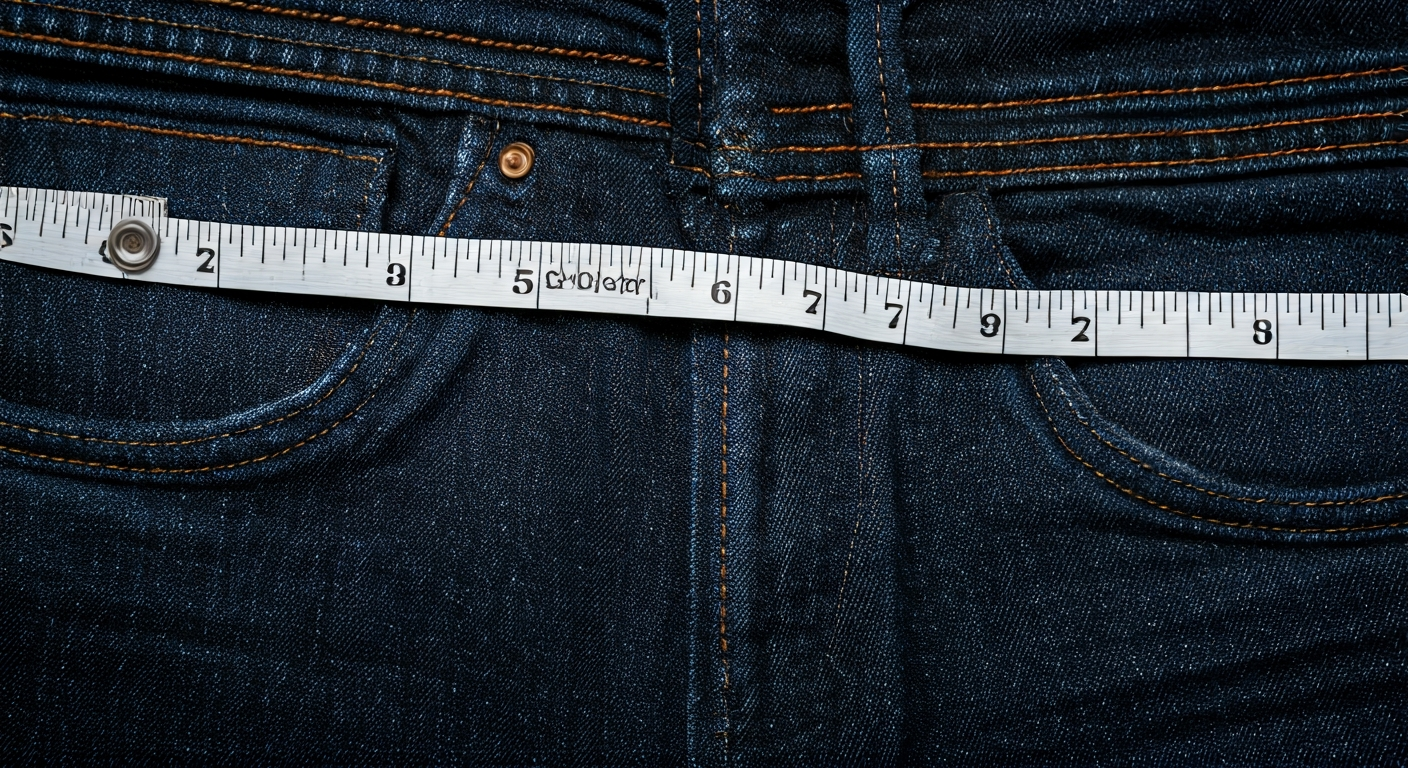
A tailor's flexible tape measure extending along the inner seam of a neatly folded pair of dark blue jeans, illustrating how to measure the inseam, with 'INSEAM FIT' text on the jeans.

The inseam is the measurement from the crotch seam to the bottom hem of a pant leg. It is crucial for achieving proper clothing fit, influencing both comfort and aesthetics. An accurate inseam ensures pants are not too long (causing tripping or dragging) or too short (appearing ill-fitting), directly impacting the overall look and feel of garments, especially trousers and jeans.

20 Found This Helpful
Read Guide
BroadMatters LogoBroadMatters

Clear, simple guides and everyday explanations to help you solve common problems with confidence.

Stay Updated

Get our latest guides and simple tips delivered directly to your inbox.

By joining, you agree to our Terms and Privacy Policy.

© 2026 BroadMatters Help Center. All rights reserved.

contact@broadmatters.com