
Quick Definition
Understanding how weather conditions affect tyre life and performance is vital for vehicle safety. Essentially, it covers how external environmental factors, such as temperature and precipitation, impact the durability and efficiency of your car’s tyres. Learning more about what makes up a car tyre helps to grasp these impacts better.
A Simple Explanation (Analogy)
Think of your tyres like athletic shoes. Just as different running surfaces or temperatures affect your shoes’ grip and wear, various weather conditions impact your tyres. Running on a hot track wears shoes differently than running in snow. Similarly, a car tyre performs and degrades uniquely depending on the external elements it faces every day.
Why People Search for This
Many people search for this topic because they want to ensure their safety on the road. They are also looking to maximize their tyre investment. Bad weather driving can be dangerous. Knowing how environmental factors impact tyres helps drivers make informed decisions. It can also prevent premature wear and costly replacements.
How It Works: Step-by-Step
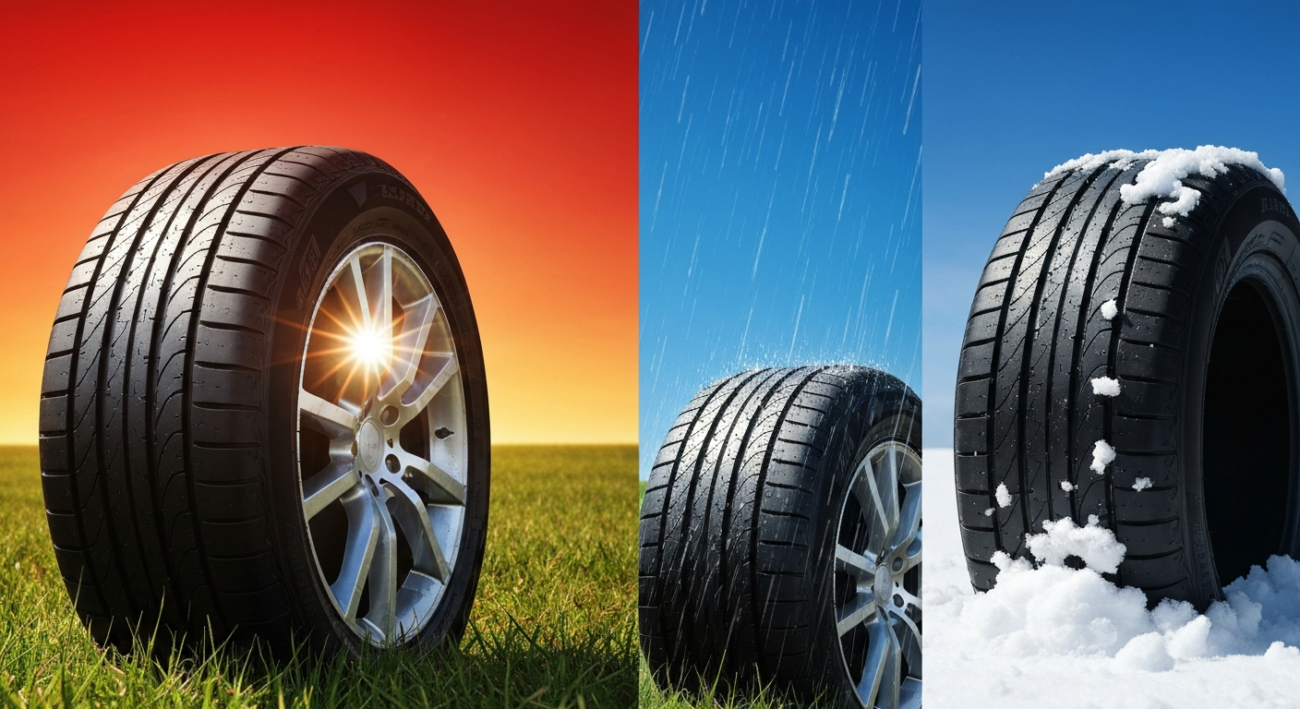
- Step 1: Temperature Changes: Extreme heat softens tyre rubber, increasing wear. Cold weather makes rubber brittle, reducing flexibility and grip.
- Step 2: Precipitation Impacts: Rain and snow reduce friction between the tyre and the road. This makes hydroplaning or skidding more likely. Wet conditions can also accelerate tread wear.
- Step 3: UV Radiation: Sunlight’s ultraviolet rays degrade the rubber compounds over time. This leads to cracking and brittleness, even on unused tyres.
- Step 4: Road Contaminants: Rain washes oil and debris onto roads, creating slick surfaces. Salt used for de-icing can also corrode tyre components and wheels.
- Step 5: Air Pressure Fluctuations: Temperature changes directly affect tyre pressure. Cold reduces pressure, while heat increases it. Both extremes are detrimental to tyre performance and lifespan.
A Real-World Example
Imagine driving your car through a harsh winter in Canada, followed by a scorching summer in Arizona. In Canada, the extreme cold makes your all-season tyres stiffer. Their grip lessens on icy roads. The severe temperature drops also lower your tyre pressure significantly. Then, in Arizona, the intense heat causes the rubber to soften. This increases rolling resistance and accelerates tread wear. You might notice cracks on the sidewall after prolonged exposure. These scenarios clearly demonstrate how varied weather conditions affect tyre life and overall vehicle handling over time.
Why Understanding How Weather Conditions Affect Tyre Life Matters
- Ensures optimal vehicle safety and handling in diverse environments.
- Extends the lifespan of your tyres, saving money on frequent replacements.
- Improves fuel efficiency by maintaining proper tyre condition and pressure.
- Reduces the risk of blowouts or punctures caused by weather-related damage.
- Provides peace of mind knowing your vehicle is prepared for all seasons.
Common Misconceptions About How Weather Conditions Affect Tyre Life
All-season tyres perform equally well in all weather conditions.
Reality: While versatile, all-season tyres are a compromise. They offer decent performance in mild conditions but are not optimized for extreme heat, heavy snow, or ice. Dedicated summer or winter tyres always outperform them in their specific conditions.
Tyres only wear down from driving; weather doesn’t really matter.
Reality: This is incorrect. UV radiation, extreme temperatures, and moisture all contribute to tyre degradation. Even a car parked for extended periods will see its tyres degrade due to weather exposure, leading to dry rot and cracking.
Lowering tyre pressure in hot weather is safer to prevent blowouts.
Reality: Actually, you should always maintain the manufacturer’s recommended tyre pressure. Deliberately lowering pressure increases the tyre’s contact patch. This generates more heat and actually increases the risk of a blowout. Check your tyre pressure regularly, especially as temperatures change.
When Does This Apply?
- When planning long road trips through varying climates.
- During seasonal changes from hot to cold, or vice versa.
- Before purchasing new tyres, to choose the right type for your local climate.
- During routine car maintenance checks and inspections.
- When driving in regions with unpredictable or extreme weather patterns.
When Does This NOT Apply?
- When tyres are specifically designed for controlled indoor environments.
- For vehicles that are never exposed to outdoor elements.
- If you are concerned about impacts from road debris, which is a separate issue.
- When considering factors related purely to mechanical vehicle faults, not external conditions.
- For very short-term, minor temperature fluctuations that don’t allow for significant material change.
A Brief History
Tyres have come a long way since their invention. Early rubber tyres were very susceptible to environmental factors. Sunlight would quickly degrade them, and cold would make them rigid. Over time, advancements in rubber compounds and manufacturing processes made tyres more resilient. The introduction of synthetic rubber and various additives significantly improved resistance to UV light, heat, and cold. Today, tyre engineers continually research new materials to enhance durability and performance under all conditions. They aim to make tyres safer and more long-lasting. Proper maintenance, including knowing when to consider a complete guide to changing a tyre, remains crucial.
