
Quick Definition
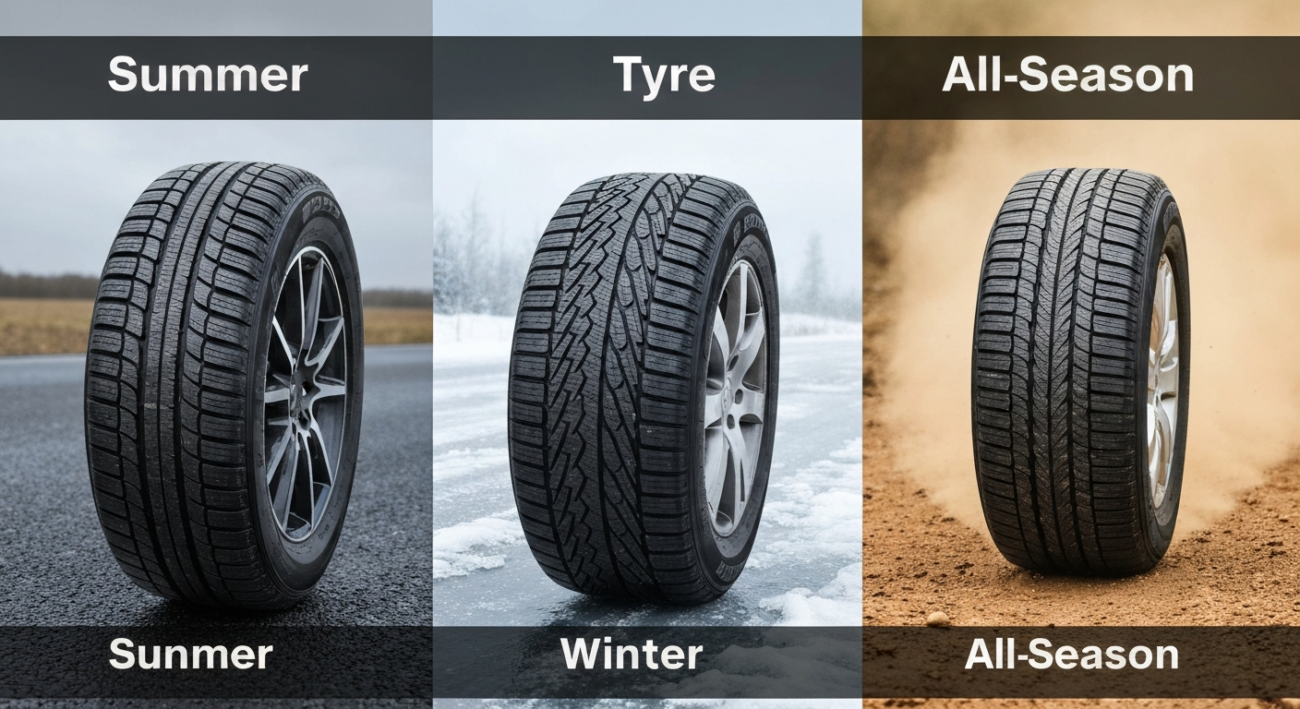
When we talk about types of car tyres, we refer to the different categories of vehicle tires. Each category is designed for specific driving conditions. They suit various climates and performance needs. Knowing these types helps you make informed choices.
A Simple Explanation (Analogy)
Think of car tyres like athletic shoes. You wouldn’t wear running shoes for a deep-sea dive. Similarly, your car needs the right ‘shoes’ for different roads and weather. Each tyre type has a unique design and rubber compound. This design helps your car perform its best. It ensures safety and efficiency on the road. To truly understand your car’s ‘shoes’, you might want to dive deeper into what exactly a car tyre is.
Why People Search for This
Drivers often seek to understand types of car tyres for many reasons. They prioritize safety on the road. Many also aim for improved vehicle performance. People frequently ask about the best tyres for winter conditions. Others are curious about how tyres affect fuel efficiency. Choosing the correct tyres directly impacts your car’s grip and handling. It also influences your vehicle’s lifespan and overall driving experience. Understanding tyre types means better control and peace of mind.
How to Identify Different Types of Car Tyres
- Check the sidewall markings for designations like ‘M+S’ (Mud + Snow) or a dedicated snowflake symbol for winter tyres.
- Examine the tread pattern; deep, aggressive patterns are common on winter or off-road tyres, while shallower, blockier patterns suggest summer use.
- Consider the rubber compound; softer compounds are designed for cold weather, maintaining flexibility, whereas harder compounds suit hot conditions.
- Identify the primary intended use: is it for summer, winter, all-season, high-performance, or specific off-road adventures?
- Consult your car’s owner manual or a reputable tyre professional for recommendations tailored to your vehicle and driving habits.
A Real-World Example
Imagine you live in a region with heavy snowfall during winter months. If you fit your car with dedicated winter tyres, you’ll experience superior grip and shorter braking distances. These tyres feature deep sipes and a soft rubber compound. This allows them to effectively bite into snow and ice. However, if you kept those same winter tyres on your car during a hot summer, they would wear down quickly. They would also offer poor handling and braking performance on dry, hot asphalt. Conversely, using summer tyres in winter conditions can be extremely dangerous. They lack the necessary grip, making stopping and steering very difficult. This clearly shows why matching your tyres to conditions is vital.
Why Choosing the Right Types of Car Tyres Is Important
- Enhanced vehicle safety and control across diverse driving conditions, reducing accident risks.
- Improved fuel efficiency due to reduced rolling resistance, saving money on petrol.
- Better handling, precise steering, and superior braking performance for a more confident drive.
- Extended tyre lifespan by using the appropriate type for specific conditions, preventing premature wear.
- Compliance with local regulations in certain climates, which may mandate specific tyre types during certain seasons.
Common Misconceptions
All-season tyres work perfectly in all extreme weather conditions, making dedicated tyres unnecessary.
Reality: While versatile, all-season tyres are a compromise. They do not offer the peak performance of dedicated summer tyres on hot, dry roads. Nor do they match winter tyres in severe snow or ice. They are best suited for mild climates.
Tyre pressure is a ‘set it and forget it’ thing; once adjusted, it stays correct.
Reality: Tyre pressure changes significantly with temperature fluctuations. It requires regular checks, ideally once a month and before long trips. Correct pressure is absolutely vital for safety, tyre longevity, and optimal fuel economy.
The cheapest tyres are always a smart buy, saving money without much compromise.
Reality: Opting for the cheapest tyres can be a false economy. Lower quality tyres often compromise on safety features like wet grip and braking distance. They also tend to wear out faster. This leads to more frequent replacements and potentially higher costs over time.
When Does This Apply?
- When experiencing diverse weather patterns throughout the year, requiring seasonal tyre changes.
- If you frequently drive in specific challenging terrains, such as off-road trails or mountainous regions.
- When seeking to optimize your vehicle’s performance, handling, or fuel economy.
- During tyre replacement or when purchasing a new or used vehicle to ensure suitable tyres.
- Before embarking on long road trips where varying weather and road conditions are expected.
When Does This NOT Apply?
- If you live in a region with consistently mild temperatures and stable weather year-round.
- When you solely use your vehicle for very short, low-speed commutes on well-maintained roads.
- If tyre performance beyond basic safety is not a primary concern, though always recommended for optimal driving.
- When a vehicle is exclusively used for competitive racing on a track, where specialized racing slicks are required.
- For vehicles that are rarely driven and stored for extended periods, as specific tyre types matter less then.
