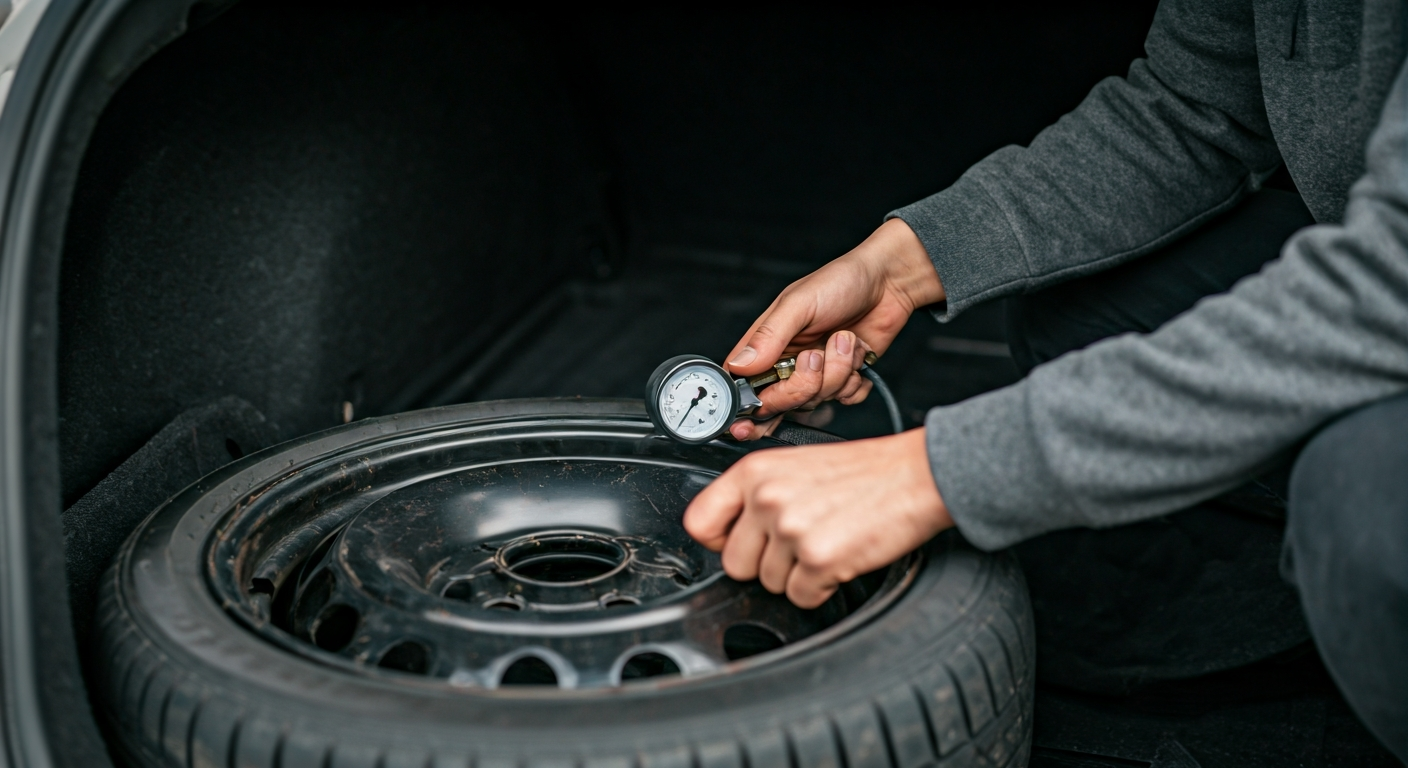
A person using a tyre pressure gauge to check the inflation of a spare tyre stored in the boot of a vehicle, ensuring it is ready for an emergency.
How To
Published

How to Inspect and Maintain Your Spare Tyre for Emergencies

A
Ali Hassan
Writer
The Answer
To ensure your spare tyre is emergency-ready, regularly inspect its inflation pressure, tread depth, and overall condition. Check pressure monthly, aiming for the vehicle manufacturer's specified PSI, usually found on a sticker in the door jamb or owner's manual. Look for at least 1/16 inch (1.6 mm) tread depth and inspect for cracks, bulges, or punctures. Proper maintenance prevents roadside delays and ensures safety when a flat occurs.
A flat tyre can strike unexpectedly, turning a routine drive into a stressful ordeal. While many drivers rely on their spare tyre for such emergencies, its utility is entirely dependent on its condition. An unmaintained spare is no better than a flat tyre, leaving you stranded and potentially unsafe. Proactive inspection and maintenance are critical steps in vehicle preparedness, transforming a potential crisis into a manageable inconvenience. This guide will walk you through the essential checks and care routines, covering everything from proper inflation and tread assessment to identifying wear and tear, ensuring your spare is always ready to get you back on the road safely.

Step-by-Step Guide to Inspecting Your Spare Tyre

1

Locate Your Spare Tyre

Before you can inspect it, you need to know where your spare tyre is stored. Common locations include under the boot floor, mounted underneath the vehicle, or sometimes on the rear door of SUVs. Ensure you have the necessary tools to access it, such as the jack and lug wrench.
2

Check Tyre Pressure

Using a reliable tyre pressure gauge, check the inflation pressure. The recommended PSI (pounds per square inch) for your spare is often higher than your regular tyres, especially for temporary 'donut' spares. Look for this specification on a sticker inside your driver's side door jamb, in your glove compartment, or consult your vehicle owner's manual. Inaccurate pressure can lead to dangerous handling or tyre failure. Aim to check this monthly.
3

Assess Tread Depth

Examine the tyre's tread for sufficient depth. The legal minimum tread depth is generally 1/16 inch (1.6 mm). You can use a tread depth gauge or the 'penny test': insert a penny head-first into a tread groove. If you can see the top of Lincoln's head, your tread is too shallow. Adequate tread ensures proper grip and traction, especially in adverse weather conditions.
4

Inspect for Damage and Wear

Thoroughly examine the entire tyre surface for signs of damage. Look for cracks, bulges, cuts, punctures, or uneven wear patterns. Pay close attention to the sidewalls, as these are often overlooked but crucial for structural integrity. Any significant damage means the tyre is not safe for use and needs professional attention or replacement.
5

Check Valve Stem and Wheel Condition

Ensure the valve stem cap is present and the valve stem itself is not cracked or damaged. A faulty valve stem can lead to air leaks. If your spare includes a wheel, inspect the wheel for any bends, cracks, or corrosion that could compromise its ability to hold air or safely attach to your vehicle.
6

Clean and Properly Store the Spare

Wipe down the spare tyre to remove any dirt or debris. If it's exposed to the elements (e.g., mounted underneath), consider using a tyre cover to protect it from UV rays and weather damage. Once inspected, return it to its designated storage location, ensuring it's securely fastened to prevent it from shifting while driving, which could cause noise or even damage.
7

Top Up Pressure Annually (Minimum)

Even if you check monthly, pressure can fluctuate with temperature changes. Make it a point to top up your spare tyre's pressure at least once a year, or more frequently if you live in an area with significant temperature swings. This proactive step is crucial for maintaining readiness.
8

Consider Replacement if Old

Even if unused, tyres degrade over time due to exposure to oxygen and ozone. Most tyre manufacturers recommend replacing tyres, including spares, every 6 to 10 years, regardless of tread wear. Check the DOT (Department of Transportation) code on the sidewall to find the manufacturing date (last four digits represent week and year). An old tyre, even if it looks good, might fail under stress.

Understanding the Different Types of Spare Tyres

Not all spare tyres are created equal, and understanding the differences is crucial for proper maintenance and safe use. The most common types include full-size matching spares, full-size non-matching spares, temporary mini-spares (often called 'donut' spares), and run-flat tyres (which eliminate the need for a spare). Each type has specific capabilities and limitations that influence how it should be maintained and what performance you can expect during an emergency. Knowing which type you have will inform your inspection routine and help you plan for a flat. For a comprehensive overview, read our guide on types of spare tyres.
A full-size matching spare is identical to the tyres currently on your vehicle. It can be rotated into service with your regular tyres, allowing for a consistent rotation schedule and even wear. This type offers the best performance and safety, as it doesn't impose speed or distance restrictions. Maintenance for this spare mirrors that of your primary tyres.
Conversely, a full-size non-matching spare has the same dimensions but may differ in brand, tread pattern, or wheel type from your primary tyres. While it provides full driving capability, it's best treated as a temporary solution until the damaged tyre can be repaired or replaced. Temporary mini-spares are lightweight, compact tyres designed for short-term, low-speed use. These are the most common spares found in modern vehicles and come with strict limitations on speed and distance. Finally, vehicles equipped with run-flat tyres often do not include a spare, as these tyres are designed to be driven for a limited distance after a puncture, allowing you to reach a service station without immediate roadside tyre changes. However, even with run-flats, understanding their capabilities is key.
Regardless of the type, proactive maintenance extends the life and reliability of your spare. Even run-flat tyres require regular pressure checks to ensure their integrity. For mini-spares, checking their often higher recommended PSI is paramount. Overlooking the specific needs of your spare tyre type can lead to being stranded or compromised safety during a critical situation.

Important: Temporary Spare Tyre Limitations

If your vehicle has a temporary 'donut' spare, it is crucial to understand its restrictions. These spares are designed for short-term use only. They typically have a maximum speed limit, often around 50 mph (80 km/h), and a limited driving range, usually no more than 50-70 miles (80-110 km). Driving beyond these limits or for extended periods can lead to tyre failure, loss of vehicle control, and potentially severe accidents. Replace a temporary spare with a full-size tyre as soon as safely possible.

Spare Tyre Pressure and Tread Depth Guidelines

Tyre TypeRecommended Pressure (PSI)Minimum Tread Depth (mm/inches)Typical Speed LimitTypical Usage Limit
Full-Size Matching SpareMatches primary tyres (consult door jamb)1.6 mm (1/16 inch)No specific limit (matches primary)Normal driving
Full-Size Non-Matching SpareMatches primary tyres (consult door jamb)1.6 mm (1/16 inch)No specific limit (matches primary)Temporary replacement until primary fixed
Temporary Mini-Spare (Donut)Higher PSI (e.g., 60 PSI, consult manual)3.2 mm (1/8 inch) recommended80 km/h (50 mph)80-110 km (50-70 miles)
Run-Flat Tyre (after puncture)Zero pressure warning indicated (not a spare)N/A (designed to operate flat)Up to 80 km/h (50 mph)Up to 80-160 km (50-100 miles)

Common Problems and Solutions for Spare Tyres

Even with regular checks, spare tyres can develop issues. One of the most frequent problems is underinflation, which can cause the tyre to heat up excessively, leading to a blowout if used. The solution is simple: check pressure monthly with a reliable gauge and reinflate to the manufacturer's recommended PSI. For most temporary spares, this PSI is significantly higher than regular tyres, often around 60 PSI. For more detailed information on maintaining correct tire pressure, consult authoritative sources like the National Highway Traffic Safety Administration (NHTSA).
Another common issue is tyre aging and degradation. Even an unused spare tyre will deteriorate over time due to exposure to UV light, temperature fluctuations, and ozone. This can lead to dry rot, visible as small cracks in the sidewall and tread. The rubber loses its elasticity and strength, making the tyre prone to failure. The primary solution here is replacement. Look for the DOT manufacturing date on the sidewall; tyres older than 6-10 years should generally be replaced, regardless of appearance. A tyre cover can help mitigate UV damage if your spare is externally mounted.
Finally, storage issues can compromise a spare. If the spare is stored under the vehicle, it's susceptible to road debris, water, and corrosion. Ensure its mounting mechanism is secure and free of rust. If stored inside the boot, ensure no heavy or sharp objects are resting on it that could cause damage or deformation over time. A clean, dry, and cool environment is ideal for tyre longevity.

Pre-Trip Spare Tyre Readiness Checklist

  • Verify spare tyre pressure matches recommended PSI (check door jamb/manual).
  • Inspect tread depth for adequate traction (at least 1/16 inch or 1.6 mm).
  • Check tyre sidewalls and tread for cracks, bulges, cuts, or punctures.
  • Confirm the valve stem and cap are intact and not leaking.
  • Ensure the wheel (if applicable) is free from damage or corrosion.
  • Verify that all necessary tools (jack, lug wrench, wheel chocks) are present and in working order.
  • Ensure the spare tyre is securely stored and properly mounted in its designated location.
  • If using a temporary spare, confirm you understand its speed and distance limitations.

The Crucial Statistics: Why Spare Tyre Readiness Matters

Every 7 seconds
Flat Tyres Occur
A vehicle experiences a flat tyre incident on average, making preparedness essential.
28%
Drivers Without Spares
Of new cars sold lacked a spare tyre, relying on repair kits or run-flats instead.
3 out of 5
Spare Tyre PSI Issues
Spares found to be improperly inflated, rendering them useless in an emergency.
45+ minutes
Average Waiting Time
The average waiting time for roadside assistance after a flat tyre, often longer without a usable spare.

Summary: Key Takeaways for Spare Tyre Maintenance

Key Takeaways

  • Regular Inspection is Non-Negotiable: Make spare tyre checks a monthly habit, focusing on pressure, tread, and overall condition.
  • Know Your Spare Type: Understand the specific limitations and maintenance needs of your full-size, mini-spare, or run-flat tyres.
  • Pressure is Paramount: Always inflate your spare to the manufacturer's recommended PSI, which is often higher for temporary spares.
  • Tread and Integrity Matter: Ensure adequate tread depth and inspect for any signs of damage like cracks, bulges, or punctures.
  • Age-Out Replacement: Tyres degrade over time, even if unused. Replace spares older than 6-10 years to prevent failure.
  • Be Prepared Beyond the Tyre: Ensure your jack, lug wrench, and other tyre-changing tools are present and functional for a complete emergency solution.

Frequently Asked Questions About Spare Tyre Maintenance

Was this guide helpful?

Your feedback helps our writers improve this help center.

Helpful for 18 readers

About the Author

A
Ali Hassan
Expert Author
Writer

"Professional writer."

Related Guides

See All Topics
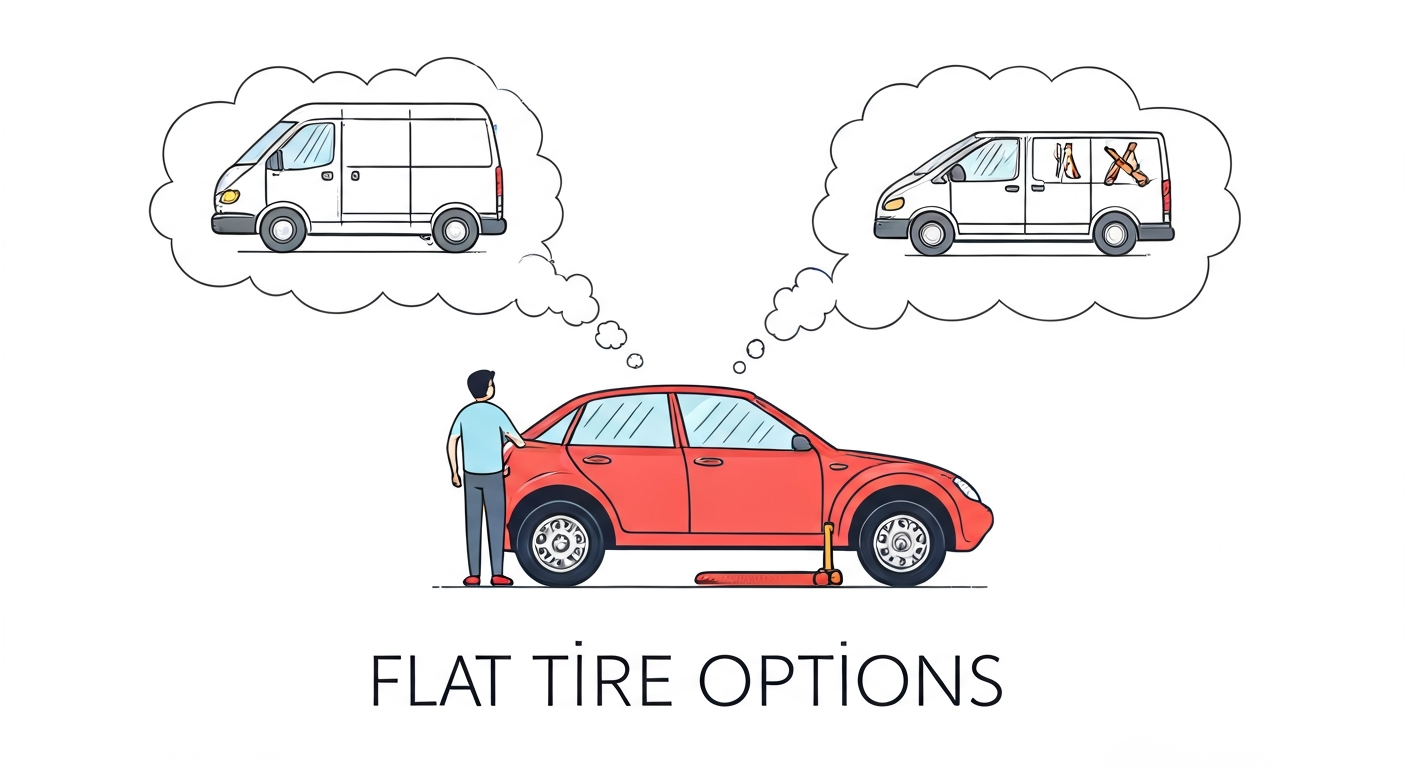
A driver contemplating options for a flat tire, with visual representations of roadside assistance arriving and tools for a DIY repair, illustrating the choice between professional help and self-service.

Choosing between roadside assistance and a DIY tyre change depends on your safety, skill level, available tools, and the specific situation. For optimal safety and convenience, especially in hazardous conditions or if you lack confidence, roadside assistance is superior. However, a DIY change offers immediate resolution and cost savings if you are prepared, skilled, and in a safe environment.

2 Found This Helpful
Read Guide
A visual comparison of three car tyre types: a large, standard black tyre (full-size spare), a smaller, narrower yellow-rimmed tyre (temporary 'donut' spare), and a modern black tyre with a 'RFT' marking (run-flat). Text overlay reads 'Spare Tyre Types'.

Identifying your spare tyre type—full-size, temporary (donut), or run-flat—is crucial for safe driving. Check your car's boot for a conventional spare or a compact 'donut' and examine its sidewall for usage restrictions. If no physical spare is present, your vehicle might be equipped with run-flat tyres or a tyre repair kit, indicating a different emergency strategy.

16 Found This Helpful
Read Guide
A person in a reflective vest safely changing a car tire on the side of a road, with hazard lights on and a warning triangle visible. The scene emphasizes roadside safety.

To ensure roadside safety when changing a tyre, prioritize finding a safe, level location away from traffic. Immediately activate hazard lights, deploy a warning triangle or flares, and wear a reflective vest. Ensure your vehicle is stable with the parking brake engaged and wheels chocked before beginning. Always stay vigilant of your surroundings to protect yourself, passengers, and other motorists.

11 Found This Helpful
Read Guide
BroadMatters LogoBroadMatters

Clear, simple guides and everyday explanations to help you solve common problems with confidence.

Stay Updated

Get our latest guides and simple tips delivered directly to your inbox.

By joining, you agree to our Terms and Privacy Policy.

© 2026 BroadMatters Help Center. All rights reserved.

contact@broadmatters.com