A visual comparison of three car tyre types: a large, standard black tyre (full-size spare), a smaller, narrower yellow-rimmed tyre (temporary 'donut' spare), and a modern black tyre with a 'RFT' marking (run-flat). Text overlay reads 'Spare Tyre Types'.
How To
Published

Different Types of Spare Tyres: Which One Do You Have?

A
Ali Hassan
Writer
The Answer
Identifying your spare tyre type—full-size, temporary (donut), or run-flat—is crucial for safe driving. Check your car's boot for a conventional spare or a compact 'donut' and examine its sidewall for usage restrictions. If no physical spare is present, your vehicle might be equipped with run-flat tyres or a tyre repair kit, indicating a different emergency strategy.
Understanding the type of spare tyre in your vehicle is more than just knowing what's hidden in the boot; it's a critical aspect of road safety and preparedness. Many drivers are unaware that not all spare tyres are created equal, each coming with its own design, purpose, and significant limitations. From traditional full-sized spares that mimic your regular wheels to compact, speed-restricted 'donut' tyres, and even advanced run-flat technology that eliminates the need for a physical spare, the options vary widely. This guide clarifies these differences, helping you identify your specific spare tyre and understand how to use it safely and effectively when an unexpected puncture occurs, ensuring you're never caught off guard.

How to Identify Your Spare Tyre Type

1

Locate Your Spare Tyre

Begin by finding where your spare tyre is stored. This is typically under the boot floor, sometimes mounted externally under the vehicle, or occasionally on the rear door of an SUV. Some vehicles, particularly newer models, might not have a spare tyre at all, instead offering a tyre repair kit.
2

Examine the Tyre's Size and Appearance

Observe the spare tyre's physical dimensions. Is it the same size and type as your car's primary wheels, including the rim? Or is it noticeably smaller, narrower, and often brightly coloured (e.g., yellow or orange) with a different type of rim? This visual assessment is the first major clue to its type.
3

Read the Sidewall Markings

Carefully inspect the sidewall of the spare tyre. Full-size spares will typically have the same detailed specifications (size, load rating, speed rating) as your regular tyres. Temporary spares, often called 'donut' tyres, will have clear warnings like 'TEMPORARY USE ONLY,' 'MAX SPEED 80 KM/H (50 MPH),' or 'DO NOT EXCEED 80 KM/H.' They may also specify a maximum distance.
4

Check Your Vehicle Owner's Manual

For definitive information, consult your car's owner's manual. It will detail the specific type of spare tyre provided with your vehicle, its intended use, limitations, and proper maintenance. This is especially useful for understanding more about what are run-flat tyres if your vehicle doesn't have a physical spare.
5

Assess for Run-Flat Capability

If you cannot find a spare tyre or a repair kit, your vehicle likely uses run-flat tyres. These tyres are designed to continue functioning for a limited distance and speed after a puncture, eliminating the need for a traditional spare. Look for 'RFT,' 'ZP,' 'SSR,' 'MOE,' or similar markings on your primary tyre sidewalls, or check your owner's manual for confirmation.
6

Identify a Tyre Repair Kit

Some vehicles come equipped with a sealant and compressor kit instead of a physical spare. This kit is designed for minor punctures, allowing temporary inflation and sealing to get you to a repair shop. Ensure you know where this kit is located and how to use it, as it serves as your emergency solution.

Full-Size Spare Tyres: The Traditional Backup

A full-size spare tyre is essentially an exact replica of the four tyres already on your vehicle. This includes matching size, tread pattern, and often, the wheel (rim) design. Historically, this was the most common type of spare provided with vehicles, offering the most straightforward solution to a flat tyre. When you replace a punctured tyre with a full-size spare, you can maintain your vehicle's handling characteristics and speed capabilities with minimal compromise.
The primary advantage of a full-size spare is its versatility; once installed, it allows you to continue your journey almost as if nothing happened. There are no strict speed or distance limitations imposed by the spare itself, giving you ample time to repair or replace the original damaged tyre. This means fewer immediate worries about finding a repair shop quickly, making it ideal for long road trips or situations far from assistance.
However, full-size spares come with their own set of considerations. They are bulky and heavy, consuming significant boot space or impacting fuel efficiency if externally mounted. They also require regular inspection and proper inflation, just like your other tyres, to ensure they are ready for use. Neglecting to check the pressure of your full-size spare can leave you stranded with two flat tyres instead of one. For instructions on installation, see how to change a car tyre.
Additionally, if your full-size spare has never been used, its rubber might age differently than the tyres in active rotation. After prolonged storage, even an unused tyre can degrade, leading to reduced performance and safety. It's often recommended to include the full-size spare in your tyre rotation schedule to ensure even wear and extend its lifespan, though this practice is less common for many drivers.

Temporary (Donut) Spare Tyres: For Short Distances Only

The temporary spare tyre, widely known as a 'donut' or 'space-saver' spare, is designed to be a lightweight, compact alternative to a full-size spare. These tyres are significantly smaller, narrower, and typically have a higher inflation pressure than standard tyres. Their primary purpose is to get you to the nearest tyre repair shop or a safe location, not to serve as a long-term replacement. Their reduced size saves space and weight, contributing to better fuel efficiency and more cargo room for modern vehicles.
A donut spare comes with stringent limitations that are crucial to observe. Most temporary spares have a maximum recommended speed, commonly 80 km/h (50 mph), and a maximum distance, often around 80-100 km (50-60 miles). Exceeding these limits can lead to tyre failure, loss of vehicle control, and potential damage to other vehicle components like the differential or ABS system due to the difference in tyre diameter and rotational speed. The reduced tread depth and smaller contact patch also mean significantly reduced traction, especially in wet or slippery conditions.
Using a donut spare affects your vehicle's handling, braking, and stability. You should drive cautiously, avoid sudden manoeuvres, and be aware that your vehicle's performance will be compromised. It is imperative to have the original damaged tyre repaired or replaced as soon as possible. After using a temporary spare, it's also important to check its inflation pressure before storing it, ensuring it's ready for any future emergency. Always remember that a temporary spare is a temporary solution, not a permanent one.

Run-Flat Tyres: An Integrated Solution

Run-flat tyres (RFTs) represent a technological advancement designed to eliminate the need for a physical spare tyre altogether. These tyres feature reinforced sidewalls or internal support structures that allow them to maintain their shape and support the vehicle's weight even after a puncture and complete loss of air pressure. This means you can continue driving for a limited distance and speed, typically around 80 km (50 miles) at speeds up to 80 km/h (50 mph), without immediately needing to stop and change the tyre.
The main benefit of run-flat tyres is safety and convenience. Drivers don't have to stop in potentially dangerous locations to change a tyre, nor do they need to carry a heavy, space-consuming spare. This technology provides peace of mind, allowing you to reach a service station or a safe location for repair. Vehicles equipped with run-flats are usually fitted with a Tyre Pressure Monitoring System (TPMS) that alerts the driver to a loss of pressure, as a flat run-flat tyre may not look visibly deflated. Learn more about their mechanics and benefits on what are run-flat tyres.
However, run-flat tyres also have drawbacks. They can be more expensive to purchase and replace than conventional tyres due to their complex construction. The reinforced sidewalls often result in a harsher ride quality and can make them more difficult for tyre shops to mount and dismount. Not all punctures are repairable with run-flats; often, even minor punctures require full tyre replacement. Furthermore, without a spare, if the run-flat's limitations are exceeded or the damage is too severe, you might still find yourself stranded and needing roadside assistance.

Comparing Spare Tyre Types

FeatureFull-Size SpareTemporary (Donut) SpareRun-Flat Tyre (No Physical Spare)
Functionality Post-PunctureFull driving capability, matches original tyre performance.Limited speed (max 80 km/h) and distance (approx. 80-100 km).Limited speed (max 80 km/h) and distance (approx. 80 km) to reach service.
Space & WeightSignificant boot space/weight; can reduce fuel efficiency.Compact, lightweight; saves boot space and aids fuel efficiency.No physical spare needed, maximizing boot space and reducing vehicle weight.
CostHigher initial cost if purchased separately, but longer lifespan.Lower initial cost than full-size.Higher initial purchase and replacement costs for the tyres themselves.
Ride QualityMaintains original ride comfort and handling.Noticeably harsher ride, reduced handling and braking performance.Can provide a slightly firmer ride than conventional tyres due to reinforced sidewalls.
RepairabilityOriginal punctured tyre usually repairable.Original punctured tyre usually repairable.Often not repairable after puncture; usually requires full replacement.

Key Considerations for Each Spare Type

Pros

  • Maintains normal driving dynamics, speed, and range.
  • The original damaged tyre can often be repaired.
  • Lightweight and compact, freeing up boot space and improving fuel efficiency.
  • Allows you to get to a service centre without roadside assistance.
  • Eliminates the need to stop and change a tyre in unsafe conditions.
  • Maximises boot space and reduces vehicle weight for better fuel economy.

Cons

  • Requires significant storage space and adds vehicle weight.
  • Needs regular pressure checks and maintenance just like primary tyres.
  • Strict limitations on speed and distance (typically 80 km/h and 80-100 km).
  • Compromises vehicle handling, braking, and stability; must drive cautiously.
  • Generally more expensive to purchase and replace than conventional tyres.
  • Often not repairable after a puncture, leading to full tyre replacement.

Maintenance and Usage Best Practices

  • Regular Pressure Checks: Always ensure your spare tyre (full-size or temporary) is correctly inflated. Under-inflated spares are useless in an emergency. Check your owner's manual for the correct pressure, which can sometimes be higher for temporary spares. The National Highway Traffic Safety Administration (NHTSA) provides comprehensive guidelines on tyre safety and maintenance, including proper inflation.
  • Inspect for Damage: Periodically check your spare tyre for cracks, punctures, or signs of dry rot, especially if it's been stored for a long time. Even unused tyres can degrade over time.
  • Know Your Limitations: If you have a temporary 'donut' spare, strictly adhere to the manufacturer's recommended speed and distance limits. These are not designed for highway speeds or long journeys.
  • Drive Cautiously: When using a temporary spare, drive slowly and avoid sudden braking, sharp turns, or aggressive acceleration. Your vehicle's handling characteristics will be compromised.
  • Prioritize Repair/Replacement: A spare tyre, particularly a temporary one, is just that—a spare. Get your original tyre repaired or replaced as soon as possible after a puncture. Do not procrastinate.
  • Understand Run-Flat Notifications: If your vehicle has run-flat tyres, familiarize yourself with your Tyre Pressure Monitoring System (TPMS) warning lights. If a light comes on, proceed cautiously to the nearest service centre within the specified limits.
  • Practice a Tyre Change: Knowing how to change a car tyre before you actually need to can save significant time and stress. Practice in a safe, well-lit environment.
  • Keep a Repair Kit Handy: If your vehicle lacks a spare tyre and relies on a repair kit, ensure you understand its operation and check its expiry date. These kits are generally for small punctures and may not handle larger damage.

Essential Tyre Terminology

Tyre Pressure Monitoring System (TPMS)
An electronic system designed to monitor the air pressure inside the pneumatic tyres on various types of vehicles. It issues a warning to the driver when tyre pressure falls dangerously low.
Tread Depth
The measurement from the top of the tyre's tread rubber to the bottom of the tyre's deepest grooves. Adequate tread depth is crucial for traction and water displacement.
Load Rating
A numerical code on the tyre sidewall indicating the maximum weight a tyre can carry when properly inflated. It is crucial to match this to your vehicle's requirements.
Speed Rating
An alphabetical code on the tyre sidewall that specifies the maximum speed at which a tyre can safely carry a load corresponding to its load index.
Dry Rot
A condition where rubber deteriorates due to exposure to UV light, ozone, and other environmental factors. It manifests as cracks on the tyre's sidewall and can compromise safety.
Space-Saver Spare
Another common term for a temporary or 'donut' spare tyre, highlighting its smaller size and the space it saves compared to a full-size spare.

What If You Have No Spare Tyre?

In a growing number of modern vehicles, manufacturers are opting to omit a spare tyre entirely. This decision is often driven by a desire to reduce vehicle weight (improving fuel efficiency), free up boot space, and sometimes integrate advanced tyre technologies like run-flats. If your vehicle falls into this category, it's essential to understand your alternatives to avoid being stranded.
The most common alternative is a tyre sealant and inflator kit. These kits typically include a can of sealant that is injected into the tyre to plug a minor puncture, along with a small compressor to re-inflate the tyre. While convenient, these kits are generally effective only for small punctures in the tread area and are not a permanent fix. They will not work for large gashes, sidewall damage, or blowouts. After using such a kit, you must still drive directly to a tyre repair shop to have the tyre professionally inspected and likely replaced.
Another scenario is having run-flat tyres (discussed earlier), which allow limited driving after a puncture. However, if your run-flats are severely damaged or you exceed their driving limits, you will still need assistance. For all scenarios where a spare is absent or insufficient, having a reliable roadside assistance membership is invaluable. Services like AAA, your car manufacturer's roadside assistance, or your insurance provider's plan can dispatch help to tow your vehicle or provide on-site temporary repairs, ensuring you're not left stranded.
Ultimately, knowing your vehicle's specific setup is key. Check your owner's manual upon purchase to confirm if a spare tyre is included and, if not, what emergency tyre solutions are provided. This proactive approach will save you significant stress and potential safety risks when faced with an unexpected flat tyre.

Summary: Your Spare Tyre Preparedness Guide

Key Takeaways

  • Identifying your spare tyre type—full-size, temporary (donut), or the absence of one due to run-flats—is the first step towards emergency preparedness.
  • Full-size spares offer maximum flexibility but require space and consistent maintenance, including regular pressure checks.
  • Temporary 'donut' spares are compact and lightweight but come with strict limitations on speed (usually 80 km/h) and distance, intended only for short trips to a service centre.
  • Run-flat tyres allow continued driving after a puncture, eliminating the need for a physical spare but often incur higher replacement costs and may offer a firmer ride.
  • Always consult your vehicle's owner's manual for specific instructions and limitations regarding your tyre setup.
  • If your vehicle lacks a spare, ensure you have an active roadside assistance plan or understand how to effectively use a tyre repair kit for minor punctures.
  • Proactive maintenance and understanding the limitations of your emergency tyre solution are crucial for safety and peace of mind on the road.

Was this guide helpful?

Your feedback helps our writers improve this help center.

Helpful for 16 readers

About the Author

A
Ali Hassan
Expert Author
Writer

"Professional writer."

Related Guides

See All Topics
A cross-section view of a run-flat tyre clearly showing its thick, reinforced sidewall designed to support the vehicle after a puncture, with 'RUN-FLAT TECHNOLOGY' text.

Run-flat tyres are specialized car tyres designed to continue functioning safely for a limited distance and speed after experiencing a puncture and losing air pressure. They achieve this through reinforced sidewalls or internal support rings, preventing the tyre from collapsing entirely. This allows drivers to reach a service station without an immediate roadside tyre change, enhancing safety and convenience.
1 Found This Helpful
Read Guide
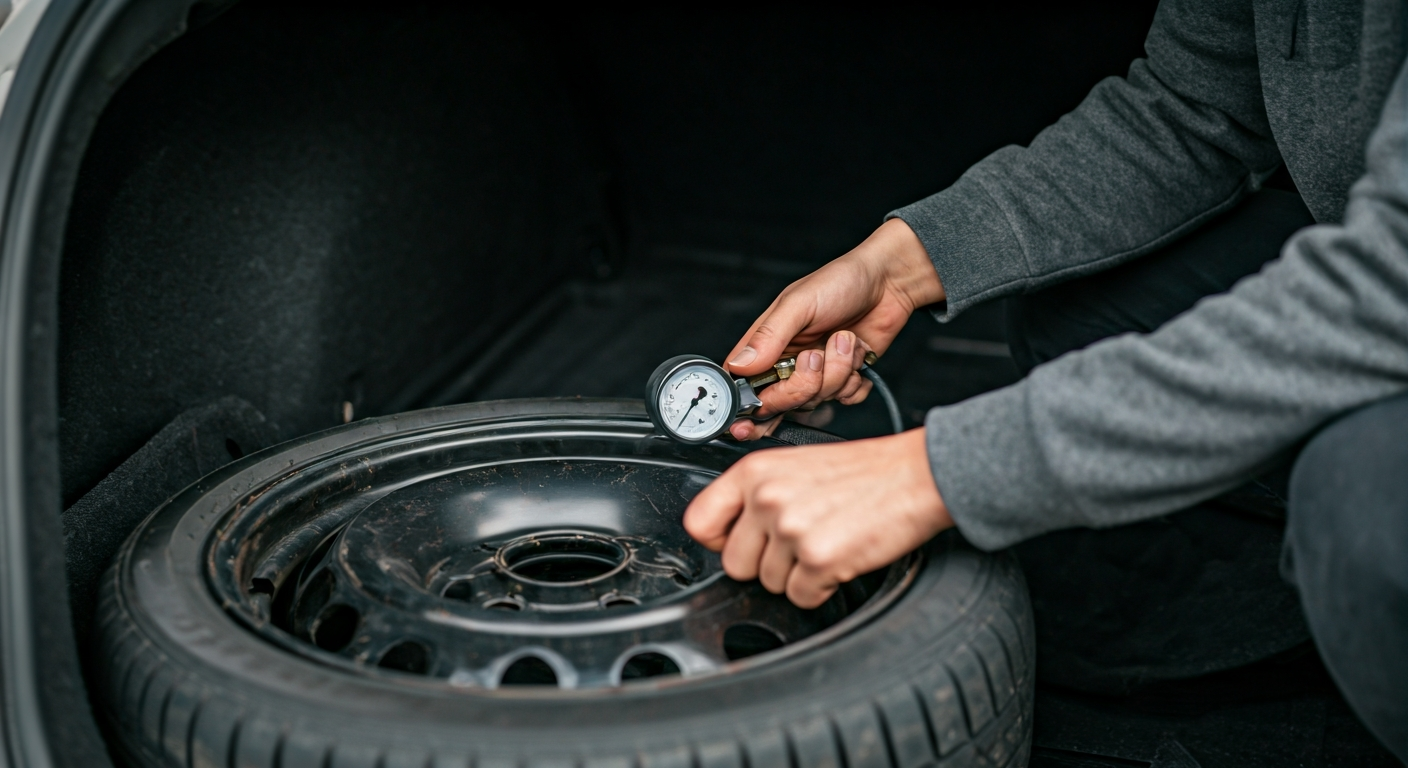
A person using a tyre pressure gauge to check the inflation of a spare tyre stored in the boot of a vehicle, ensuring it is ready for an emergency.

To ensure your spare tyre is emergency-ready, regularly inspect its inflation pressure, tread depth, and overall condition. Check pressure monthly, aiming for the vehicle manufacturer's specified PSI, usually found on a sticker in the door jamb or owner's manual. Look for at least 1/16 inch (1.6 mm) tread depth and inspect for cracks, bulges, or punctures. Proper maintenance prevents roadside delays and ensures safety when a flat occurs.

18 Found This Helpful
Read Guide
A well-maintained car tyre with healthy tread and proper inflation, with the text 'PREVENT FLAT TYRES' indicating proactive maintenance to avoid punctures and damage.

Preventing flat tyres primarily involves consistent tyre maintenance, including maintaining correct tyre pressure, regular visual inspections for damage or foreign objects, and adhering to safe driving practices. Understanding common causes like punctures, under-inflation, and impact damage allows drivers to proactively implement strategies that significantly reduce the risk of a roadside emergency and prolong tyre life.

18 Found This Helpful
Read Guide
BroadMatters LogoBroadMatters

Clear, simple guides and everyday explanations to help you solve common problems with confidence.

Stay Updated

Get our latest guides and simple tips delivered directly to your inbox.

By joining, you agree to our Terms and Privacy Policy.

© 2026 BroadMatters Help Center. All rights reserved.

contact@broadmatters.com