A person in a reflective vest safely changing a car tire on the side of a road, with hazard lights on and a warning triangle visible. The scene emphasizes roadside safety.
How To
Published

Roadside Safety for Changing a Tyre: Protecting Yourself and Others

A
Ali Hassan
Writer
The Answer
To ensure roadside safety when changing a tyre, prioritize finding a safe, level location away from traffic. Immediately activate hazard lights, deploy a warning triangle or flares, and wear a reflective vest. Ensure your vehicle is stable with the parking brake engaged and wheels chocked before beginning. Always stay vigilant of your surroundings to protect yourself, passengers, and other motorists.
Changing a tyre on the side of the road is a common vehicle emergency that can quickly turn hazardous without proper precautions. The combination of distracted drivers, limited visibility, and uneven terrain presents significant risks to anyone performing the repair. This guide focuses on the critical safety measures drivers must adopt to protect themselves, their passengers, and other road users during this vulnerable process. Understanding and implementing these safety protocols is paramount, transforming a potentially dangerous situation into a manageable one. Our aim is to provide clear, actionable advice to help you navigate roadside tyre changes with confidence and security, ensuring your well-being remains the top priority.

Step-by-Step Guide to Safe Roadside Tyre Changing

1

1. Find a Safe Location

As soon as you notice a flat tyre, begin searching for a safe, level, and firm spot away from the flow of traffic. An emergency lane, a quiet side street, or a well-lit parking lot are ideal. Avoid curves, hills, or high-traffic areas where visibility is poor for you or oncoming vehicles. If you cannot find an immediate safe spot, proceed slowly to the nearest suitable area, even if it means driving a short distance on the flat tyre. Your safety is more important than potential rim damage.
2

2. Secure Your Vehicle and Enhance Visibility

Once safely parked, turn on your vehicle's hazard lights immediately. This signals to other drivers that you are experiencing an emergency. Engage the parking brake firmly. If available, place wheel chocks under the wheel diagonally opposite to the flat tyre to prevent accidental movement. For additional visibility, especially at night or in adverse weather, wear a reflective safety vest before exiting the vehicle.
3

3. Set Up Warning Signals

Deploy warning triangles or flares behind your vehicle to alert oncoming traffic. The recommended distance can vary by region, but generally, place them 50 to 150 feet (15-45 meters) behind your vehicle, depending on the speed limit and road conditions. This provides other drivers ample time to react and move over. Consult your local traffic laws or vehicle manual for precise distances. For more information on road safety regulations, refer to official government guidelines like those from the National Highway Traffic Safety Administration (NHTSA).
4

4. Gather Necessary Tools and Prepare the Area

Retrieve your spare tyre, jack, lug wrench, and any other essential tools from your trunk. It is crucial to have the right equipment for the job. You can find a comprehensive list of what you need in our guide on Essential Car Tyre Changing Tools. Lay out a mat or blanket if you have one to protect your clothing, and ensure the work area directly around the flat tyre is clear of debris.
5

5. Loosen Lug Nuts (Before Lifting)

With the vehicle still on the ground and stable, use the lug wrench to slightly loosen the lug nuts on the flat tyre. Turn them counter-clockwise approximately a quarter to half a turn. This step prevents the wheel from spinning when you try to loosen them later and reduces the risk of the vehicle becoming unstable once it's jacked up.
6

6. Jack Up the Vehicle Safely

Position the jack correctly under the vehicle's frame, near the flat tyre, at the designated jack point (refer to your vehicle's owner's manual). Slowly raise the vehicle until the flat tyre is about 1 to 2 inches off the ground. Ensure the jack is on a firm, level surface. Never place any part of your body under the vehicle while it is supported only by a jack. For detailed instructions on the actual tyre change, refer to our comprehensive guide on How to Change a Car Tyre.
7

7. Change the Tyre and Re-Tighten

Once the vehicle is lifted, fully remove the lug nuts, take off the flat tyre, and mount the spare. Hand-tighten the lug nuts as much as possible. Lower the vehicle until the spare tyre touches the ground, then remove the jack. Fully tighten the lug nuts in a star or criss-cross pattern to ensure even pressure. Finally, lower the vehicle completely and remove the jack.
8

8. Pack Up and Drive Cautiously

Gather all your tools, the flat tyre, and any warning signals. Secure everything in your trunk. Remember that most spare tyres are temporary and designed for limited speeds and distances. Drive cautiously to the nearest service station or tyre shop to have your flat repaired or replaced and to check the air pressure of your spare tyre.

Understanding Common Roadside Hazards

Changing a tyre on the roadside exposes you to several critical hazards that demand your full attention. The most immediate danger is oncoming traffic. Drivers may be distracted, speeding, or simply not expect a stationary vehicle and person on the shoulder. Limited visibility, especially at night or in bad weather, significantly increases this risk. Another major concern is the unstable environment itself. Soft shoulders, uneven ground, or slopes can make jacking up a vehicle extremely dangerous, leading to the car slipping off the jack and causing severe injury. Finally, personal injury from improper lifting, dropped tools, or even passing vehicles is a constant threat. Recognizing these dangers is the first step toward mitigating them.

Essential Safety Gear for Your Vehicle

  • Reflective Safety Vest: Makes you highly visible to other drivers, especially at night or in low light conditions.
  • Warning Triangles or Flares: Provides an early warning system for approaching traffic, giving them time to react.
  • Wheel Chocks: Prevents the vehicle from rolling while it's jacked up, adding a crucial layer of stability.
  • Gloves: Protects your hands from dirt, grease, and sharp edges while working.
  • Flashlight or Headlamp: Essential for visibility if changing a tyre at night or in poorly lit areas, allowing you to see what you're doing.
  • Rain Gear/Poncho: Provides protection from the elements, allowing you to work more comfortably and effectively in bad weather.
  • First-Aid Kit: For minor injuries that might occur during the process.
  • Mobile Phone (fully charged): For calling for assistance if needed, though rely on self-help as the primary plan.

Choosing a Safe Location for Your Tyre Change

The decision of where to stop your vehicle is perhaps the most critical safety choice you will make when facing a flat tyre. An improperly chosen location drastically increases the risk of accidents and injuries. Always prioritize a spot that is as far away from active traffic lanes as possible. This means utilizing emergency shoulders, breakdown lanes, or, ideally, exiting the main road entirely to find a well-lit and stable parking area, such as a gas station, rest stop, or a quiet side street. The goal is to maximize the physical barrier between your working space and moving vehicles.
When assessing a location, consider the terrain. It must be as level and firm as possible. Soft shoulders, gravel, or sloped surfaces can compromise the stability of your jack, leading to your vehicle potentially falling. A fall from the jack can cause severe damage to your vehicle and, more importantly, poses a grave risk to anyone working beneath or near it. If you are on a slight incline, point your wheels away from traffic and use wheel chocks effectively to mitigate movement.
Visibility is another non-negotiable factor. If it's dark, raining, foggy, or during twilight hours, the need for a highly visible location intensifies. If no such place is immediately available, it's safer to drive a short distance on a flat tyre to reach a secure location, even if it means potentially damaging the rim. The cost of a new rim is negligible compared to the cost of a serious injury or fatality caused by changing a tyre in an unsafe spot. Always remember that your personal safety and the safety of your passengers and other motorists supersede all other concerns.

Pre-Tyre Change Safety Checklist

  • Vehicle is pulled over safely, far from traffic, on level ground.
  • Hazard lights are activated and functioning.
  • Parking brake is firmly engaged.
  • Gear selector is in 'Park' (automatic) or 'Reverse/First' (manual).
  • Passengers are moved to a safe location (e.g., away from the roadside, in a safe part of the vehicle if staying inside).
  • Reflective vest is worn by anyone exiting the vehicle.
  • Warning triangles or flares are deployed at appropriate distances behind the vehicle.
  • Wheel chocks are placed under the diagonal wheel (if available).
  • All necessary tools (jack, lug wrench, spare tyre) are easily accessible.

Communication and Visibility: Alerting Other Drivers

Effective communication with other road users is vital to ensure your safety during a roadside tyre change. The primary method of communication is through visual signals designed to alert approaching drivers to your presence and predicament. Your hazard lights, often called 'four-way flashers,' should be activated immediately upon stopping. These lights flash simultaneously, indicating an emergency or a stopped vehicle, and are universally understood by drivers.
Beyond hazard lights, physical warning devices significantly enhance visibility. Warning triangles, reflective signs, or flares act as critical early indicators, especially when placed at suitable distances behind your vehicle. These devices create a safety buffer, giving drivers ample time to notice your stationary vehicle, adjust their speed, and move into another lane if possible. The further back these devices are placed, the more reaction time drivers have, which is particularly important on high-speed roads. Many jurisdictions have specific regulations regarding the placement and use of such devices; for instance, the UK Highway Code provides detailed guidance on breakdown procedures.
Personal visibility also plays a crucial role. Wearing a reflective vest or bright clothing makes you stand out against your vehicle and the surrounding environment, especially in low light or adverse weather conditions. Never assume other drivers see you, even in broad daylight. Maintain awareness of your surroundings at all times; a quick glance over your shoulder every few moments can alert you to a potentially dangerous approaching vehicle, allowing you to react quickly and move to safety if necessary. Your proactive measures in communicating your presence are your best defense against roadside accidents.

Key Takeaways for Roadside Tyre Safety

Key Takeaways

  • Prioritize Safety Over Speed: Always take the time to find the safest possible location, even if it means driving a short distance on a flat tyre.
  • Maximize Visibility: Use hazard lights, warning triangles, and wear reflective clothing to alert other drivers to your presence.
  • Ensure Vehicle Stability: Park on level, firm ground, engage the parking brake, and use wheel chocks to prevent vehicle movement.
  • Have the Right Tools: Keep a complete and accessible set of tyre changing tools, including a functional spare tyre.
  • Stay Vigilant: Be constantly aware of your surroundings, especially oncoming traffic, and be prepared to move to safety.
  • Know When to Call for Help: If you feel unsafe or unable to change the tyre yourself, do not hesitate to call roadside assistance.

Common Questions About Roadside Tyre Safety

Was this guide helpful?

Your feedback helps our writers improve this help center.

Helpful for 11 readers

About the Author

A
Ali Hassan
Expert Author
Writer

"Professional writer."

Related Guides

See All Topics
A neatly arranged collection of car tyre changing tools including a scissor jack, a cross-brace lug wrench, bright yellow wheel chocks, a reflective safety triangle, work gloves, and a flashlight, with the words 'Tyre Change Tools' in a professional font.

To safely and effectively change a car tyre, you require a specific set of tools: a <strong>car jack</strong> (scissor or bottle type), a <strong>lug wrench</strong> (standard or telescopic), <strong>wheel chocks</strong>, the vehicle's owner's manual, and the spare tyre itself. For enhanced safety, always include a <strong>reflective safety triangle</strong> or flares, work gloves, and a torch. Ensure all tools are in good working order before embarking on any journey.
9 Found This Helpful
Read Guide
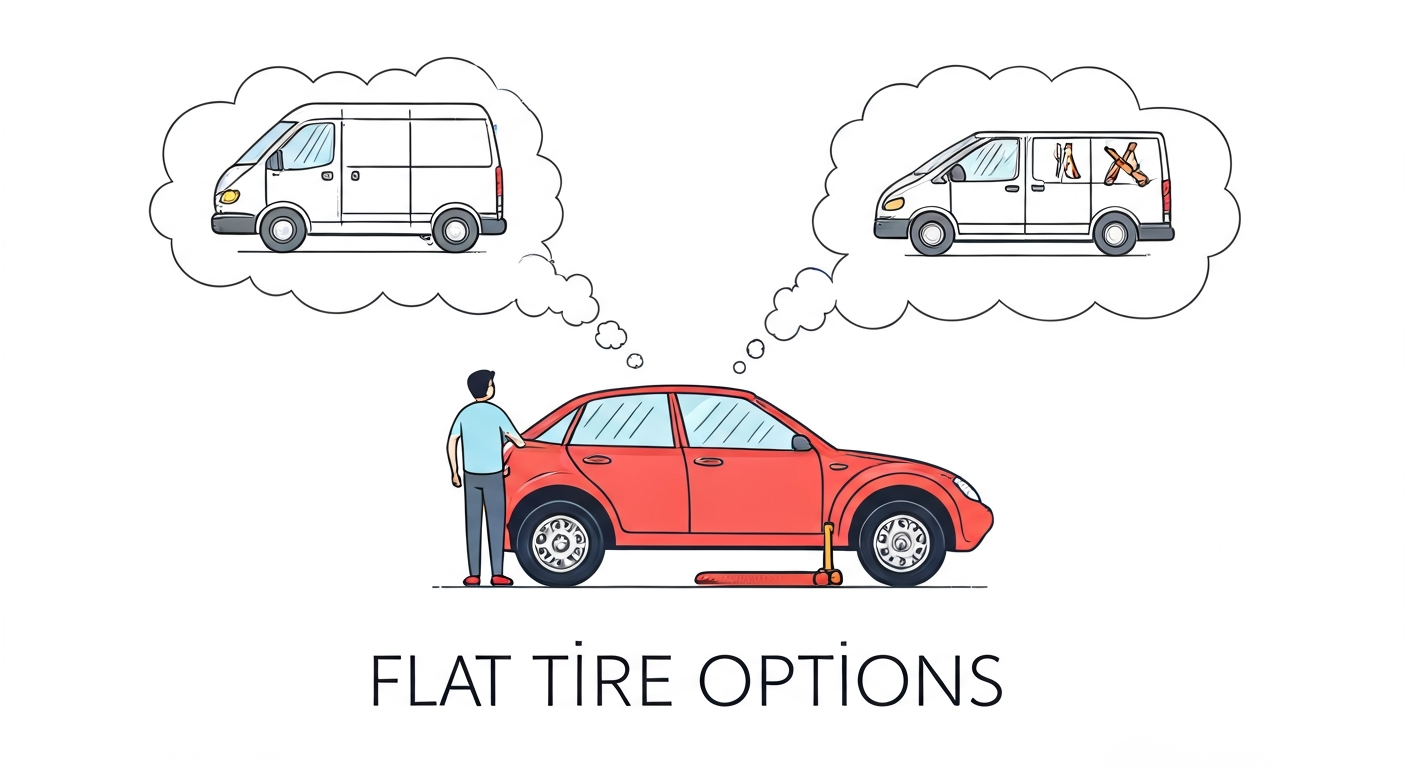
A driver contemplating options for a flat tire, with visual representations of roadside assistance arriving and tools for a DIY repair, illustrating the choice between professional help and self-service.

Choosing between roadside assistance and a DIY tyre change depends on your safety, skill level, available tools, and the specific situation. For optimal safety and convenience, especially in hazardous conditions or if you lack confidence, roadside assistance is superior. However, a DIY change offers immediate resolution and cost savings if you are prepared, skilled, and in a safe environment.

2 Found This Helpful
Read Guide
A person confidently changing a car tire on a paved road, using a lug wrench and car jack, with a spare tire ready.

To safely and efficiently change a car tyre, first ensure a safe location, apply the parking brake, and activate hazard lights. Gather your spare tyre, jack, and lug wrench. Loosen the lug nuts before jacking up the car. Lift the vehicle, remove the flat tyre, install the spare, and hand-tighten the nuts. Lower the car, then fully tighten the lug nuts in a star pattern. Drive cautiously to the nearest service centre.

15 Found This Helpful
Read Guide
BroadMatters LogoBroadMatters

Clear, simple guides and everyday explanations to help you solve common problems with confidence.

Stay Updated

Get our latest guides and simple tips delivered directly to your inbox.

By joining, you agree to our Terms and Privacy Policy.

© 2026 BroadMatters Help Center. All rights reserved.

contact@broadmatters.com