
Quick Definition
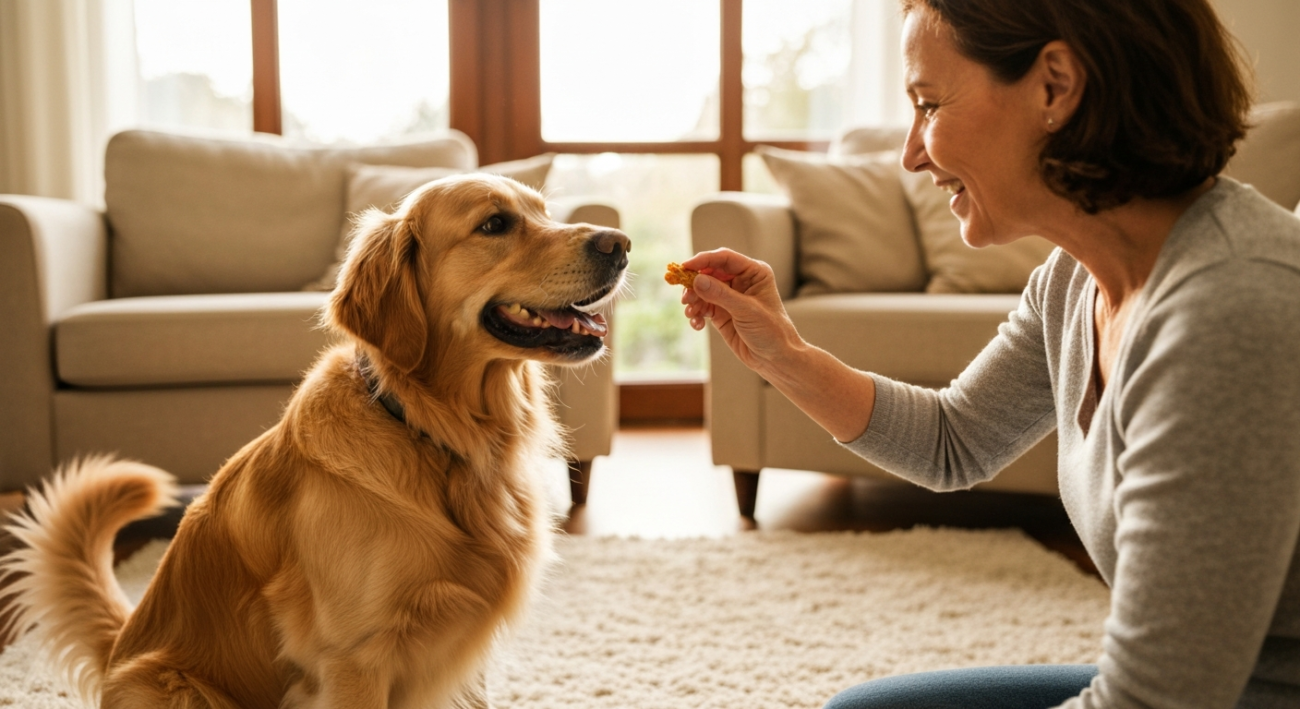
Positive reinforcement dog training is a method that focuses on rewarding desired behaviors to increase the likelihood of them happening again, rather than punishing unwanted actions.
Simple Explanation
Imagine you want your dog to sit. When they perform a sit, even accidentally at first, you immediately give them something they love, like a treat or praise. Over time, your dog learns that ‘sitting’ leads to good things. Therefore, they start offering the sit more often. It’s about teaching your dog what you want them to do by making good things happen when they do it right, creating a fun and positive learning experience for both of you. This approach makes training enjoyable and strengthens your bond.
Why People Look This Up
Many dog owners are looking for gentle, effective ways to train their pets without resorting to harsh methods. They want to understand how to correct problem behaviors, teach new commands, and build a better relationship with their dog. Often, people are frustrated with traditional, punishment-based training and seek a more humane approach. They also might be curious about why their current training methods aren’t working, leading them to explore the benefits of positive reinforcement dog training techniques for a happier, well-behaved companion.
How Positive Reinforcement Dog Training Works
- Identify a desired behavior: Decide what you want your dog to do, such as ‘sit’, ‘stay’, or ‘come’.
- Wait for or prompt the behavior: You can wait for your dog to naturally offer the behavior or gently guide them into position.
- Mark the behavior: The instant your dog performs the desired action, use a verbal marker like ‘yes!’ or a clicker sound. This marks the exact moment they did something right.
- Deliver a reward: Immediately after marking, give your dog a high-value reward, like a small, tasty treat, a favorite toy, or enthusiastic praise. The reward should be something your dog truly values.
- Repeat and generalize: Practice the behavior in various environments and gradually fade the reliance on continuous treats as your dog understands the command. Gradually, you’ll introduce hand signals and verbal cues.
Real-Life Example
Let’s say you want to teach your puppy to ‘come’ when called. You start in a quiet room. When your puppy takes a step towards you after you say ‘come’, you click and immediately give a treat. As they get closer, you keep clicking and treating. Soon, they learn that coming to you when called means a delicious reward. You then practice this in different rooms, then in the backyard, always rewarding their effort. This consistent, positive association makes coming when called a joyful act for your dog, rather than a chore.
Why Positive Reinforcement Dog Training Matters
Using positive reinforcement methods builds trust between you and your dog, fostering a strong, loving bond. Instead of fearing punishment, your dog learns to enjoy training sessions and looks to you for guidance. This method encourages your dog to think and make good choices, leading to a more confident and well-adjusted pet. Furthermore, it helps prevent and resolve common behavioral issues by teaching your dog appropriate alternatives. Understanding effective strategies is crucial, especially when tackling dog discipline guide considerations, ensuring a harmonious household for everyone involved.
Common Misunderstandings
- It means you never say ‘no’ to your dog: While it focuses on rewards, it doesn’t mean you ignore unwanted behavior. Instead, you redirect or manage the environment.
- You’ll always need treats to get your dog to listen: Treats are essential for teaching new behaviors, but once learned, rewards can be varied to include praise, toys, or even life rewards like a walk.
- It makes your dog ‘spoiled’ or disobedient: Quite the opposite. It builds a dog who is eager to learn and please, as they associate good behavior with positive outcomes.
- It’s only for puppies: Positive reinforcement works effectively for dogs of all ages, from puppies to senior dogs, and can be used to teach new tricks or modify existing behaviors.
- It’s a ‘soft’ approach that isn’t effective for serious issues: This method is highly effective for addressing a wide range of behavioral challenges, often more so than punitive methods, as it addresses the root cause.
When This Applies
Positive reinforcement dog training applies in almost every aspect of your dog’s life. It’s ideal for teaching basic obedience commands like sit, stay, and come. You can also use it for more complex tricks, agility training, and addressing specific behavioral problems such as jumping, barking, or nipping. Moreover, it’s excellent for socializing puppies, helping them have positive experiences with new people, places, and other animals. Essentially, anytime you want to encourage a behavior or teach your dog something new, this approach is your go-to.
When It Does Not Apply
While highly versatile, positive reinforcement dog training is not about letting your dog do whatever they want. It doesn’t apply when you need to physically prevent your dog from harming themselves or others, such as pulling them away from a dangerous situation. It also shouldn’t be confused with bribing your dog; the reward comes *after* the desired behavior, not before. Furthermore, it’s not a quick fix for behaviors rooted in severe anxiety or aggression; while it’s part of the solution, these cases often require professional guidance from a certified behaviorist in conjunction with reinforcement.
Background of Positive Reinforcement
The principles behind positive reinforcement training are rooted in behavioral psychology, particularly the work of B.F. Skinner and his studies on operant conditioning in the mid-20th century. While these scientific foundations existed, their application to dog training became widespread in the latter half of the century. Pioneers like Karen Pryor helped popularize clicker training, which is a specific method leveraging positive reinforcement. This shift moved away from traditional, often harsh, compulsion-based methods towards a more humane, science-backed approach that focuses on building a cooperative relationship between dogs and their owners.
