
Quick Answer
Yes, you can you push start a car, but only if it has a manual transmission and specific conditions are met. This method, also known as bump-starting, involves using momentum to turn the engine over when the starter motor is unable to, usually due to a dead battery. It won’t work for automatic cars, and it’s essential to prioritize safety.
What Push-Starting Means
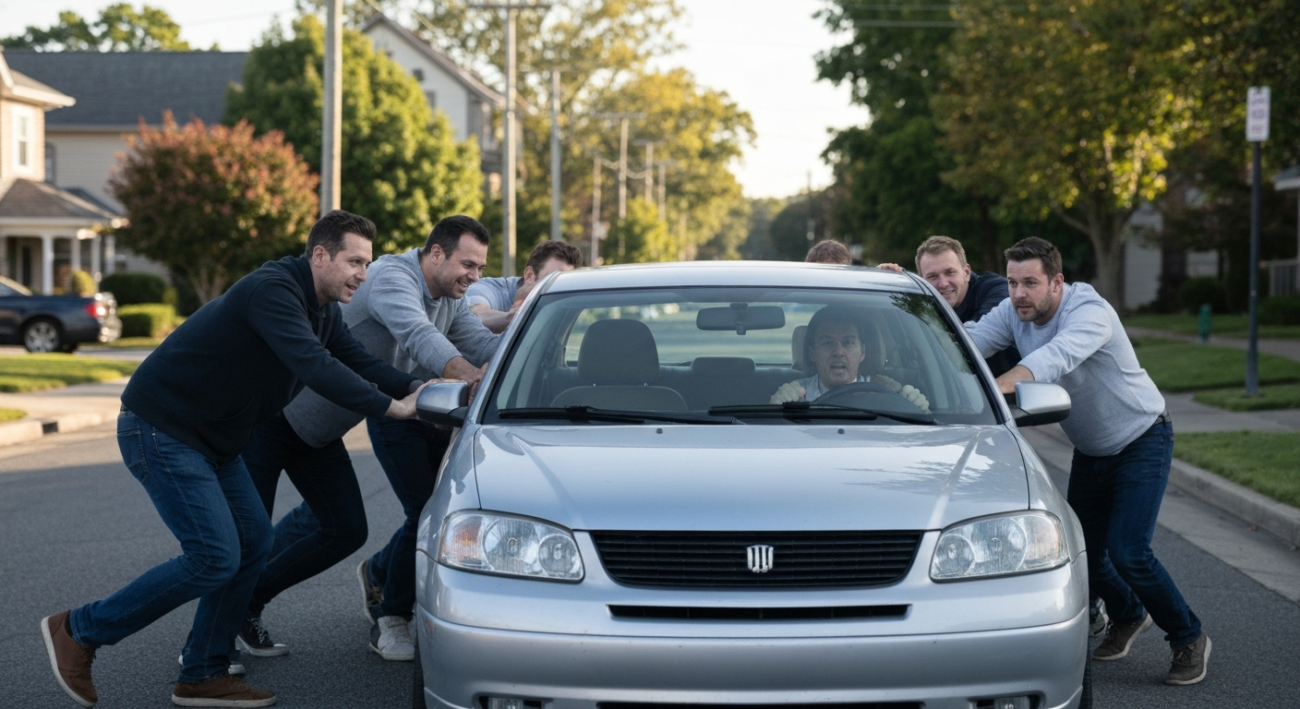
Push-starting is an old-school technique where you get a car moving to manually engage its engine. Instead of the starter motor doing the work, the spinning wheels transfer power to the transmission, which then turns the engine’s crankshaft. This motion helps the engine ‘catch’ and start running, assuming the problem isn’t something more serious than a weak battery. It’s a clever workaround when your car won’t crank on its own, relying on kinetic energy rather than electrical power from the battery to get the initial spark.
Why Knowing About Push-Starting Matters
Knowing how to push-start a car can be a real lifesaver when you’re stranded with a dead battery and no jump cables or another vehicle in sight. Imagine being in a remote area, far from roadside assistance, and your car just won’t start. If you have a manual car and a few willing helpers, this knowledge could get you back on the road. It offers a sense of self-reliance and can save you time, money, and a lot of frustration. However, it’s crucial to understand its limitations and risks before attempting it.
Common Reasons a Car Needs a Push
- Dead or weak car battery
- Faulty alternator (not charging the battery)
- Loose or corroded battery terminals
- Lights left on overnight, draining the battery
- Infrequent driving, causing battery discharge
How to Safely Push-Start Your Car
Prepare the Vehicle and Surroundings
First, ensure you are in a safe, open area with a slight downhill slope if possible. This makes getting momentum much easier. Turn on your hazard lights. Make sure there’s plenty of space ahead and behind. Clear any obstacles from the path. You’ll need at least one, preferably two, people to help push the car, especially if it’s on flat ground. Communicate clearly with everyone involved before you begin.
Get Ready to Push (Manual Transmission Only)
The driver should get into the car and turn the ignition key to the ‘on’ position – but do not try to crank the engine. Press the clutch pedal all the way down and put the car into second gear. First gear might be too jerky. Ensure the handbrake is off. The people pushing should position themselves safely at the rear of the car, ready to push on the bodywork (avoiding lights or windows).
Build Momentum and Engage the Engine
When everyone is ready, have the helpers push the car. Once the car is rolling at a decent speed (around 5-10 mph), the driver should quickly release the clutch pedal. This sudden engagement of the wheels with the engine can make the engine ‘turn over’ and hopefully start. If it works, the engine will roar to life. If it doesn’t start immediately, press the clutch again and try once more after gaining more speed. This method is the core of how you can you push start a car effectively.
What to Do After the Car Starts
Once the engine starts, the driver should press the clutch again to disengage the gear, then shift into neutral. Allow the engine to run for at least 15-20 minutes, or even drive it around, to let the alternator recharge the battery. Don’t immediately turn it off, or you might find yourself in the same situation again. If you’re unsure about the battery’s health, or if this issue recurs, it’s wise to consider professional inspection. For persistent battery issues, you might also consider learning how to safely jump-start a car, which is often a more reliable and less physically demanding solution.
When This Method May Be Different or Impossible
- Automatic transmission vehicles cannot be push-started due to their design.
- Modern cars with push-button start systems or advanced electronics may prevent it.
- If the battery is completely dead (zero charge), the car’s electronics won’t power up for ignition.
- Serious mechanical issues like a seized engine or fuel problems won’t be fixed by push-starting.
- Heavy vehicles or large SUVs require too much force to push effectively.
- Trying to push-start uphill or on very uneven terrain is highly dangerous and ineffective.
Common Push-Starting Myths Debunked
Push-starting an automatic car is possible if you push it fast enough.
Reality: This is false. Automatic transmissions use a torque converter that prevents power transfer from the wheels to the engine during a push. You’ll only risk damage without success.
It’s harmless to your car.
Reality: While often safe for manual cars, it can put stress on the drivetrain and catalytic converter. Repeated attempts or improper execution can lead to damage. It’s an emergency measure, not a routine.
Any car can be push-started.
Reality: Only manual transmission cars with specific issues (usually a flat battery) can be push-started. Newer cars, especially automatics or those with complex electronics, are generally not compatible.
When You Should Be Concerned and Seek Professional Help
- The car fails to start even after multiple push-start attempts.
- You hear unusual grinding, clunking, or clicking noises when trying to start the car.
- The car starts but immediately dies again.
- Dashboard warning lights (especially battery or engine light) remain on after starting.
- You frequently experience starting issues, indicating a deeper problem than just a one-time dead battery.
A Glimpse into Push-Starting History
The concept of push-starting isn’t new; it’s a technique that has been around for as long as manual cars have existed. In earlier decades, before advanced diagnostics and ubiquitous roadside assistance, knowing how to get a vehicle going without a fully functional starter was a common skill. Many vintage cars lacked the robust electrical systems we rely on today, making a dead battery a frequent issue. Push-starting offered a simple, mechanical solution that kept drivers on the move. It represents a resourceful, hands-on approach to car trouble that has slowly faded with the prevalence of automatic transmissions and more complex vehicle technologies. It’s a testament to mechanical ingenuity from a bygone era.
Beyond the Push-Start: Next Steps for Your Vehicle Health
Successfully push-starting your car is a temporary fix, not a permanent solution for underlying issues. If your car started, drive it for a while to allow the alternator to recharge the battery fully. Immediately head to an auto parts store to have your battery tested for free. If the battery is old or failing, it’s time for a replacement. If the battery tests fine, you might have an issue with your alternator or another part of the charging system, which requires professional attention. Regular basic car maintenance, like checking battery terminals and fluid levels, can help prevent future starting problems. Don’t wait for your car to leave you stranded again; proactive care is always the best approach.
