
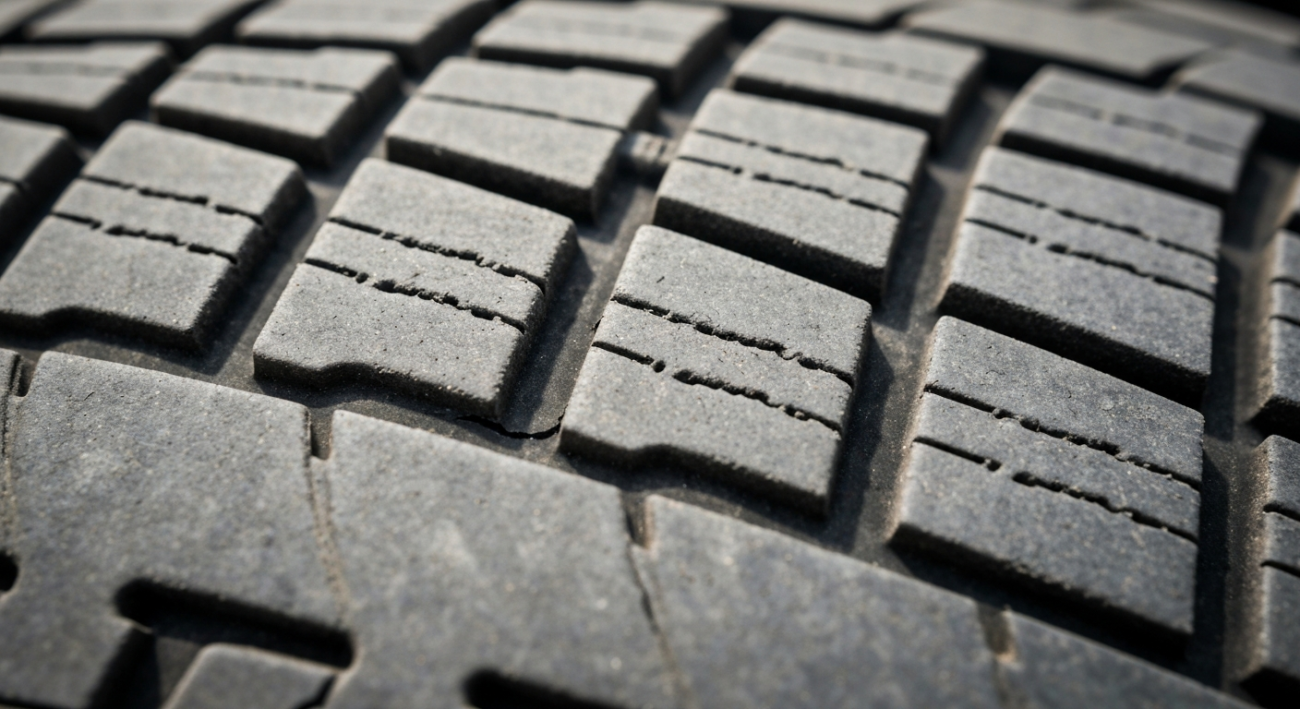
Understanding When to Change a Tyre
Knowing when to change a tyre is crucial for your safety on the road. Worn or damaged tyres significantly reduce your car’s grip. This directly impacts braking distances and handling precision. Ignoring tyre condition can easily lead to dangerous situations and potential accidents. Many drivers aren’t entirely sure how to spot the critical signs that indicate a tyre needs replacing. This guide aims to clear up that confusion. We will help you understand precisely when new tyres are needed. Understanding tyre basics, like what makes up a car tyre, is a good starting point for all drivers concerned with vehicle safety and performance.
Key Factors for When to Change a Tyre
- Normal driving friction on roads: Daily driving naturally wears down tyre tread. This happens gradually over time. Every mile driven contributes to this process.
- Improper tyre inflation (under or over-inflated): Incorrect pressure causes uneven wear patterns. Under-inflation wears the outer edges, while over-inflation wears the center. Both shorten tyre life significantly.
- Misalignment of vehicle wheels: Misaligned wheels drag instead of rolling smoothly. This leads to rapid, uneven wear on specific parts of the tyre. It can be quite noticeable.
- Aggressive driving habits like hard braking or acceleration: Sudden stops and fast starts put immense stress on tyres. This friction accelerates tread loss dramatically. Cornering aggressively also contributes to faster wear.
- Road hazards such as potholes or debris: Hitting potholes, curbs, or sharp objects can cause immediate damage. This includes bulges, cuts, or punctures, which often necessitate immediate replacement.
- Age of the tyre, even with low mileage: Tyres degrade over time, even if not driven much. Rubber compounds harden and crack with age. Most manufacturers recommend replacing tyres after 6-10 years, regardless of tread.
Easy Fixes for Tyre Issues
- Regularly check and maintain correct tyre pressure: Check pressure at least once a month. Use a reliable gauge when tyres are cold. Correct pressure ensures optimal contact with the road, evening out wear and improving fuel efficiency.
- Rotate your tyres every 5,000-8,000 miles to ensure even wear: Tyre rotation moves tyres to different positions on the car. This distributes wear evenly across all four tyres. It maximizes their lifespan and performance.
- Visually inspect tyres monthly for cuts, bulges, or foreign objects: Look for any unusual marks or embedded items. Early detection of damage can prevent a sudden blowout. Address these issues promptly to avoid bigger problems.
- Remove small stones or debris from tread grooves promptly: Objects stuck in the tread can work their way deeper. They can also cause punctures over time. Use a small tool to carefully dislodge them, protecting your tyre.
- Ensure your vehicle’s wheels are balanced: Unbalanced wheels cause vibrations. They also lead to uneven tyre wear over time. Get your wheels balanced whenever new tyres are installed or rotated for smooth driving.
Safety Notes for Tyre Care
- Always check tyre pressure when tyres are cold for accurate readings: Tyres heat up while driving, which increases internal pressure. Cold tyres provide the most accurate reading of true pressure before your journey.
- Never drive on a visibly flat or severely damaged tyre: Driving on a flat tyre can severely damage the wheel rim. It can also cause a dangerous loss of control. Pull over safely and address the issue immediately.
- Learn how to use a jack and safely remove a wheel if needed: Knowing how to change a spare tyre is vital for roadside emergencies. Practice in a safe environment beforehand. For a comprehensive guide, refer to this guide on changing a tyre.
- Do not exceed your vehicle’s recommended load capacity: Overloading your car puts excessive strain on tyres. This can lead to overheating and tyre failure. Check your car’s manual for precise load limits.
- Be extra cautious when driving in wet or icy conditions with older tyres: Worn tyres have less tread depth. This reduces their ability to grip the road in adverse weather. Drive slower and allow greater braking distances.
When to Call a Professional
- You notice uneven tyre wear that indicates alignment issues: If one side of the tyre wears faster, or the wear is patchy, it signals a problem. This often points to wheel alignment or suspension trouble. A professional can diagnose and fix it.
- There are large punctures, deep sidewall cuts, or bulges: Most small punctures in the tread can be repaired. However, large holes, cuts in the sidewall, or bulges mean the tyre’s structure is compromised. These require immediate replacement for safety.
- Your tyre repeatedly loses air pressure: If you constantly need to reinflate a tyre, it has a slow leak. A professional can find the source of the leak, whether it’s a small puncture or a faulty valve stem. Don’t ignore persistent leaks.
- You experience persistent vibrations or pulling while driving: These symptoms can indicate a range of issues. They might be unbalanced wheels, bent rims, or internal tyre damage. A mechanic can pinpoint the precise cause and resolve it.
- The tread depth is below the legal limit (1.6mm in many regions): Use a tread depth gauge or look for the tread wear indicators. These are small bars within the main grooves. If the tread is flush with these bars, it’s definitively time for new tyres.
