
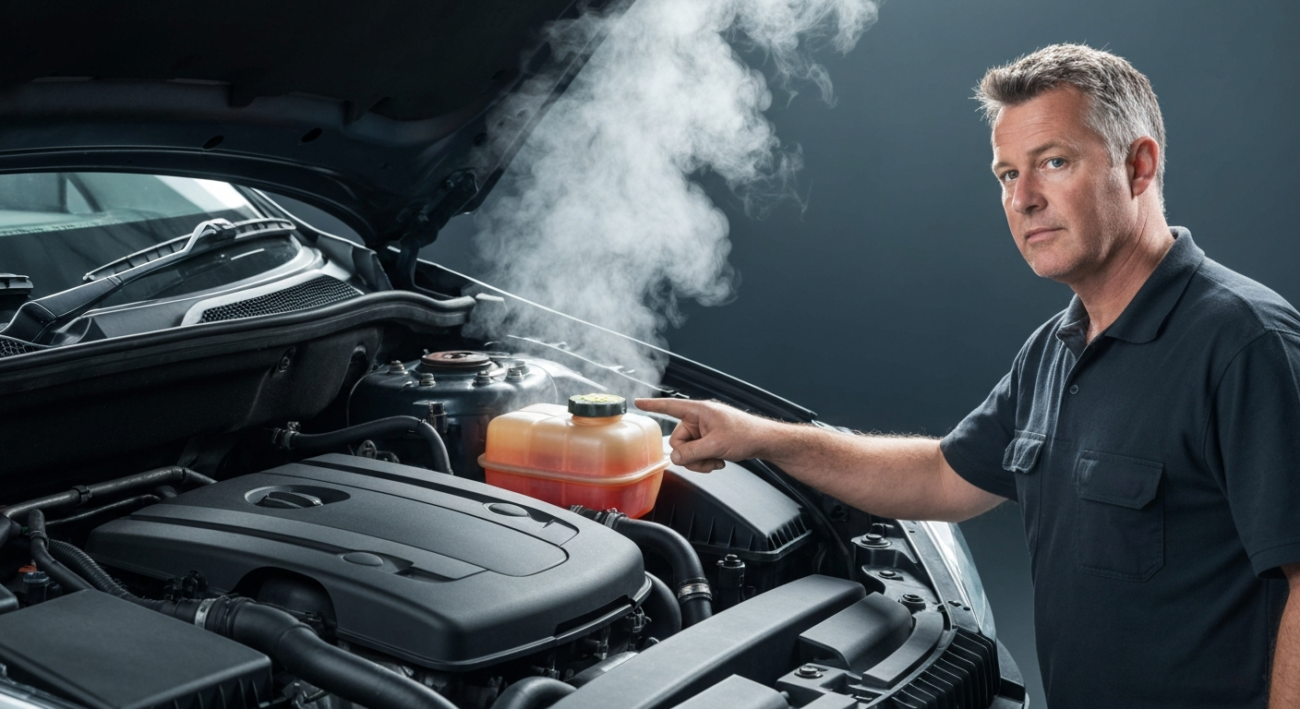
Immediate Action: Check and Add Coolant
If your engine is completely cool, safely open the hood, locate the coolant reservoir, and add a 50/50 mix of the correct coolant and distilled water up to the ‘full’ line. Never open a hot radiator cap.
Understanding Low Coolant Issues
Coolant, also known as antifreeze, is vital for your car’s engine. It circulates through the engine block, absorbing the intense heat generated during combustion and then releasing it through the radiator. When your car runs low on coolant, this essential heat transfer process is severely compromised. Without sufficient coolant, your engine struggles to maintain a safe operating temperature, quickly leading to overheating. This can cause significant and often irreversible damage, ranging from warped cylinder heads and cracked engine blocks to a completely seized engine. Ignoring low coolant levels is one of the quickest and most costly mistakes a car owner can make, often resulting in repairs that far exceed the vehicle’s value.
Why Your Car Runs Low on Coolant
- Leaks in the cooling system, such as a cracked hose, a faulty radiator, a leaky water pump gasket, or a compromised heater core.
- A blown head gasket, allowing coolant to burn off in the combustion chamber, mix with engine oil, or leak externally.
- Slow evaporation over time, although this is usually minor and only accounts for very gradual decreases in level.
- A faulty radiator cap that isn’t sealing properly, leading to pressure loss within the system and coolant escape.
- Improper bleeding of the cooling system after a repair, leaving air pockets that displace the coolant and cause low levels.
Fast Steps When Your Car Runs Low on Coolant
- Pull over immediately and turn off the engine if you see a temperature warning light, steam, or smell a sweet odor. Let it cool down completely.
- Check the coolant reservoir level once the engine is cool. If it’s below the ‘min’ line, carefully add the correct coolant type (consult your car’s manual).
- Inspect visible hoses, the radiator, and connections for obvious leaks, such as drips or puddles beneath the car.
- Check the radiator fan’s operation. It should turn on automatically when the engine gets hot to draw air through the radiator.
- Ensure the radiator cap is on securely and appears undamaged. A damaged or loose cap can cause pressure loss.
More In-Depth Fixes and Diagnostics
- Perform a cooling system pressure test to pinpoint subtle or hidden leaks that might not be visible during a basic inspection. This typically requires specialized tools.
- Flush the entire cooling system thoroughly and refill with fresh, appropriate coolant according to manufacturer specifications. This removes old, contaminated fluid and ensures optimal protection.
- Replace the thermostat if it’s confirmed to be stuck closed or partially closed, preventing proper coolant circulation and causing persistent overheating.
- Inspect the water pump for signs of leaks from its weep hole or abnormal noises like grinding or squealing. A failing water pump cannot adequately circulate coolant.
- Consider replacing the radiator if it’s clogged internally, corroded, or visibly damaged. A restricted radiator significantly reduces the system’s ability to dissipate heat.
- If coolant is disappearing without any external leaks, a compression test or exhaust gas analysis can help diagnose a blown head gasket.
Vehicle-Specific Coolant Considerations
- Different car manufacturers often specify particular types of coolant (e.g., OAT, HOAT, IAT, inorganic, organic, or hybrid organic acid technology). Using the wrong type can lead to severe issues like corrosion, sludge formation, or damage to gaskets and seals within the cooling system components. Always refer to your vehicle’s owner’s manual for the correct coolant type, color, and mixing ratio to ensure compatibility and optimal performance. This seemingly small detail is critical for engine health.
- Hybrid vehicles often have complex cooling systems that include separate circuits for the internal combustion engine and the high-voltage hybrid components, such as the battery pack and inverter. If you notice a general low coolant issue in a hybrid, it’s crucial to identify which system is affected. Addressing only one system when both are compromised could lead to continued problems or damage to expensive hybrid components.
- Older cars, particularly those with cast-iron engine blocks and older cooling system materials, might have different coolant requirements and sensitivities compared to modern vehicles with aluminum engines. Always double-check your specific vehicle’s needs and maintenance schedule to avoid issues. Regular, proactive care, as highlighted in resources like a beginner’s guide to smooth driving, can significantly prevent many coolant-related problems and extend your car’s lifespan.
When Professional Help is Essential
- If the temperature gauge quickly goes into the red zone even after adding coolant, indicating a severe underlying problem.
- If you constantly need to add coolant, indicating a significant and persistent leak that you cannot locate or fix yourself.
- If you notice coolant mixing with oil (appearing as milky sludge under the oil cap or on the dipstick) or exhaust smoke that is unusually sweet-smelling (often indicative of a head gasket issue).
- If you are uncomfortable performing any of the diagnostic or repair steps yourself, especially those involving pressure tests or system flushes.
- If the engine repeatedly overheats despite your attempts at fixing it, suggesting a complex problem beyond basic troubleshooting.
Ensuring Your Engine Stays Cool
By addressing a low coolant issue promptly, you can prevent severe engine damage and ensure the longevity of your vehicle. Regularly checking your coolant levels and inspecting for leaks are crucial preventive measures that can save you significant time and money. Once the underlying cause is fixed, your car’s cooling system should operate efficiently, keeping your engine at its optimal temperature and prolonging its lifespan. Always remember that preventive maintenance is far less costly and stressful than reactive repairs.
