
Quick Answer
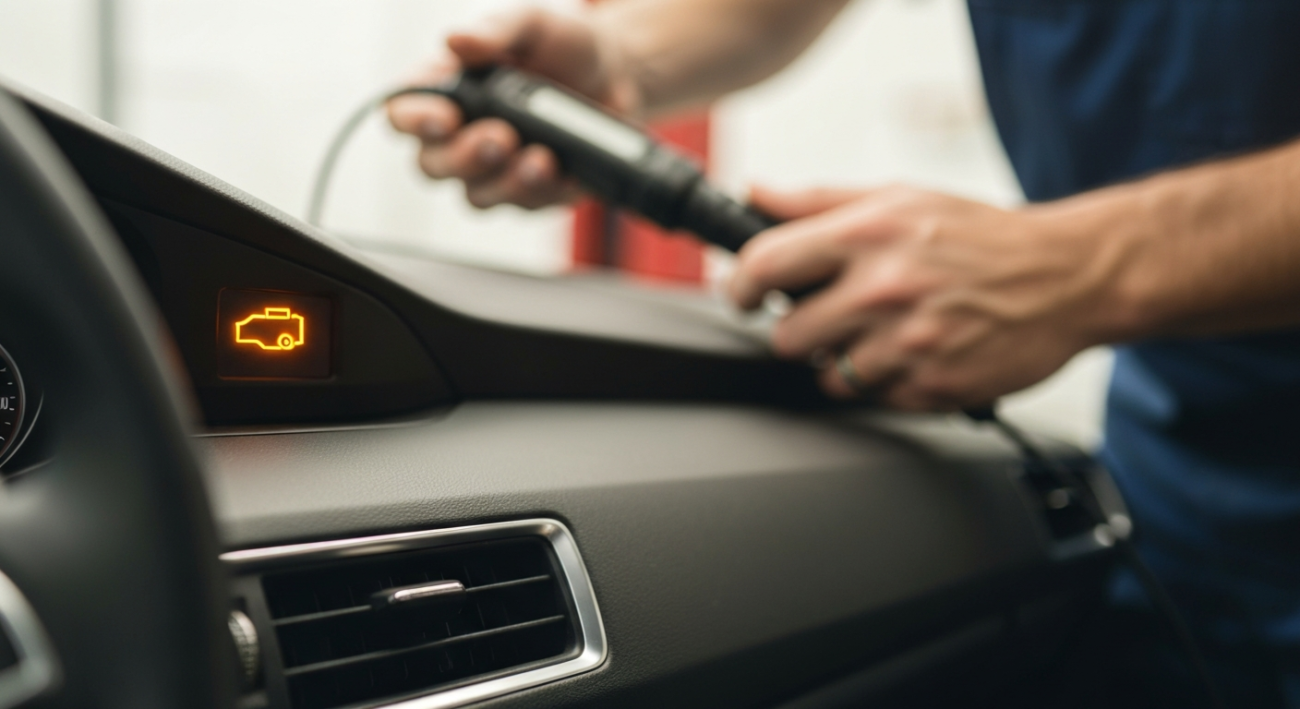
The check engine light, also known as the Malfunction Indicator Lamp (MIL), illuminates to signal a problem with your vehicle’s engine, emissions system, or other critical components. When you see this light, it means your car’s On-Board Diagnostics (OBD-II) system has detected an issue that requires attention. Ignoring it can lead to more severe damage or reduced fuel efficiency. So, what does the check engine light mean? It’s your car asking for help.
What This Means
The check engine light acts as your car’s primary communication system for internal malfunctions. At its core, it signifies that your vehicle’s On-Board Diagnostics II (OBD-II) system has detected a fault. This sophisticated computer system constantly monitors hundreds of sensors throughout your engine, transmission, and emission control components. If any sensor sends a reading outside the manufacturer’s specified range, the OBD-II system records a diagnostic trouble code (DTC) and illuminates the dashboard light. This could range from a minor issue, like a loose gas cap, to a more significant problem involving the catalytic converter or engine misfires. It’s a critical early warning, designed to prevent more extensive and costly damage by alerting you to a problem that needs investigation.
Why This Matters
Understanding and responding to the check engine light is incredibly important for several reasons. Firstly, ignoring it could lead to significantly more expensive repairs down the line. A small issue today, if left unaddressed, can cascade into a major component failure. For example, a persistent engine misfire, indicated by the light, can severely damage your catalytic converter—a very costly repair. Secondly, it impacts your vehicle’s performance and fuel economy. Many underlying issues cause reduced efficiency, meaning you’re spending more at the pump. Thirdly, and critically, a lit check engine light often means your car is emitting higher levels of pollutants, contributing to environmental damage and potentially causing you to fail emission tests. Finally, in some cases, the problem could even be a safety concern, affecting braking or acceleration. Taking prompt action ensures your car remains reliable, efficient, and safe to drive.
Common Causes When the Check Engine Light Means Trouble
- Loose or faulty gas cap
- Oxygen sensor failure
- Catalytic converter issues
- Spark plug or ignition coil problems
- Mass airflow sensor malfunction
- Vacuum leak
- Exhaust gas recirculation (EGR) valve problems
Addressing What Does the Check Engine Light Mean
Check Your Gas Cap
Believe it or not, a loose or damaged gas cap is surprisingly common and often the simplest reason your check engine light activates. The cap forms a seal that helps maintain pressure within your fuel system and prevents gasoline vapors from escaping. If this seal is compromised, whether by being improperly tightened or having a crack, your vehicle’s evaporative emission control (EVAP) system will detect a leak. This triggers a diagnostic code and illuminates the light. Before panicking, simply remove your gas cap, inspect it for any damage, and then securely re-tighten it until you hear several clicks. Drive your car for a few cycles, and in many cases, the light will reset itself automatically, saving you a trip to the mechanic.
Use an OBD-II Scanner
To accurately diagnose the underlying issue, you’ll need an On-Board Diagnostics II (OBD-II) scanner. These user-friendly devices plug into a dedicated port typically located under your dashboard, allowing them to communicate with your car’s computer. The scanner reads the diagnostic trouble codes (DTCs) stored by the system, which are specific codes that pinpoint the exact problem area. Many auto parts stores offer free diagnostic checks, or you can purchase an affordable scanner for personal use. Knowing the specific code is vital as it provides a clear direction for repair, helping you understand the severity and complexity of the problem without guesswork.
Address Emission System Faults
Many check engine light triggers are directly related to your vehicle’s emission system. For instance, a failing oxygen sensor, which measures the amount of unburnt oxygen in the exhaust, can lead to poor fuel economy and increased harmful emissions. A more serious and often more expensive issue is a malfunctioning catalytic converter, which is crucial for reducing pollutants; this can sometimes be signaled by a rotten egg smell or noticeable loss of engine power. Addressing these components according to the diagnostic codes is essential not only for your car’s performance but also for meeting environmental standards. Understanding these components is part of knowing car maintenance basics.
Inspect Ignition and Fuel Systems
Problems within the ignition and fuel delivery systems are frequent culprits behind a lit check engine light. Faulty spark plugs, worn-out ignition coils, or clogged fuel injectors can all lead to engine misfires or incomplete combustion. These issues directly impact engine efficiency, power output, and emissions. Regular vehicle maintenance, including replacing spark plugs at the manufacturer’s recommended intervals, can significantly prevent many of these problems. If your OBD-II scanner indicates a misfire, it’s critical to identify the specific cylinder affected and replace the faulty component to restore proper engine operation and prevent further damage to other systems.
When This May Be Different
- The light flashes instead of staying solid, indicating a severe misfire that could rapidly damage the catalytic converter – stop driving immediately.
- Your car seems to be running normally despite the light being on, suggesting a less critical, but still present, issue that requires attention.
- The light comes on immediately after a fuel-up, very often pointing towards a loose or faulty gas cap.
- A steady light accompanied by noticeable performance issues (e.g., loss of power, strange noises, rough idling) suggests a more serious problem requiring prompt investigation.
Common Myths Debunked
The check engine light means something major is wrong every time.
Reality: While the check engine light certainly can indicate serious problems, it’s crucial not to jump to the worst conclusions immediately. Often, the cause is much more benign, such as a faulty oxygen sensor, a vacuum leak, or even just a loose gas cap. These issues, while important to fix, are typically not catastrophic and can be resolved without breaking the bank. The light’s purpose is to flag any detected anomaly, not just major failures, making early diagnosis possible.
You can just ignore the light if the car seems to run fine.
Reality: Ignoring the check engine light, even if your car feels normal, can lead to worse damage over time, significantly reduced fuel efficiency, or potentially cause you to fail an emissions test. The issue might be slowly deteriorating a component or causing excessive pollution without immediate symptoms. It’s always best to get it checked by reading the diagnostic code to prevent minor problems from escalating into major, costly repairs.
Disconnecting the battery will fix the problem permanently.
Reality: Disconnecting the battery may temporarily clear the check engine light from your dashboard, but it does not fix the underlying mechanical or electrical issue that triggered it. Once the car’s computer system completes its diagnostic cycle again, if the fault is still present, the light will inevitably return. Furthermore, disconnecting the battery can erase valuable diagnostic data, making it harder for a mechanic to accurately pinpoint the original problem.
When You Should Be Concerned
- The check engine light is flashing – this is a critical warning, usually indicating a severe engine misfire that can cause rapid and costly damage to your catalytic converter. Pull over safely as soon as possible and call for assistance.
- The light is solid, and your car is experiencing significant performance issues such as sputtering, stalling, a noticeable loss of power, difficulty accelerating, or strange engine noises.
- You notice a strong, unusual smell, such as burning oil, gasoline, or a rotten-egg odor from the exhaust, inside or outside the car.
- Your car is overheating, and the check engine light is also illuminated, indicating a potentially severe engine problem that requires immediate attention to prevent irreversible damage.
What to Do Next
When your check engine light comes on, your immediate next steps are crucial for proper diagnosis and repair. First, don’t panic! Start by checking your gas cap and ensuring it’s tightly secured. If the light persists after a few driving cycles, your next immediate action should be to use an OBD-II scanner. These devices are readily available for purchase, or you can often get a free diagnostic scan at most auto parts stores. The scanner will provide a specific diagnostic trouble code (DTC) which is like a specific clue pointing to the problem area. With this code, you can research the issue, understand its severity, and decide if it’s a simple DIY fix or if you need to consult a trusted mechanic. Proactive steps prevent further damage and ensure your car remains reliable and safe for the long haul. Remember, ignoring this warning can lead to more expensive repairs and even safety hazards over time.
