
Quick Answer
Learning how to inflate a car tyre properly is crucial. It ensures your vehicle runs safely. You will achieve optimal fuel efficiency. This simple task extends your tyre’s lifespan. You’ll finish with correctly pressurized tyres. This improves your overall driving experience and confidence.
Why Correct Tyre Inflation Works
Proper tyre inflation is more than just a recommendation. It is a critical aspect of vehicle safety. Correct pressure ensures even contact with the road. This improves handling and braking performance. Furthermore, adequately inflated tyres reduce rolling resistance. This means your engine works less, leading to better fuel economy. Understanding what a car tyre is and how it functions is key to appreciating this. Lastly, it prevents premature tyre wear. This saves you money in the long run. Therefore, taking a few minutes to check and adjust tyre pressure is always a worthwhile investment.
What You Need
- Reliable tyre pressure gauge (digital is often easiest)
- Access to an air compressor (at a petrol station or a portable one)
- Your car’s owner’s manual or the tyre pressure sticker (usually inside the driver’s door jam)
Step-by-Step Guide: How to Inflate a Car Tyre
Step 1: Find Your Car’s Recommended Tyre Pressure
Locate the correct tyre pressure for your vehicle. This information is typically found on a sticker. Check the driver’s side door jam, glove compartment, or your car’s owner’s manual. Note down the ‘cold inflation pressure’. This reading is for when your tyres haven’t been driven for at least three hours or more than a mile. Pressures are usually listed in PSI (pounds per square inch) or kPa (kilopascals).
Step 2: Gather Your Tools and Prepare
Have your tyre pressure gauge ready. Position your vehicle near the air compressor. Remove the valve caps from all four tyres. Keep them in a safe place, like your pocket, to avoid losing them. It’s best to check all tyres at once. This ensures consistent pressure across your vehicle.
Step 3: Check the Current Tyre Pressure
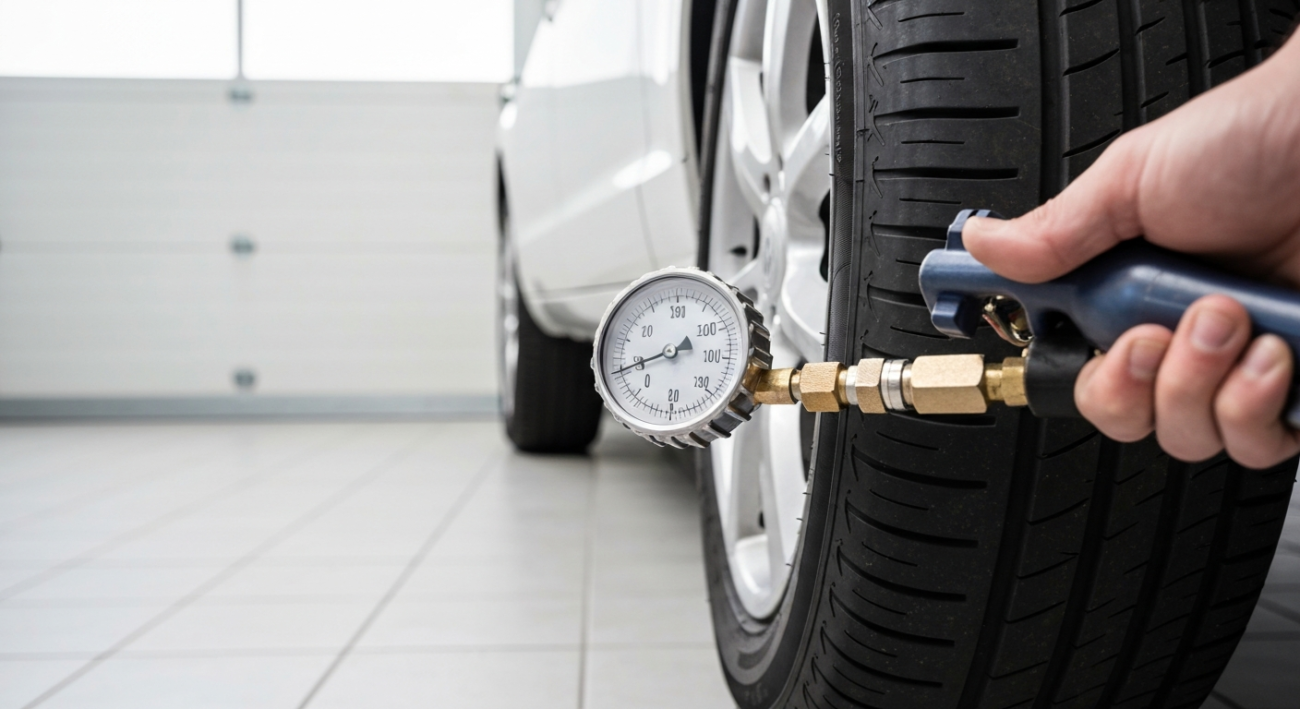
Press the tyre gauge firmly onto the valve stem of one tyre. You will hear a brief hiss of air. The gauge will then display the current pressure reading. Compare this number to your car’s recommended pressure. This tells you if you need to add or release air. Remember, even slightly off pressure can impact performance.
Step 4: Add Air to Your Tyres
If your tyre pressure is too low, it’s time to add air. Attach the air hose nozzle firmly to the valve stem. Press the lever or button to start adding air. Add air in short bursts. Recheck the pressure frequently with your gauge. This helps you avoid over-inflating. It’s important to learn how to inflate a car tyre carefully. Continue until you reach the recommended PSI.
Step 5: Release Air (If Over-inflated)
Sometimes, you might over-inflate a tyre. Don’t worry, this is easy to fix. Use the small pin on the back of most tyre gauges. Press it into the center of the valve stem. This will release air gradually. Release air in short bursts. Then, recheck the pressure with your gauge. Repeat until the correct PSI is achieved. Accuracy is important for safety.
Step 6: Recheck All Tyre Pressures
Once you have adjusted the pressure for one tyre, move to the next. Repeat the process for all four tyres. Always double-check each tyre’s pressure after adjustment. This ensures every tyre meets the recommended specification. Consistent pressure across all tyres is crucial for optimal vehicle balance.
Step 7: Replace All Valve Caps
After all tyres are correctly inflated, replace their valve caps. These caps do more than just look good. They protect the valve stems from dirt, moisture, and debris. This prevents internal leaks and damage. Always ensure they are screwed on tightly. This simple step maintains tyre integrity over time.
Common Mistakes When Inflating Car Tyres
- Checking tyres when they are hot (after driving). Always check them cold for an accurate reading.
- Using an inaccurate or uncalibrated tyre pressure gauge. Invest in a good quality gauge.
- Ignoring the spare tyre. It also needs to be checked and maintained.
- Over-inflating or under-inflating significantly. Stick to the manufacturer’s recommended pressure.
- Forgetting to replace valve caps. This leaves the valve stem exposed to elements.
If Something Doesn’t Work
Tyre not holding air after inflation.
Check for obvious punctures or leaks around the valve stem. Sometimes, a faulty valve stem core is the culprit. If the tyre still loses air quickly, it might have a significant puncture. Consult this complete guide on changing a tyre for next steps or seek professional help.
Tyre gauge gives inconsistent readings.
Ensure you are pressing the gauge firmly and squarely onto the valve stem. A poor seal can lead to air hissing out and inaccurate readings. If issues persist, try a different gauge. Your current one might be faulty or broken.
Air compressor isn’t working or delivering air.
Check the power supply to the compressor. Ensure it’s plugged in correctly. If at a petrol station, check if the machine is operational or if you need to pay. If using a portable compressor, check its fuse. Sometimes, the nozzle simply isn’t seated properly on the valve.
Expected Result
You will now have four perfectly inflated car tyres. This results in a smoother, safer ride. You will experience better fuel efficiency and longer tyre life. Enjoy peace of mind knowing your vehicle is properly maintained. Your car will handle more predictably. This simple task contributes greatly to your overall driving safety.
Quick Summary
Properly inflating your car tyres is a straightforward task. It offers significant benefits for safety and vehicle performance. Follow these steps carefully to ensure accuracy. Regular checks prolong tyre life. They also improve fuel economy. This maintenance routine is essential for every car owner. You are now equipped to manage your tyre pressure effectively.
