
Quick Answer: How to Check Brake Fluid Level
Knowing how to check brake fluid level is a simple yet crucial part of car maintenance. You’ll locate the reservoir under your hood, typically near the driver’s side, and inspect the fluid against the ‘MIN’ and ‘MAX’ lines. If it’s low, adding the correct type of brake fluid can prevent serious braking issues and keep your vehicle safe on the road. This quick check takes just a few minutes and provides peace of mind.
Why Checking Brake Fluid Level Matters for Your Safety
Your brake fluid is the unsung hero of your car’s stopping power. It transmits the force from your foot on the pedal to the brake pads, bringing your vehicle to a halt. When fluid levels are correct, your brakes respond reliably and effectively. Low brake fluid, however, can lead to a spongy pedal, reduced braking performance, or even total brake failure. Regular checks ensure your braking system operates as it should, protecting you and others.
What You Need Before You Start
- Your car’s owner’s manual
- Clean lint-free cloth or paper towel
- Appropriate type of brake fluid (DOT 3, DOT 4, DOT 5.1, etc.)
- A flat, level surface to park your car
Detailed Steps for How to Check Brake Fluid Level
Step 1: Park on Level Ground and Open the Hood
Always start by parking your car on a flat, level surface. This ensures an accurate reading of the fluid level. Engage the parking brake for safety. Then, pop open your car’s hood. Refer to your owner’s manual if you’re unsure how to release the hood latch or if you need to identify specific components under the hood. Safety first is always a good approach when working on your vehicle.
Step 2: Locate the Brake Fluid Reservoir
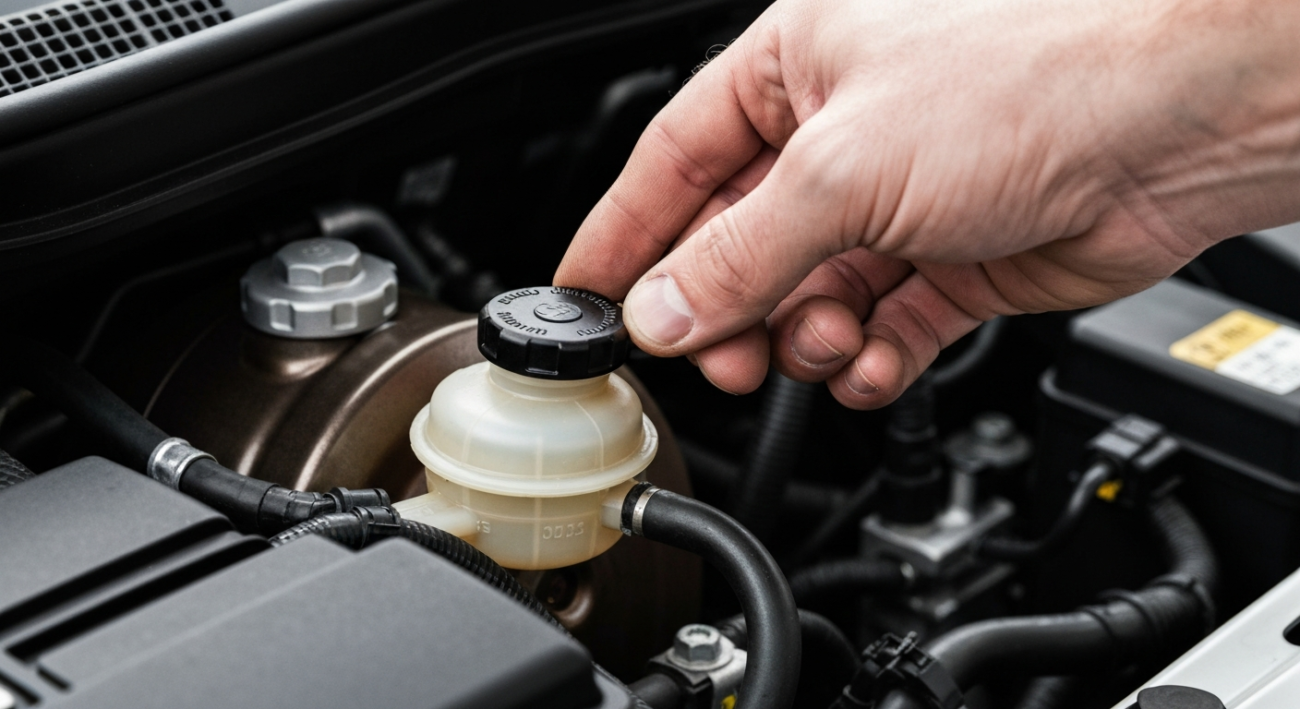
The brake fluid reservoir is typically a small, clear or translucent plastic container with a black or dark-colored cap. It’s usually located on the driver’s side of the engine bay, mounted on the firewall, often near the master cylinder. The cap often has ‘BRAKE FLUID’ or a brake system symbol stamped on it. Some vehicles might have it in a less obvious spot, so consult your owner’s manual if you have trouble finding it.
Step 3: Inspect the Fluid Level Visually
Most reservoirs have ‘MIN’ and ‘MAX’ lines clearly marked on the side. Without removing the cap, visually check where the fluid level sits in relation to these lines. The fluid should ideally be between the ‘MIN’ and ‘MAX’ marks. If it’s below the ‘MIN’ line, your fluid level is too low and requires immediate attention. A slight drop over time can be normal due to brake pad wear, but a significant drop needs investigation.
Step 4: Examine the Fluid Condition
While observing the level, also take a moment to look at the fluid’s color. New brake fluid is typically clear or has a slightly yellowish tint. Over time, it can absorb moisture and contaminants, turning darker, sometimes brownish or even blackish. Very dark or murky fluid indicates it’s degraded and might need flushing, not just topping off. This isn’t directly part of how to check brake fluid level, but it’s a vital related inspection.
Step 5: Top Off Fluid if Necessary (Carefully)
If the fluid is below the ‘MIN’ line, carefully twist or pry open the reservoir cap. Use a clean, lint-free cloth to wipe away any dirt around the cap to prevent contaminants from entering the system. Slowly add only the recommended type of new brake fluid, pouring carefully to avoid spills. Fill it until the level is just below the ‘MAX’ line. Do not overfill, as expanding fluid needs room. Replace the cap securely once finished.
Step 6: Clean Up and Test Your Brakes
Any spilled brake fluid should be wiped up immediately as it can damage paint. Close the hood. After topping off, gently pump your brake pedal a few times before driving to ensure a firm feel. Take a short, careful drive at low speeds in a safe area to confirm your brakes are working correctly. If the brake warning light remains on or you notice any issues, have your car professionally inspected right away.
Common Mistakes When Checking Brake Fluid
- Using the wrong type of brake fluid (DOT 3 vs. DOT 4 vs. DOT 5.1 are not always interchangeable)
- Overfilling the reservoir, which can cause fluid to overflow during expansion
- Letting dirt or contaminants enter the reservoir when the cap is off
- Ignoring consistently low fluid levels, which can signal a leak or significant wear
- Assuming a low level means adding fluid is always the solution, without considering brake wear or leaks
If Something Doesn’t Work as Expected
Brake warning light stays on after topping off fluid.
A persistent warning light after ensuring proper fluid levels often indicates a deeper issue, such as a sensor malfunction, a leak in the brake line, or a problem with the master cylinder. Do not ignore this. It’s crucial to have a qualified mechanic diagnose and repair the problem immediately. Driving with a faulty brake system is extremely dangerous.
Fluid level drops quickly after topping off.
Rapid fluid loss is a strong indicator of a brake fluid leak. Inspect your brake lines, calipers, and master cylinder for visible signs of drips or wet spots. You might also notice puddles under your car. This situation requires immediate professional attention as it severely compromises your vehicle’s stopping ability. It’s a critical safety concern.
Brake pedal feels soft or spongy even after checking fluid.
A spongy brake pedal usually means there’s air in the brake lines, or the fluid itself is old and has absorbed too much moisture. Bleeding the brakes can remove air, restoring a firm pedal feel. If the fluid is old, a complete brake fluid flush and replacement might be necessary. Both tasks are best performed by a professional to ensure safety and proper system function. For general vehicle upkeep, understanding car maintenance basics can be very helpful.
Your Expected Result and What Success Looks Like
Once you’ve correctly checked and, if necessary, topped off your brake fluid, you should feel more confident in your car’s braking performance. The fluid level will be within the ‘MIN’ and ‘MAX’ marks, ensuring optimal pressure transmission. A firm brake pedal and responsive stopping are the signs of a healthy braking system. This routine check contributes significantly to your overall driving safety and the longevity of your brake components.
Quick Summary: Keeping Your Brakes Safe
Regularly checking your brake fluid level is a simple, effective way to maintain your vehicle’s safety and performance. By following these steps, you ensure your brakes are always ready to respond when you need them most. Don’t underestimate the importance of this quick inspection; it’s a small effort for a big safety reward on the road. Make it a part of your routine car care.
