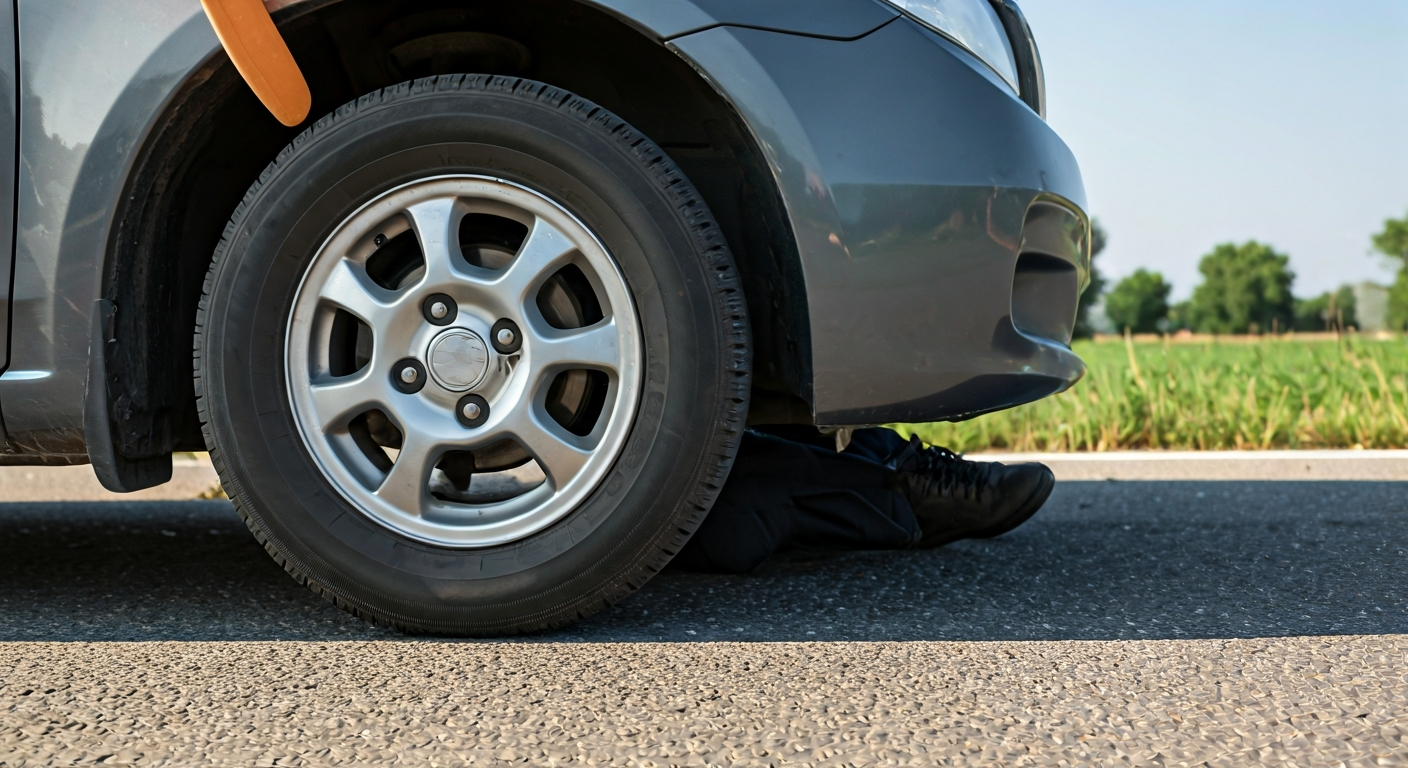
A person kneeling beside a car, skillfully replacing a flat tire with a spare using a lug wrench, with the text 'TYRE CHANGE TIME' clearly visible on the image.
How To
Published

How Long Does It Take to Change a Car Tyre? A Time Estimate Guide

A
Ali Hassan
Writer
The Answer
Changing a car tyre typically takes 15 to 30 minutes for an average driver with basic tools and some experience. For novices, it can extend to 45 minutes or more, especially under adverse conditions. Experienced individuals or roadside assistance professionals might complete the task in under 10-15 minutes.
Facing a flat tyre can be an unexpected and stressful event. Knowing how much time the repair or replacement will take is crucial for managing your schedule and deciding whether to handle it yourself or call for professional help. This guide provides realistic time estimates for changing a car tyre, detailing the various factors that influence the duration, from your personal experience and available tools to environmental conditions and the type of vehicle. Understanding these elements will equip you to make informed decisions quickly and confidently when confronted with a flat, ensuring you're back on the road safely and efficiently.

How to Change a Car Tyre: Step-by-Step Guide

1

1. Find a Safe Location and Secure the Vehicle

Pull over to a flat, stable, and safe area away from traffic. Engage the parking brake, switch off the engine, and turn on your hazard lights. If you have them, place safety triangles or flares behind your vehicle to warn other drivers. This initial step is non-negotiable for your safety and the stability of your vehicle. Ensure the ground is firm and level to prevent the jack from slipping.
2

2. Gather Your Tools

Collect all necessary items: a spare tyre (make sure it's properly inflated), a jack, a lug wrench, and your car's owner's manual (it often contains specific jacking points). It's also wise to have gloves, a reflective vest, and a flashlight if it's dark. Having these items readily accessible saves valuable time when every minute counts.
3

3. Loosen the Lug Nuts

Before jacking up the car, use the lug wrench to loosen the lug nuts on the flat tyre. Turn the wrench counter-clockwise. You may need to use significant force or even stand on the wrench for leverage. Only loosen them enough so they can be turned by hand once the car is off the ground, but do not remove them completely yet. For a detailed guide on this process, refer to How to Change a Car Tyre.
4

4. Jack Up the Vehicle

Consult your owner's manual for the correct jacking points, typically located on the frame near the flat tyre. Position the jack firmly on the ground and slowly raise the vehicle until the flat tyre is completely clear of the ground. Ensure the vehicle remains stable during this process; any instability can be extremely dangerous.
5

5. Remove the Flat Tyre

With the car securely elevated, completely unscrew the loosened lug nuts and place them in a safe spot, such as your hubcap. Carefully remove the flat tyre by pulling it straight towards you. It can be heavy, so be prepared for its weight. Place it flat on the ground to prevent it from rolling.
6

6. Mount the Spare Tyre

Lift the spare tyre onto the wheel studs, aligning the holes in the spare with the studs. Push it firmly into place against the hub. Hand-tighten the lug nuts back onto the studs as much as possible. This ensures the spare is seated correctly before the car is lowered.
7

7. Lower the Vehicle and Fully Tighten Nuts

Slowly lower the vehicle until the spare tyre is resting on the ground, but the full weight of the car is not yet on it. At this point, use the lug wrench to fully tighten the lug nuts in a star or crisscross pattern. This pattern ensures even pressure and prevents the wheel from coming loose. Once tightened, completely lower the vehicle and remove the jack.
8

8. Final Checks and Stowage

Give the lug nuts one final check for tightness. Store the flat tyre, jack, and lug wrench securely in your vehicle. Remember that most spare tyres are 'space savers' designed for temporary use at reduced speeds and distances. Drive to the nearest service centre to have your flat tyre repaired or replaced and to check the air pressure of your spare. Regularly check your spare tyre's pressure and condition; resources like the National Highway Traffic Safety Administration (NHTSA) provide excellent tyre safety guidelines.

Initial Preparations and Safety First

Before you even begin to consider the time it takes to change a tyre, the most critical step is ensuring your safety and that of others. This involves more than just pulling over; it means choosing the right spot. A flat, solid surface is paramount. Soft shoulders, uneven ground, or slopes can cause your jack to slip, leading to serious injury or further vehicle damage. Always use your hazard lights, and if available, deploy safety triangles or road flares, especially in low visibility conditions or at night. Your well-being should always take precedence over speed.
Gathering the correct tools efficiently can significantly reduce the overall time. A standard vehicle will come equipped with a jack, a lug wrench, and a spare tyre, but checking their condition and knowing their location beforehand is key. Imagine struggling to find your jack in the dark, or realizing your spare is flat – these scenarios add considerable time and frustration. Consider keeping a small 'tyre change kit' with essential items like gloves, a flashlight, and a small kneeling pad.
Familiarity with your vehicle's specific jacking points and lug nut specifications, often found in your owner's manual, is also vital. Different vehicles have unique requirements. Attempting to lift your car from an incorrect point can damage its chassis or undercarriage, turning a simple tyre change into a costly repair. Investing a few minutes to review this information can save you much more time and money in the long run.

Average Time Estimates at a Glance

45+ minutes
Novice Driver
First-timers, limited tools, challenging conditions.
15-30 minutes
Average Driver
Some experience, standard tools, favorable conditions.
10-15 minutes
Experienced Driver
Frequent practice, well-maintained tools, ideal setting.
5-10 minutes
Roadside Professional
Specialized tools, extensive training, optimal efficiency.

Factors Affecting Tyre Change Duration

  • Driver Experience: A seasoned driver with prior practice will be significantly faster than a novice. Practice builds muscle memory and confidence.
  • Tool Availability and Condition: Having the right tools (jack, lug wrench, spare) in good working order is crucial. Missing tools or faulty equipment can cause major delays.
  • Vehicle Type: Larger vehicles (SUVs, trucks) often have heavier wheels and require more robust jacks, potentially increasing effort and time. Sports cars may have specific jacking points or unique lug nut designs.
  • Roadside Conditions: Changing a tyre on a flat, dry, well-lit surface is much quicker than on a sloped, muddy, dark, or busy roadside. Weather conditions like rain, snow, or extreme cold can severely impede the process and increase safety risks.
  • Lug Nut Condition: Rusted, overtightened, or stripped lug nuts can be incredibly stubborn and difficult to remove, sometimes requiring specialized tools or professional intervention.
  • Spare Tyre Type: Full-size spares are generally easier to install than compact 'donut' spares, which might require more careful handling and specific inflation pressures.
  • Presence of Wheel Locks: If your vehicle has wheel locks, you'll need the corresponding key. Losing or misplacing this key will prevent you from removing the wheel, turning a quick fix into a tow situation.

DIY vs. Roadside Assistance: Time vs. Convenience

Pros

  • Cost Savings: Changing a tyre yourself is free, saving you potential service fees.
  • Immediate Solution: If you have the tools and confidence, you can be back on the road without waiting for help.
  • Skill Development: It's a valuable life skill that empowers you in emergencies.
  • Professional Expertise: Technicians are trained, equipped with specialized tools, and can often assess other tyre-related issues.
  • Safety and Convenience: You remain safe inside your vehicle while a professional handles the task, especially beneficial in dangerous locations or bad weather.
  • No Tool Requirement: You don't need to carry or maintain your own jack, lug wrench, or spare.

Cons

  • Safety Risks: Performing the task on the roadside can be dangerous due to traffic and unstable conditions.
  • Physical Exertion: Requires strength and can be difficult in adverse weather or for individuals with physical limitations.
  • Tool Dependence: You must have all necessary tools and a properly inflated spare; otherwise, DIY isn't an option.
  • Waiting Time: You must wait for the service to arrive, which can be extended during peak hours or in remote areas.
  • Service Costs: Roadside assistance, while convenient, comes with a fee unless covered by a membership (e.g., AAA).
  • Dependence on Others: You are reliant on the availability and responsiveness of the service provider. For a detailed comparison, see Roadside Assistance vs. DIY Tyre Change.

Post-Change Considerations and Tyre Maintenance

Once your spare tyre is on, your immediate crisis is over, but the task isn't truly complete. It's crucial to understand that most spare tyres, especially the compact 'donut' type, are strictly temporary solutions. They are designed to get you to the nearest service station, not for long-term driving. Their construction is lighter, tread shallower, and they often lack the same traction capabilities as your regular tyres. Exceeding their speed or mileage limits can lead to dangerous situations and potential damage to your vehicle's differential or transmission.
Your next step should be to visit a reputable tyre shop as soon as possible. They can assess the damage to your flat tyre and determine if it's repairable or needs replacement. They will also properly balance and install a new tyre, ensuring it's inflated to the correct pressure according to your vehicle's specifications. Don't forget to have them check the air pressure of your spare tyre, as spares often go neglected and can be flat when you need them most.
Proactive tyre maintenance is the best way to avoid future flats and reduce the time spent on unexpected tyre changes. Regularly check your tyre pressures, inspect for visible damage or excessive wear, and rotate your tyres according to your vehicle manufacturer's recommendations. These simple habits not only extend the life of your tyres but also significantly enhance your safety and fuel efficiency on the road.

Summary of Tyre Change Time

Key Takeaways

  • Changing a car tyre is a manageable task, typically taking 15-30 minutes for an average driver.
  • Numerous factors, including driver experience, available tools, vehicle type, and environmental conditions, heavily influence the duration.
  • Prioritizing safety by choosing a flat, stable location and using hazard lights is paramount.
  • Having the correct tools (jack, lug wrench, inflated spare) readily accessible significantly speeds up the process.
  • While DIY saves money, professional roadside assistance offers convenience and safety, especially in challenging situations.
  • Always replace your spare tyre with a full-size, properly inflated tyre as soon as possible, and re-torque lug nuts after 50-100 miles.
  • Regular tyre maintenance can help prevent unexpected flats, saving you time and stress in the long run.

Frequently Asked Questions About Tyre Changes

Was this guide helpful?

Your feedback helps our writers improve this help center.

Helpful for 8 readers

About the Author

A
Ali Hassan
Expert Author
Writer

"Professional writer."

Related Guides

See All Topics
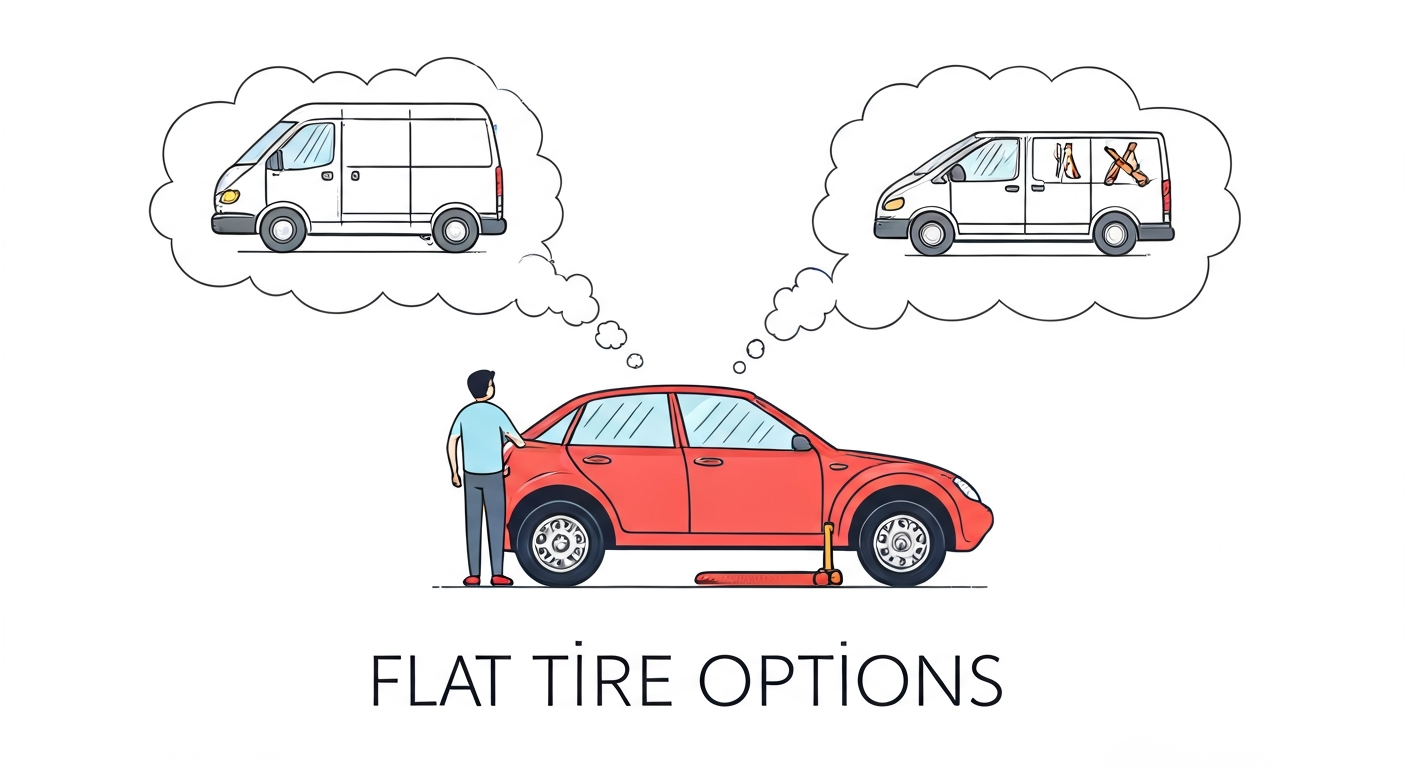
A driver contemplating options for a flat tire, with visual representations of roadside assistance arriving and tools for a DIY repair, illustrating the choice between professional help and self-service.

Choosing between roadside assistance and a DIY tyre change depends on your safety, skill level, available tools, and the specific situation. For optimal safety and convenience, especially in hazardous conditions or if you lack confidence, roadside assistance is superior. However, a DIY change offers immediate resolution and cost savings if you are prepared, skilled, and in a safe environment.

2 Found This Helpful
Read Guide
A person confidently changing a car tire on a paved road, using a lug wrench and car jack, with a spare tire ready.

To safely and efficiently change a car tyre, first ensure a safe location, apply the parking brake, and activate hazard lights. Gather your spare tyre, jack, and lug wrench. Loosen the lug nuts before jacking up the car. Lift the vehicle, remove the flat tyre, install the spare, and hand-tighten the nuts. Lower the car, then fully tighten the lug nuts in a star pattern. Drive cautiously to the nearest service centre.

15 Found This Helpful
Read Guide
A stack of old car tyres awaiting recycling, with 'TYRE RECYCLING' visible, symbolizing environmentally responsible disposal.

Properly disposing of old car tyres involves contacting local recycling centers, reputable tyre dealers, or municipal waste facilities to ensure they are processed according to environmental guidelines. Most facilities charge a small fee, which covers the cost of recycling or repurposing the rubber, preventing landfill accumulation, fire hazards, and chemical leaching that can harm ecosystems.

6 Found This Helpful
Read Guide
BroadMatters LogoBroadMatters

Clear, simple guides and everyday explanations to help you solve common problems with confidence.

Stay Updated

Get our latest guides and simple tips delivered directly to your inbox.

By joining, you agree to our Terms and Privacy Policy.

© 2026 BroadMatters Help Center. All rights reserved.

contact@broadmatters.com