
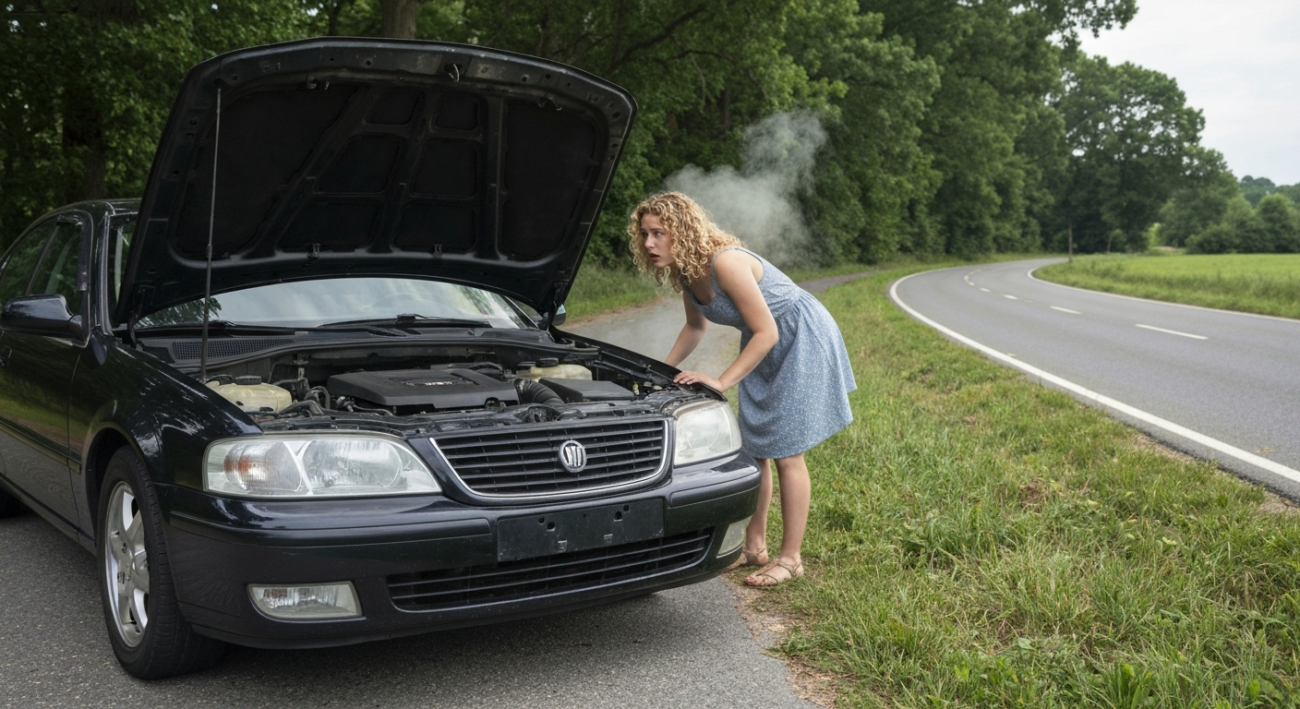
Immediate Fix: What to Do Right Now
If your engine temperature gauge is high or steam is coming from under the hood, pull over safely, turn off your engine, and let it cool down completely. This is the absolute first step when your car overheating what to do is your main concern, preventing further damage to critical engine components. Safety first!
Understanding What Happens When Your Car Is Overheating
When your car overheats, it means the engine’s operating temperature has exceeded its safe limits, signaling a critical issue with your cooling system. This isn’t just a minor inconvenience; it’s a warning sign that could lead to severe and costly engine damage if ignored. You might observe the temperature gauge climbing sharply into the red zone, or warning lights might illuminate on your dashboard. Often, one of the most visible indicators is steam or smoke billowing from under the hood. Ignoring these early signs can result in problems like a blown head gasket, warped cylinder heads, or even a cracked engine block, emphasizing why swift action is essential.
Common Reasons for Engine Overheating
- Low coolant levels, often due to leaks, evaporation, or not being topped up during routine maintenance.
- A faulty radiator that is clogged or damaged, preventing it from effectively dissipating heat from the coolant.
- A broken or weak water pump that fails to properly circulate coolant through the engine and cooling system.
- A thermostat that is stuck in the closed position, blocking the flow of coolant to the radiator.
- Clogged or collapsed radiator hoses, or a malfunctioning radiator fan that isn’t pulling enough air across the radiator.
- An engine oil leak or improper oil level, which can increase friction and heat within the engine.
- A head gasket failure, allowing hot combustion gases to leak into the cooling system or coolant to mix with oil.
Quick Actions When Your Car Is Overheating
- Turn off your air conditioning immediately. This reduces the load on the engine and helps redirect power to other critical functions.
- If you’re in traffic and must keep moving, put the car in neutral or park and gently rev the engine. This can sometimes increase water pump speed and improve coolant circulation and airflow.
- If it’s safe to do so, turn on your car’s heater to full blast with the fan on high. This uses the heater core as a mini-radiator, drawing some heat away from the engine into the passenger cabin.
- Once you’ve safely pulled over and the engine is off, absolutely do NOT open the radiator cap. The cooling system is under high pressure when hot, and opening it can cause severe steam and scalding liquid burns.
- Wait at least 30-60 minutes for the engine to cool down completely before attempting to inspect anything under the hood, especially coolant levels.
- After the engine is cool, check the coolant reservoir level. If it’s low, carefully add a 50/50 mix of coolant and distilled water. In an emergency, distilled water alone can temporarily suffice, but replace it with proper coolant as soon as possible.
Troubleshooting and More Advanced Fixes
- Inspect your radiator for any visible damage, bent fins, or blockages from debris like leaves or bugs. Ensure air can flow freely through its core for optimal cooling efficiency.
- Carefully check all radiator hoses (upper and lower) for cracks, leaks, bulges, or softness. Squeeze them gently (when cool) to feel for firmness; a soft hose might be collapsing internally.
- Test your thermostat. A simple indication of it working is observing if the upper radiator hose gets hot after the engine runs for a few minutes, indicating the thermostat has opened and allowed coolant flow.
- Listen for your radiator fan to activate when the engine gets hot. If it doesn’t spin, check its fuse, relay, or motor. A non-functional fan is a common cause of overheating, especially in stop-and-go traffic.
- Consider getting a professional cooling system flush. Over time, sediment, rust, and contaminants can build up inside the system, significantly reducing its ability to transfer heat effectively.
- If you notice persistent white smoke from the exhaust, a milky appearance in your engine oil, or inexplicable coolant loss, you might have a blown head gasket. This requires immediate professional diagnosis and repair.
Vehicle-Specific Considerations
- Some modern cars feature electric water pumps and highly complex cooling system designs, which may require specific diagnostic tools and expertise for proper troubleshooting and repair.
- Older vehicles are generally more susceptible to component degradation, such as hose hardening, radiator corrosion, and worn water pump bearings, necessitating more frequent preventative checks.
- Hybrid vehicles often incorporate separate, intricate cooling systems for their high-voltage battery packs and electric motors; overheating can impact these specialized components as well.
- High-performance and turbocharged vehicles generate significantly more heat, often requiring enhanced cooling systems, specific coolant formulations, and more rigorous maintenance schedules.
- Diesel engines operate differently and often have more robust cooling systems, but they can still overheat due to similar issues, sometimes complicated by additional systems like exhaust gas recirculation (EGR) coolers.
When Professional Help is Essential
- If the temperature gauge quickly rises to the red zone again after you’ve allowed the car to cool and refilled the coolant.
- If you discover visible coolant leaks that are significant, difficult to locate, or beyond your immediate ability to fix safely.
- If you notice thick smoke from the engine (not just steam), a distinct burning smell, or any unusual knocking noises.
- If your car consistently overheats despite your attempts at basic troubleshooting and quick fixes.
- If you suspect a major component failure such as a water pump, radiator, or internal engine issue like a blown head gasket.
- Any time you feel unsafe continuing to drive your vehicle, or if you are unsure about the underlying cause of the overheating, it’s always best to call for a tow and a professional inspection.
Driving Confidently After a Fix
Once the root cause of your car’s overheating has been correctly identified and fixed, and your cooling system is operating as it should, you can expect smooth and reliable performance. Your temperature gauge should consistently remain within its normal operating range, and you won’t encounter any alarming warning lights or steam. Remember, regular preventative maintenance is your best defense against future issues. This includes routinely checking your coolant levels, inspecting hoses for wear, and ensuring all cooling system components are in good working order. Understanding basic car maintenance can significantly reduce the likelihood of many common car problems. It’s also incredibly wise to understand the risks of low coolant to prevent serious and expensive engine damage down the road.
