
Quick Answer
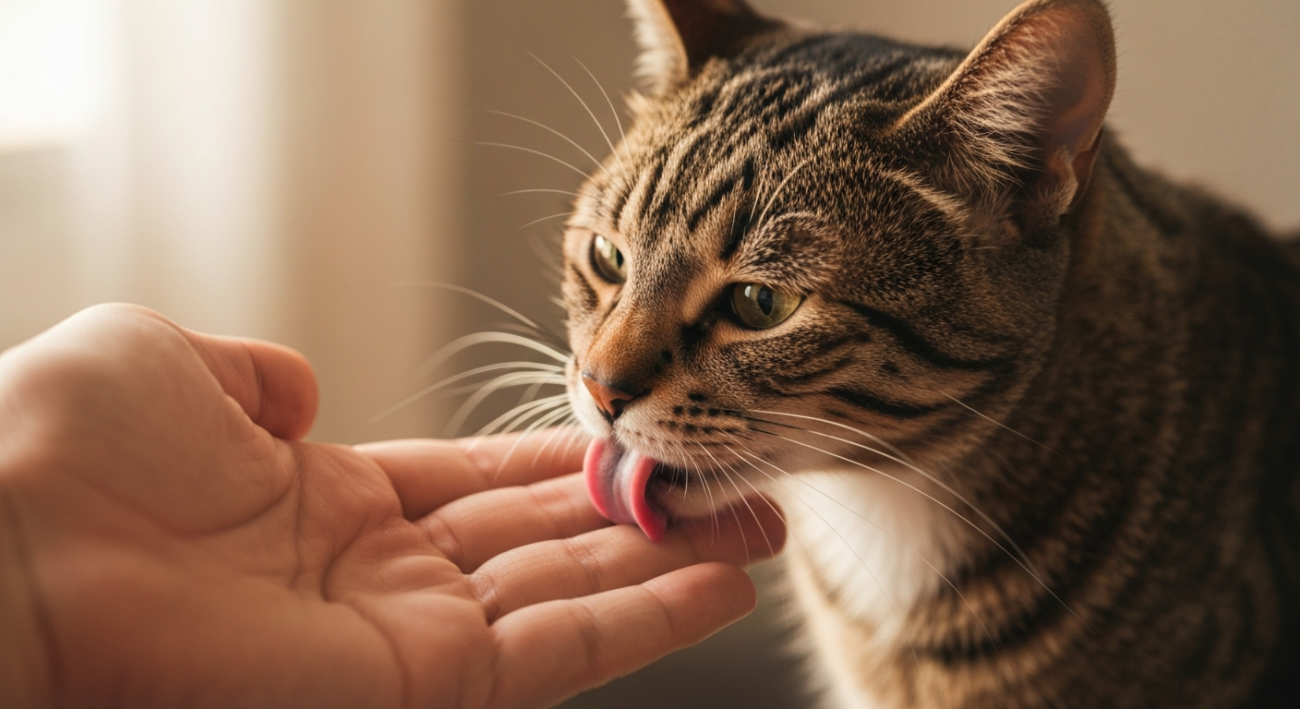
When your cat licks you, it’s often a sign of affection, treating you like a member of their own family group. They might also be grooming you, marking you with their scent, or seeking comfort.
What Is It?
Your cat’s licking isn’t just a random act; it’s a complex and instinctual behavior with several meanings. For starters, it’s a powerful bonding tool. Cats perform ‘allogrooming’ on each other, which means mutual grooming, as a way to show affection and strengthen social ties within their colony. When they lick you, they’re essentially doing the same thing, welcoming you into their inner circle and showing you trust. Beyond affection, just as understanding why dogs eat grass gives insight into canine behavior, deciphering why cats lick can reveal a lot about your feline friend’s emotional state and physical needs. It can also be a way for them to spread their scent, marking you as part of their territory or family, a subtle declaration that you belong to them. This behavior helps maintain a secure and familiar environment for them.
Key Takeaways
Affection and Bonding
Cats often lick to show love and treat you as a trusted member of their social group, much like they would groom another cat in their family.
Grooming and Scent Marking
Licking is a form of grooming. Your cat might be ‘grooming’ you or depositing their scent to mark you as part of their territory or family.
Why It Matters
- Understanding why cats lick helps strengthen your bond with your pet.
- Recognizing the meaning of licking allows you to better respond to your cat’s needs.
- It helps you differentiate between normal affectionate behavior and potential signs of stress or medical issues.
- Knowing this behavior can deepen your appreciation for your cat’s unique communication style.
How to Fix It
- Enjoy the moment and return the affection with gentle pets or soft words.
- Observe other body language cues alongside the licking to understand the full context.
- If the licking becomes too rough or persistent, gently redirect their attention with a toy or by moving your hand.
- Ensure your hands are clean and free of strong scents that might encourage over-licking.
Extra Tips
- Pay attention to the specific situations when your cat licks you to identify patterns.
- If the licking is accompanied by purring and kneading, it’s a strong sign of contentment and affection.
- Offer a quiet, safe space where your cat can feel secure, reducing any potential anxiety that might lead to excessive self-licking.
- Consider interactive play sessions to help your cat expend energy and reduce any stress.
When You Should Worry
- If your cat suddenly starts licking excessively, either themselves or you, especially if it leads to skin irritation or bald patches.
- When licking is accompanied by other unusual behaviors like hiding, aggression, or a change in appetite.
- If the licking seems compulsive or frantic, as this could indicate stress, anxiety, or an underlying medical condition.
- When licking is focused on a specific spot on their body, suggesting pain or discomfort in that area.
Summary
Understanding why cats lick us is key to building a stronger relationship with our feline companions. This behavior is usually a sign of deep affection, a form of social bonding, or even their way of scent-marking you as part of their trusted family. By paying attention to the context and your cat’s other behaviors, you can better interpret their loving gestures and respond in ways that reinforce your special bond. While often harmless, a sudden change or excessive licking could signal an underlying issue, so it’s always good to be observant.
