
Simple Definition
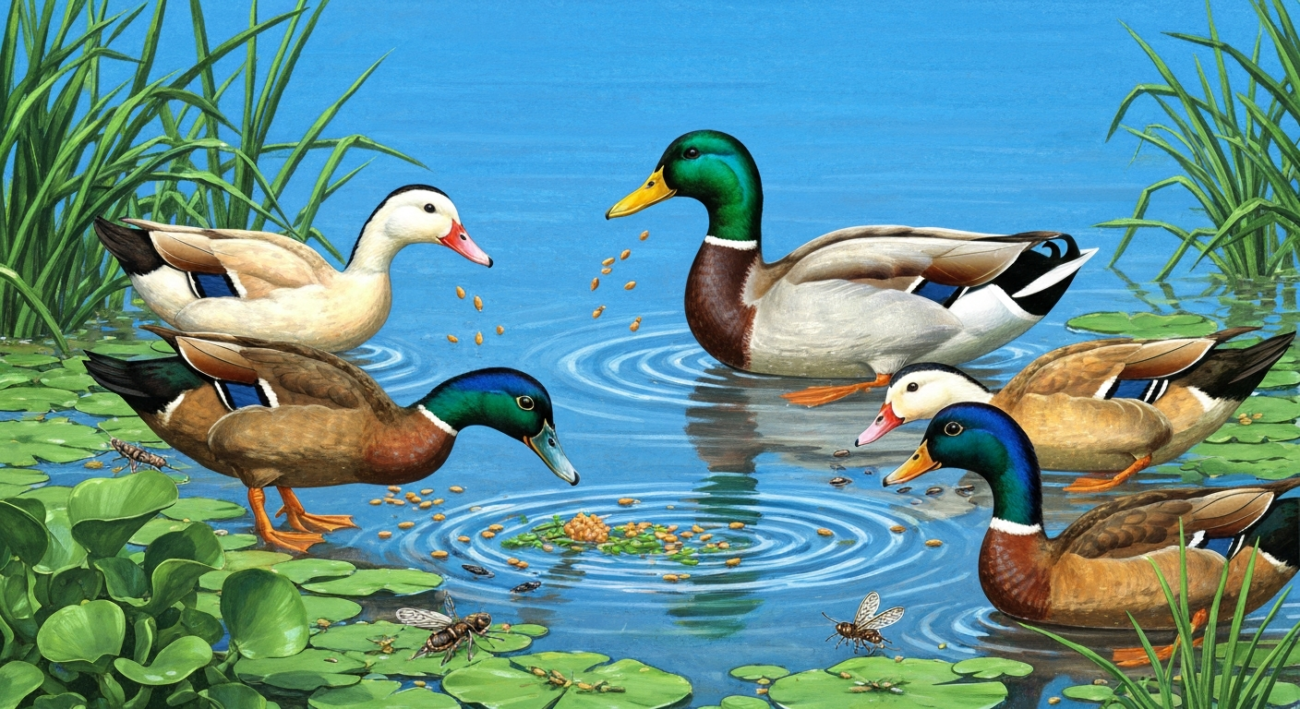
Ducks are omnivorous birds that consume a diverse diet of aquatic plants, small invertebrates, seeds, grains, and sometimes small fish, depending on their species and habitat.
Easy Explanation
Simply put, ducks aren’t picky eaters! They will eat a wide range of things they find in their environment. This includes everything from plants and seeds to bugs and tiny fish. What do ducks eat really depends on where they live and what’s available to them.
History and Origin
Ducks have evolved over millions of years as highly adaptable waterfowl. Their feeding habits are deeply rooted in their aquatic and semi-aquatic habitats. Early ducks likely foraged for aquatic vegetation and small invertebrates, developing their characteristic dabbling and diving techniques to access food sources in water. Their digestive systems are robust, allowing them to process a varied diet, a trait that has ensured their survival across diverse ecosystems worldwide.
Key Terms
Dabbling: A feeding technique where ducks tip their bodies forward, keeping their tails in the air, to reach food just below the water’s surface without fully submerging.
Foraging: The act of searching for and obtaining food.
Invertebrates: Animals without a backbone, such as insects, worms, and snails.
How It Works
- Ducks use their specialized bills to sift through water or mud, filtering out small food items. Their bills often have lamellae, which are small comb-like structures.
- Many ducks, known as dabblers, tip their bodies upside down to reach submerged plants and insects without diving completely.
- Other duck species are divers. They can go completely underwater to chase fish or pull up roots and tubers from the bottom.
- On land, ducks will graze on grass, clover, and other greens. They also peck at seeds and grains they find on the ground.
- Their digestive system processes a mix of plant matter and protein from insects and other small animals.
Real-Life Example
Imagine a group of mallard ducks in a local pond. You might see them ‘dabbling,’ with their heads underwater and their tails up in the air, sifting through the mud for aquatic plants, seeds, and small insects like mosquito larvae. Later, they might waddle onto the grass nearby to graze on fresh clover or pick up spilled grains from a bird feeder. This shows just how varied what do ducks eat can be.
Why It Matters
Understanding what do ducks eat is crucial for their health and the ecosystem. Feeding ducks the wrong foods, like bread, can lead to malnutrition, ‘angel wing’ deformity, and water pollution. Knowing their natural diet helps us protect them and their habitats. It ensures they get the proper nutrition they need to thrive and contributes to the overall health of wetlands and waterways.
Broader Implications
The dietary habits of ducks have broader implications for wetland ecosystems. By consuming algae, aquatic plants, and insect larvae, ducks help control populations and maintain water quality. Changes in their food sources due to pollution or habitat loss can impact entire food webs. Human intervention, particularly improper feeding, can alter natural foraging behaviors and lead to dependence on unsuitable foods, affecting their long-term survival and migration patterns. Promoting natural food sources and educating the public on what do ducks eat correctly are vital for conservation.
Common Myths
- Myth: Ducks should be fed bread. Reality: Bread offers no nutritional value to ducks and can lead to serious health issues like ‘angel wing’ and malnutrition. It also pollutes water.
- Myth: Ducks only eat plants. Reality: While plants are a big part of their diet, ducks are omnivores and also consume a variety of insects, worms, small fish, and other animal matter.
- Myth: All ducks eat the same thing. Reality: Different duck species have varying diets based on their habitat and bill structure. A diving duck’s diet differs from a dabbling duck’s diet.
Quick Quiz
Question: What is the primary reason why feeding bread to ducks is harmful?
Answer: Bread has very little nutritional value and can cause health problems like malnutrition and ‘angel wing’ in ducks.
Summary
In summary, what do ducks eat is a fascinating and varied list. Ducks are adaptable omnivores, thriving on a diverse diet of aquatic plants, seeds, insects, and small invertebrates. Understanding their natural diet is key to ensuring their health and preserving the ecosystems they inhabit. Always choose natural, healthy alternatives like cracked corn, oats, or defrosted peas if you wish to feed them, and avoid bread entirely.
