
Simple Definition
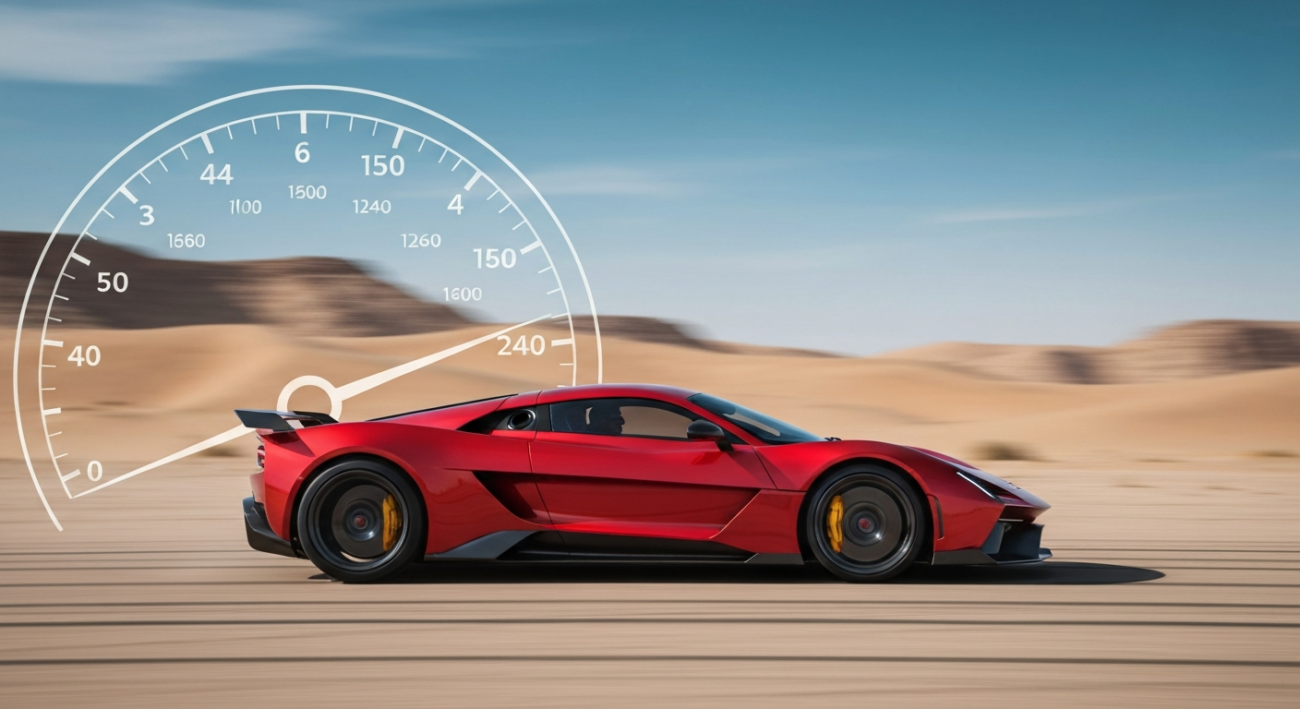
The fastest car in the world refers to the production vehicle officially recognized for achieving the highest verified top speed, often under specific, controlled conditions.
Easy Explanation
Imagine a car built purely for speed, pushing the limits of engineering to go faster than any other vehicle. That’s essentially what we mean by the fastest car in the world. It’s not just about raw power; it also involves incredible design, lightweight materials, and advanced aerodynamics all working together to conquer air resistance and friction. These cars, often called hypercars, represent the pinnacle of automotive performance, constantly challenging what’s possible and redefining the boundaries of velocity.
History and Origin
The relentless quest for the fastest car began almost as soon as cars were invented. Early speed records were initially set by steam and electric vehicles before internal combustion engines fully dominated. In the early 20th century, racing and land speed records became a significant part of automotive development, capturing the public’s imagination. Over many decades, legendary brands like Bugatti, McLaren, and Koenigsegg have pushed the boundaries, turning theoretical maximums into tangible achievements. The distinction between a ‘production car’ record and a pure ‘land speed record’ (set by purpose-built, non-commercial vehicles) became important. Today, when we talk about the fastest car in the world, we are typically referring to a vehicle that can be purchased by the public, albeit in extremely limited numbers. Each new record often follows breakthroughs in engine technology, material science, and aerodynamic design, driven by a continuous and almost obsessive pursuit of speed.
Key Terms
Top Speed: The maximum velocity a vehicle can achieve, usually measured in kilometers per hour (km/h) or miles per hour (mph), often independently verified.
Aerodynamics: The study of how air interacts with a moving object, which is crucial for designing fast cars to minimize drag and maximize stability at high velocities.
Horsepower (HP): A unit of power that indicates an engine’s ability to perform work, directly influencing a car’s acceleration capabilities and ultimate top speed.
Power-to-Weight Ratio: A key measure of a vehicle’s performance, calculated by dividing its power output by its total weight; a higher ratio generally signifies superior acceleration and top speed potential.
How It Works
- Massive Power Output: The fastest car in the world boasts engines with extraordinary horsepower, often exceeding 1,000 HP. These are typically highly tuned multi-cylinder engines (like V8, V12, or even W16 configurations), sometimes augmented with hybrid electric powertrains for immediate, immense torque.
- Advanced Aerodynamics: Designers meticulously sculpt the car’s body to slice through the air with minimal resistance. This involves smooth, unbroken surfaces, innovative diffusers, active spoilers, and optimized undertrays that precisely manage airflow to significantly reduce drag and generate essential downforce for stability at extreme speeds.
- Lightweight Construction: To maximize the crucial power-to-weight ratio, extensive use of lightweight, high-strength materials such as carbon fiber, titanium, and advanced aluminum alloys is standard. This reduces the car’s inertia, allowing it to accelerate more rapidly and maintain higher top speeds with greater efficiency.
- Specialized Tires: Custom-developed tires are absolutely essential. They must be engineered to withstand immense centrifugal forces, extreme temperatures, and provide unwavering grip at speeds far beyond typical road usage. These tires are often bespoke, specific to the car model, and undergo rigorous testing.
- Optimized Gearing: The transmission systems are precisely engineered with specific gear ratios. This ensures the engine operates efficiently at its peak power output during its highest speeds, translating every bit of available power into forward motion and sustained velocity.
- Precision Engineering: Every single component, from the braking system to the suspension, is engineered with extreme precision. This meticulous attention to detail ensures they can reliably handle the immense stresses of high-speed travel, guaranteeing both performance and critical safety.
Real-Life Example
For many years, the Bugatti Veyron and later the Bugatti Chiron were synonymous with the title of the fastest car in the world. The original Veyron was groundbreaking, breaking the 400 km/h (250 mph) barrier. Then came the Bugatti Chiron Super Sport 300+, which achieved an astonishing feat by becoming the first production car to officially exceed 300 mph, hitting 304.77 mph (490.48 km/h) in a one-way run. Currently, contenders like the Koenigsegg Jesko Absolut claim a theoretical top speed even higher, potentially surpassing 330 mph. Other significant players, such as the SSC Tuatara, have also made headlines with their own record attempts and achievements. It’s a continuous battle among elite manufacturers, constantly pushing the envelope, which means the specific car holding the title of the fastest car in the world can change frequently as new innovations emerge.
Why It Matters
The pursuit of the fastest car in the world is far more than just chasing bragging rights; it serves as a critical crucible for automotive innovation. Engineers are pushed to break new ground in engine design, material science, aerodynamics, and tire technology. These groundbreaking advancements often trickle down to more conventional cars, ultimately leading to safer, more efficient, and better-performing vehicles for everyone on the road. This intense competition also serves to inspire future generations of engineers and designers, showcasing the incredible potential of human ingenuity and mechanical prowess. Developing the fastest car helps drive forward the entire automotive industry, setting new benchmarks for what is technologically achievable.
Broader Implications
The future of the fastest car in the world is likely to be significantly influenced by electric or hybrid powertrains. As battery technology rapidly advances and electric motors offer instant, immense torque and incredible power delivery, electric hypercars are already setting impressive acceleration records. The pursuit of top speed will undoubtedly continue, but with a heightened emphasis on sustainability, energy efficiency, and innovative power sources. We can anticipate even more sophisticated active aerodynamic systems, artificial intelligence optimizing vehicle performance in real-time, and groundbreaking new materials that redefine weight and strength. The focus might also broaden beyond pure straight-line speed to encompass overall track performance or even new forms of advanced personal mobility. Technologies developed for these extreme machines could find applications in aerospace or other high-performance sectors, constantly pushing the boundaries of what’s possible. The competition remains fierce, promising even more astounding feats of engineering and speed.
Common Myths
- Myth: The fastest car is always the most expensive. Reality: While top-speed cars are indeed incredibly expensive, cost isn’t the sole or primary determinant. Engineering prowess and speed are the core goals, though high costs are a natural consequence of the advanced technology.
- Myth: It’s just about having the biggest engine. Reality: Engine size and raw power are vital, but aerodynamics, extensive weight reduction, specialized tire technology, and advanced transmissions are equally critical for achieving and sustaining extreme top speeds.
- Myth: Anyone can easily drive the fastest car. Reality: Controlling a car at speeds exceeding 200 mph requires exceptional skill, extensive training, and highly specialized driving techniques. It is a supremely demanding task for even the most experienced professional drivers.
- Myth: These cars are practical for daily driving. Reality: While often street-legal, the fastest cars are unequivocally designed for peak performance, not practicality. They typically feature stiff suspensions, limited visibility, and consume fuel at an astonishing rate, making them highly unsuitable for everyday commutes.
Quick Quiz
Question: Which crucial factor, besides powerful engines, allows a car to achieve extremely high top speeds?
Answer: Advanced aerodynamics (or lightweight construction, specialized tires, optimized gearing).
Summary
The fastest car in the world represents the pinnacle of automotive engineering, a relentless pursuit of speed driven by continuous innovation in power, aerodynamics, and materials. It’s a title constantly contended by elite hypercars from manufacturers like Bugatti, Koenigsegg, and SSC, pushing boundaries far beyond conventional limits. This quest for ultimate velocity not only breaks world records but also drives significant technological advancements that ultimately benefit the broader automotive industry, profoundly shaping the future of transportation and performance.
