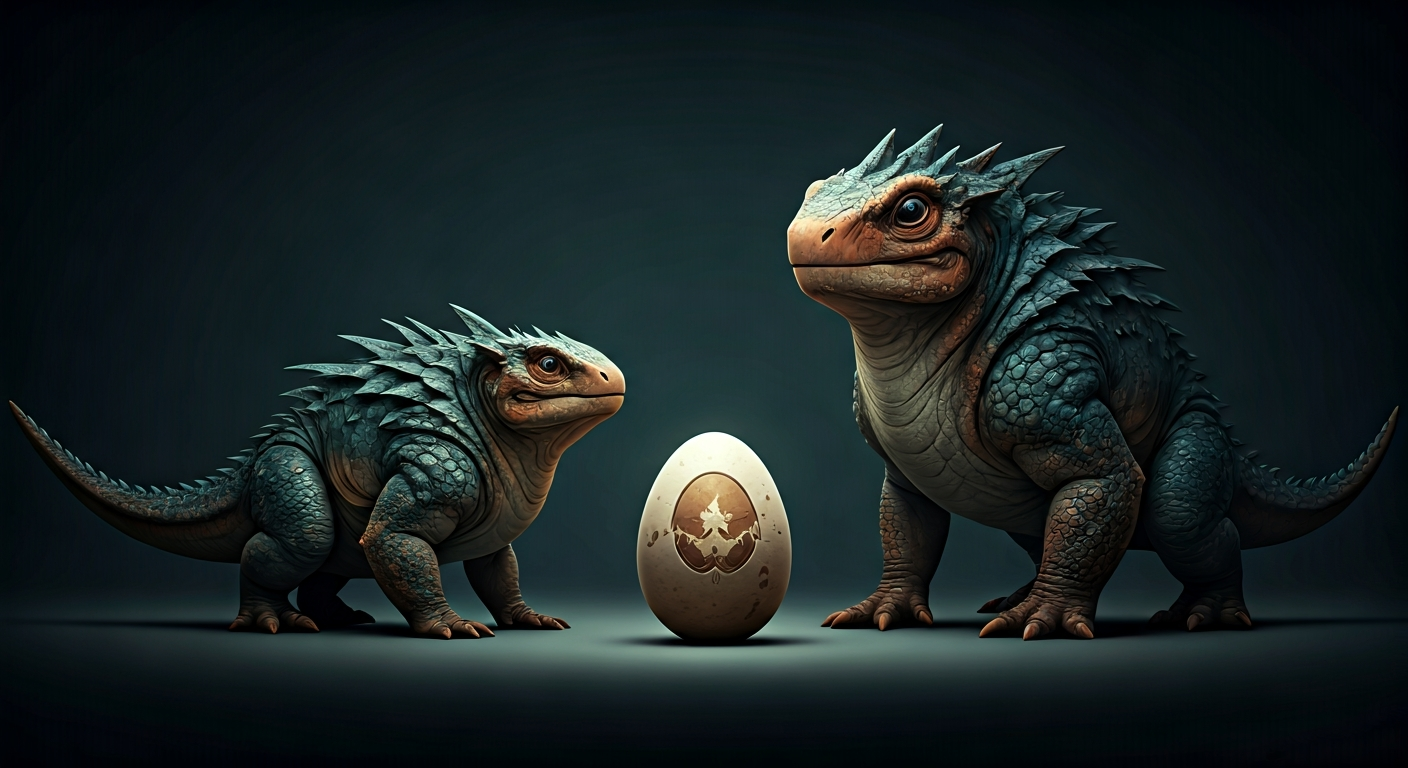
Two distinct Palworld creatures, one large and one small, standing near a glowing egg, illustrating the concept of Palworld breeding groups.

Understanding Palworld Egg Groups and How They Impact Breeding

A
Ali Hassan
Writer
The Answer
In Palworld, 'Egg Groups' functionally categorize Pals based on physical characteristics and dictate breeding compatibility. Pals must belong to the same functional egg group to produce offspring, though the specific names of these groups are not explicitly displayed in-game. Understanding these compatibility rules is crucial for strategic breeding, allowing players to plan pairings to inherit desired passive skills or create specific powerful Pal combinations.
Breeding in Palworld is a cornerstone mechanic for acquiring Pals with optimal stats and passive skills, crucial for both combat and base management. At the heart of this system lies a hidden but fundamental principle: Pal breeding compatibility, often referred to by the community as 'Egg Groups.' While the game doesn't explicitly label Pals into named 'Egg Groups' like some other creature-collecting games, the underlying mechanics group Pals by their physical size, body type, and other inherent traits, determining which species can successfully produce an egg together. Mastering this system allows players to move beyond random pairings to a calculated approach, unlocking powerful Pal combinations and streamlining the acquisition of rare traits. This guide will demystify these functional 'Egg Groups,' explain how they govern breeding, and provide practical strategies for leveraging them to your advantage.

What Are Palworld 'Egg Groups' and Why Do They Matter for Breeding?

In Palworld, 'Egg Groups' refer to the invisible classification system that dictates which Pals are compatible for breeding. Unlike some creature-collecting games where explicit group names are shown, Palworld uses a more implicit system based on the physical characteristics and perceived 'types' of Pals. Essentially, two Pals can only breed if they fall into the same functional egg group. This fundamental rule is the first and most critical gatekeeper in the breeding process, preceding considerations of gender or specific passive skills.
The importance of these functional egg groups cannot be overstated. Without understanding this compatibility layer, players might attempt countless pairings that will yield no results, leading to frustration and wasted resources. For example, a tiny Chikipi will never be able to breed with a colossal Jormuntide, not because of their size difference per se, but because they belong to entirely different compatibility categories. Recognizing these categories is the first step toward successful and efficient Pal breeding, allowing you to correctly identify potential breeding partners from your roster.
By grasping the concept of Palworld's functional egg groups, you gain the ability to intelligently plan your breeding farm operations. This knowledge is not just about avoiding incompatible pairs; it's about proactively identifying which Pals can cross-breed to produce offspring with combined strengths or to unlock specific rare Pals. This foundational understanding ties directly into broader breeding strategies, as detailed in our guide on Palworld breeding mechanics explained, which delves deeper into the entire breeding process.

How Functional Egg Groups Determine Pal Breeding Compatibility

The core principle is straightforward: for two Pals to produce an egg, they must both be male and female, and they must share the same 'functional egg group.' This group is not a named entity you see in the Paldeck; instead, it's an observed compatibility based on their in-game models, sizes, and general biology. For instance, most smaller, bipedal Pals tend to belong to one group, while larger, quadrupedal Pals belong to another. This ensures that only biologically sensible (within the game's context) pairings are possible, maintaining a logical consistency in the Palworld ecosystem.
While most breeding combinations involve two Pals from the same functional group, there are often some 'universal' or 'wildcard' Pals within certain groups that can breed with a surprisingly wide range of others within their own category, extending their utility. However, these are still bound by the overarching functional group system. The outcome of a breeding pair is determined by a specific formula applied to the parent Pals, but the very first check is always for compatibility through these groups. If they don't match, no egg will ever be produced, regardless of the parents' levels, species, or passive skills.
Understanding this rule allows players to optimize their breeding efforts. Instead of trial-and-error, you can consult community-generated compatibility charts or guides that categorize Pals into these functional groups. This enables you to systematically search for parents that not only share an egg group but also possess the desired passive skills or elemental types you wish to pass down to the offspring. For a deeper dive into the specific outcomes of different Pal pairings, our resource on Palworld breeding calculator guide offers invaluable tools and insights.

Observed Palworld Breeding Compatibility Categories (Functional 'Egg Groups')

Functional CategoryCharacteristicsExample Pals (Not Exhaustive)
Small Bipedal / MammalianTypically small to medium-sized, often bipedal or resembling small mammals. Very common and versatile.Cattiva, Chikipi, Lamball, Foxparks, Lifmunk, Pengullet
Medium Bipedal / HumanoidMedium-sized, often bipedal with human-like or monster-like forms. Includes many combat-oriented Pals.Bushi, Penking, Suzaku, Anubis, Relaxaurus, Mozzarina
Large Quadrupedal / BeastialLarger, often four-legged, beast-like Pals. Many mounts and resource gatherers fall here.Eikthyrdeer, Mammorest, Vanwyrm, Blazamut, Incineram, Reindrix
Aquatic / Serpent-likePals often associated with water, or having long, serpentine bodies. Can be diverse in size.Azurobe, Jormuntide, Felbat, Surfent, Relaxaurus Lux
Flying / AvianPals with wings, capable of flight, often bird-like or draconic in appearance.Nitewing, Ragnahawk, Faleris, Vanwyrm Cryst, Galeclaw

Strategic Breeding: Leveraging Egg Groups for Desired Offspring

1

Step 1: Identify Your Target Pal

Before breeding, decide which Pal you want to create or which specific passive skills you aim to combine. This target determines your parent selection. For instance, if you want a faster mount, you'll look for Pals that can breed a mountable Pal and have speed-boosting passive skills.
2

Step 2: Determine Its Functional Egg Group

Consult community breeding charts or trusted Palworld wikis (like Palworld Wiki) to find the functional egg group of your target Pal. This is crucial for narrowing down potential parents. If the target Pal isn't listed, look up Pals with similar physical traits.
3

Step 3: Select Compatible Parent Pals

Choose two Pals (one male, one female) from your current roster that belong to the same functional egg group as your target, or that are known to breed together to produce your target. Prioritize parents that already possess desired passive skills, even if they are 'negative' skills you plan to breed out.
4

Step 4: Optimize Parent Passive Skills

Once you have compatible parents, begin a process of iterative breeding. Breed them to pass down desired passive skills. For example, if you want 'Lucky' and 'Ferocious' on your offspring, you'll need parents with those skills, or breed up to parents that collectively have them. Remember that passive skills are inherited randomly from the parents' available pool.
5

Step 5: Prepare Your Breeding Farm

Ensure you have a functioning Breeding Farm with a hot spring for your Pals' sanity and a feed box filled with Cake. Cake is the essential item consumed during the breeding process. Place your chosen male and female Pals into the breeding farm.
6

Step 6: Monitor and Hatch Eggs

Pals will automatically begin breeding if they are compatible and Cake is available. Once an egg is produced, take it to an Egg Incubator to hatch. The time required for incubation varies based on the egg type and incubator settings. Repeat the process with the offspring if further skill refinement is needed.
7

Step 7: Utilize Breeding Calculators for Advanced Planning

For complex combinations or to discover all possible offspring from a pair, use an external Palworld breeding calculator. These tools can quickly tell you the exact offspring for any compatible pair, saving you time and resources. Our guide on the Palworld breeding calculator guide provides an in-depth look at how to use these invaluable resources.

Troubleshooting Palworld Breeding: Common Issues and Solutions

Even with a solid understanding of 'Egg Groups,' players can encounter issues during breeding. The most common problem is Pals simply not breeding. This often boils down to a few critical factors beyond compatibility. First, always double-check the gender of your Pals; you need one male and one female. It sounds obvious, but in the heat of catching and managing many Pals, this can be easily overlooked. If both Pals are of the same gender, no breeding will occur, regardless of their compatibility.
Another frequent cause is the lack of Cake. Breeding consumes one Cake per egg. If your feed box within the breeding farm is empty or lacks Cake, the breeding process will halt. Ensure you have a steady supply of ingredients (Flour, Red Berries, Milk, Egg, Honey) and Pals assigned to cooking to keep the Cake production flowing. Pal Sanity (or 'Satiety') also plays a role; ensure your Pals in the breeding farm have access to a Hot Spring to maintain their mood and prevent them from becoming stressed, which can disrupt their work.
Lastly, sometimes Pals can get 'stuck' or confused within the breeding farm's boundaries. If all other conditions are met (compatible Pals, correct genders, Cake available, good Sanity) and they're still not breeding, try picking them up and placing them down again in the breeding pen. Occasionally, simply exiting and re-entering the area, or even restarting the game, can resolve minor pathing glitches. If you're struggling to produce specific combinations, consider consulting our guide on best Palworld breeding combos for proven successful pairings.

Key Terms in Palworld Breeding

Functional Egg Group
An invisible categorization system in Palworld that groups Pals by physical characteristics, determining which pairs are compatible for breeding. Pals must belong to the same functional egg group to produce an egg.
Parent Pal
Any Pal used in the breeding process. Two parent Pals (one male, one female) are required to produce an offspring egg.
Offspring
The Pal that hatches from an egg produced by two parent Pals. Offspring inherit aspects like passive skills from their parents.
Passive Skill
Special abilities or traits that Pals possess, which can be positive (e.g., 'Ferocious,' 'Swift') or negative (e.g., 'Slacker,' 'Coward'). These can be passed down through breeding.
IVs (Individual Values)
Hidden stats for each Pal that represent their inherent potential in HP, Attack, and Defense. While not explicitly shown, they are present and can be optimized through breeding, often alongside passive skills.
Breeding Farm
A base structure in Palworld where two compatible Pals (one male, one female) can be assigned to produce eggs, provided Cake is available.
Cake
A cooked food item essential for Pal breeding. One Cake is consumed for each egg produced in a Breeding Farm.

Summary: Mastering Palworld Breeding Through Egg Group Understanding

Key Takeaways

  • Palworld's breeding system relies on hidden 'functional egg groups' that categorize Pals by their physical traits and determine breeding compatibility.
  • Two Pals (one male, one female) must belong to the same functional egg group to successfully produce an egg; incompatibility means no breeding will occur.
  • Understanding these compatibility categories is the foundational step for strategic breeding, enabling players to plan pairings for specific offspring or desired passive skills.
  • Community-generated charts and online wikis are invaluable resources for identifying these functional egg groups and compatible breeding pairs.
  • Beyond egg groups, successful breeding also requires a male and female pair, sufficient Cake in the Breeding Farm's feed box, and maintaining the Pals' Sanity with structures like Hot Springs.
  • Leveraging this knowledge allows for efficient acquisition of powerful Pals with optimized passive skills, greatly enhancing gameplay in both combat and base management.

Frequently Asked Questions About Palworld Egg Groups and Breeding

Was this guide helpful?

Your feedback helps our writers improve this help center.

Helpful for 20 readers

About the Author

A
Ali Hassan
Expert Author
Writer

"Professional writer."

Related Guides

See All Topics
Two Pals, a male and a female, standing near a glowing egg in a high-tech incubator within a Palworld-themed setting, with 'PALWORLD BREEDING' text.

Palworld breeding combines inherited passive skills and Individual Values (IVs) from parent Pals to create offspring. Passive skills have a 70% chance of passing from either parent, or a 30% chance of appearing randomly. IVs, representing inherent stats, are inherited within a range derived from the parents' IVs. Successful breeding also depends on compatible <a href="https://broadmatters.com/palworld-egg-groups-explained">Palworld Egg Groups</a>.
10 Found This Helpful
Read Guide
A male and female Pal stand next to each other inside a Palworld Breeding Farm, with the text 'BREEDING FIXES' overlaid, symbolizing solutions to common breeding problems.

To troubleshoot Palworld breeding issues, ensure your Breeding Farm is correctly placed and includes both a male and female Pal of the desired species. Crucially, place at least one Cake in the farm's feed box. Verify Pals are assigned to the farm, have high Sanity, and are not suffering from pathing issues. Restarting your game and relocating the farm can also resolve persistent glitches.

7 Found This Helpful
Read Guide
A scenic Palworld breeding farm at sunset, featuring a glowing Pal egg and two majestic parent Pals standing near a heart-shaped icon, with 'Palworld Breeding Guide' text.

To acquire rare and powerful Pals in Palworld, strategic breeding is essential. Focus on combining specific parent Pals known to produce highly desirable offspring, such as Bushi and Penking for Anubis, or Relaxaurus and Sparkit for Orserk. Prioritize parents with beneficial passive skills like 'Legend', 'Ferocious', or 'Workaholic' to pass down superior traits, significantly enhancing your resulting Pal's combat effectiveness or base utility.

12 Found This Helpful
Read Guide
BroadMatters LogoBroadMatters

Clear, simple guides and everyday explanations to help you solve common problems with confidence.

Stay Updated

Get our latest guides and simple tips delivered directly to your inbox.

By joining, you agree to our Terms and Privacy Policy.

© 2026 BroadMatters Help Center. All rights reserved.

contact@broadmatters.com