Two Pals, a male and a female, standing near a glowing egg in a high-tech incubator within a Palworld-themed setting, with 'PALWORLD BREEDING' text.

Palworld Breeding Mechanics Explained: Understanding Genes, Traits, and Offspring

A
Ali Hassan
Writer
The Answer
Palworld breeding combines inherited passive skills and Individual Values (IVs) from parent Pals to create offspring. Passive skills have a 70% chance of passing from either parent, or a 30% chance of appearing randomly. IVs, representing inherent stats, are inherited within a range derived from the parents' IVs. Successful breeding also depends on compatible Palworld Egg Groups.
Breeding in Palworld is a crucial and complex system that allows players to optimize their Pals for combat, base work, and exploration. Far beyond simply combining two Pals to get an egg, understanding the underlying genetic mechanics—how passive skills (traits) and Individual Values (IVs) are inherited—is essential for creating truly powerful and efficient offspring. This guide demystifies the process, explaining the probabilities, stat transfers, and compatibility rules that govern Pal reproduction. Mastering these mechanics not only saves time and resources but also unlocks the full potential of your Pal collection, transforming random chance into calculated genetic engineering. By grasping these principles, players can confidently pursue specific builds, troubleshoot issues, and elevate their Palworld experience.

The Fundamentals of Palworld Genetic Inheritance

At its core, Palworld's breeding system is a sophisticated genetic lottery where the offspring inherits characteristics from its two parents. The primary goals of breeding typically revolve around acquiring specific passive skills, known as traits, and optimizing the hidden Individual Values (IVs) that dictate a Pal's base stats. While the process itself involves placing two compatible Pals in a Breeding Farm, the outcome is governed by precise probabilities and rules for skill and stat transfer.
When an egg is produced, the game calculates which passive skills will be inherited and what range of IVs the new Pal will possess. This inheritance system is what makes breeding a powerful tool for customization and optimization, but it also introduces an element of randomness that players must learn to manage. Understanding these core mechanics is the first step towards consistent and successful breeding outcomes, moving beyond mere chance to strategic selection and pairing.
Effective breeding requires careful selection of parent Pals based on their existing passive skills and, for advanced breeders, their underlying IVs. It's not just about combining any two Pals; it's about making informed decisions to increase the likelihood of getting the desired traits and statistical advantages in the offspring. This strategic approach is what differentiates casual breeders from those who consistently produce top-tier Pals.

How Passive Skills (Traits) Are Inherited

Passive skills are special abilities that provide stat bonuses or unique effects, such as 'Swift' for increased movement speed or 'Artisan' for enhanced work speed. Each Pal can have up to four passive skills. When breeding, the game assesses the passive skills of both parent Pals to determine what the offspring will inherit. This process involves specific probabilities that players can leverage to their advantage.
For each passive skill slot on the offspring, the game decides its trait based on the parents' skills. There is roughly a 70% chance for a passive skill from either parent to be passed down. This means if both parents share a desirable trait, the offspring has a very high chance of inheriting it. Conversely, if only one parent has a specific trait, there's a good chance it will pass, but it's not guaranteed. The remaining 30% allows for the possibility of a completely random passive skill appearing, including those not present on either parent. This random factor can sometimes yield unexpected, yet valuable, traits.
It's crucial to understand the distinction between positive and negative passive skills. While positive skills boost a Pal's performance, negative skills (like 'Slacker' or 'Downtime Slave') can hinder it. The inheritance probabilities apply equally to both. Therefore, carefully selecting parents that have only desirable traits, or at least a minimal number of negative traits, significantly improves the quality of your offspring. For a deeper dive into optimizing this process, refer to our guide on Breeding for Specific Passive Skills in Palworld.

How Pal IVs are Inherited During Breeding

Unlike passive skills, IVs are not passed down with a simple percentage chance but through a more nuanced system that aims for an average or better. For each stat (HP, Attack, Defense), the offspring's IV will fall within a specific range determined by the parents' IVs. Specifically, the offspring has a chance to inherit one of the parents' IVs directly, or it can receive an IV that is an average of the two parents' IVs, plus or minus a small random deviation.
This means that if both parents have high IVs in a particular stat, the offspring is highly likely to inherit a high IV in that stat as well. Conversely, if parents have low IVs, the offspring will likely have low IVs. This system allows for gradual improvement of IVs over generations, as players can selectively breed Pals with progressively higher stats. The ultimate goal is often to produce Pals with 100 IVs in their most critical stats.
While direct inheritance of a parent's IV is possible, the 'average plus deviation' method helps in improving overall IV distribution. This mechanism is what enables players to 'stack' good IVs over time, even if individual parents aren't perfect. For example, if Parent A has 80 Attack IV and Parent B has 60 Attack IV, the offspring could inherit 80, 60, or something around 70 (the average), plus or minus a small number. This makes understanding and tracking IVs a key component of advanced breeding strategies.

Palworld Egg Group Compatibility Chart

Egg GroupExample PalsNotes on Breeding
HumanoidGrizzbolt, BushiOften good for combat and manual labor traits. Can be combined with other groups via specific Pals.
DragonJormuntide, AstegonFrequently have strong elemental traits; generally powerful combat Pals. Limited cross-breeding.
FairyCattiva, RibbunyTypically smaller Pals, good for early game and specific utility traits. Very common group.
AquaticSuzaku Aqua, Gobfin IgnisPals adept in water or with specific elemental affinities. Good for specific elemental trait transfer.
FieldLifmunk, EikthyrdeerCommon ground-dwelling Pals, versatile for various tasks. Broad compatibility within the group.

Step-by-Step Guide to Breeding Specific Traits

1

Step 1: Identify Desired Traits and Parents

Determine which passive skills (e.g., 'Artisan,' 'Swift,' 'Lucky') you want your offspring to have. Select two parent Pals that collectively possess these traits, ideally with minimal negative traits.
2

Step 2: Build and Power the Breeding Farm

Construct a Breeding Farm at your base. Ensure it has a nearby Hot Spring for Pal comfort and assign a Pal with the 'Kindling' work suitability to keep the Egg Incubator powered with fire, if needed, or simply for the farm's functionality.
3

Step 3: Prepare Your Parents

Catch and level up your chosen parent Pals. Feeding them Cake is essential for breeding, as no Cake means no eggs. Place the male and female parent Pals into the Breeding Farm. You may need to pick them up and throw them into the farm's designated area.
4

Step 4: Monitor and Incubate the Egg

Once the parents are in the farm and consuming Cake, they will eventually produce an egg. Collect the egg and place it in an Egg Incubator. The incubator requires specific temperature conditions (hot, cold, or neutral) to speed up incubation, indicated by a 'comfort level' message. Adjust nearby heat/cool sources (e.g., Campfire, Heater, Cooler) as needed.
5

Step 5: Evaluate Offspring and Re-breed

After incubation, the egg will hatch. Examine the new Pal's passive skills and stats. If the offspring doesn't have all the desired traits, use it (or another suitable Pal from its lineage) as a new parent in subsequent breeding attempts. This iterative process is key to genetic optimization. For calculating potential outcomes and finding optimal pairings, consult an external resource like the Palworld Wiki Breeding Guide for comprehensive data and community insights.
6

Step 6: Utilize a Breeding Calculator

To streamline your efforts and predict outcomes, use an external Palworld Breeding Calculator. These tools can help you determine which parent Pals to use to get a specific Pal species or to efficiently combine desired passive skills across generations.

Advanced Strategies for Palworld Breeding

  • Condensation for Stat Boosting: While not directly part of genetic inheritance, condensing Pals at the Pal Essence Condenser can significantly boost a Pal's stats, enhancing the benefits of well-bred IVs and passive skills. Consider this as a final step for your perfect Pal.
  • 'Fusion' Breeding (Specific Pal Combinations): Some Pal combinations result in offspring that are entirely different from either parent, often powerful alpha Pals or rare species. These 'fusion' combinations are a fixed outcome, irrespective of passive skills or IVs, and are essential for acquiring certain Pals that cannot be found in the wild. This mechanism acts almost like a separate branch of the breeding system.
  • Managing Negative Traits: Actively remove Pals with negative passive skills from your breeding pool. Even if a Pal has one desirable trait, if it also carries multiple negative ones, it pollutes your genetic line, making it harder to get clean offspring. Cull or sell these Pals to maintain genetic purity.
  • Parent Rotation and Iterative Improvement: Don't expect perfection in one generation. Use offspring that are 'better' than their parents (even if not perfect) as new parents. This iterative process of replacing older generations with genetically superior ones is key to achieving optimal Pals with ideal passive skills and high IVs.

The Pal Breeding Process: A Strategic Timeline

Initial Phase

Identify Target Pal & Traits

Research which Pal species you want to breed and the specific passive skills you desire for it. Plan out a lineage if multiple generations are needed.
Preparation Phase

Capture & Level Parent Pals

Catch Pals with the desired passive skills (or good base IVs). Level them sufficiently to unlock necessary stats or simply to make them viable for base work/combat after breeding.
Farm Setup

Construct Breeding Farm & Supply Cake

Build your Breeding Farm and ensure a steady supply of Cake. Assign appropriate Pals (e.g., Kindling for cooking, Watering for flour, Farming for ingredients).
Breeding Cycle

Place Pals & Collect Eggs

Assign selected male and female Pals to the Breeding Farm. Periodically collect generated eggs. This is where the core genetic inheritance calculations occur.
Incubation & Hatching

Incubate Eggs & Assess Offspring

Place eggs in incubators, optimizing temperature. Upon hatching, immediately check the new Pal's passive skills and IVs (if using external tools).
Evaluation & Next Steps

Re-evaluate or Deploy Pal

If the offspring has ideal traits, deploy it for its intended purpose (combat, base work). If not, decide if it can be used as a new parent to further refine the genetic line, or if it should be condensed/sold.

Glossary of Palworld Breeding Terminology

Passive Skill (Trait)
Special abilities or characteristics possessed by a Pal, providing stat bonuses or unique effects (e.g., 'Workaholic,' 'Ferocious'). Pals can have up to four, which are largely inherited during breeding.
Individual Values (IVs)
Hidden, inherent stats (HP, Attack, Defense) ranging from 0-100 that determine a Pal's natural growth potential. IVs are fixed upon birth and are partially inherited from parents.
Breeding Farm
A base structure required to facilitate Pal breeding. Two compatible Pals (male and female) are assigned here, and if fed Cake, they will produce eggs.
Egg Group
A categorization system that dictates which Pal species are compatible for breeding. Pals generally must be from the same or a compatible egg group to reproduce.
Condensation
A process at the Pal Essence Condenser where multiple Pals of the same species are sacrificed to enhance the stats and Partner Skill of a primary Pal. Not directly breeding, but often a final step for optimized Pals.
Cake
A food item that is essential for Pal breeding. Parents assigned to a Breeding Farm will only produce eggs if there is a consistent supply of Cake available in the feed box.

Summary: Mastering Palworld Breeding for Optimized Pals

Key Takeaways

  • Palworld breeding is a powerful system for creating optimized Pals with desired passive skills and high Individual Values (IVs).
  • Passive skills have a 70% chance of passing from either parent and a 30% chance of being random. Prioritize parents with positive traits and minimize negative ones.
  • IVs (Individual Values) for HP, Attack, and Defense are inherited within a range derived from parent IVs, allowing for iterative stat improvement over generations.
  • Compatibility for breeding is determined by Palworld Egg Groups; ensure your chosen parents can breed together.
  • Utilize a Palworld Breeding Calculator and refer to guides like Breeding for Specific Passive Skills in Palworld to streamline your efforts.
  • The process involves building a Breeding Farm, supplying Cake, incubating eggs, and critically evaluating offspring for re-breeding or deployment.
  • Advanced strategies include managing negative traits, understanding 'fusion' breeding for unique Pals, and using condensation for final stat boosts.
  • Mastering these mechanics turns breeding from a random endeavor into a strategic genetic optimization process, yielding powerful Pals for any challenge.

Frequently Asked Questions About Palworld Breeding

Was this guide helpful?

Your feedback helps our writers improve this help center.

Helpful for 10 readers

About the Author

A
Ali Hassan
Expert Author
Writer

"Professional writer."

Related Guides

See All Topics
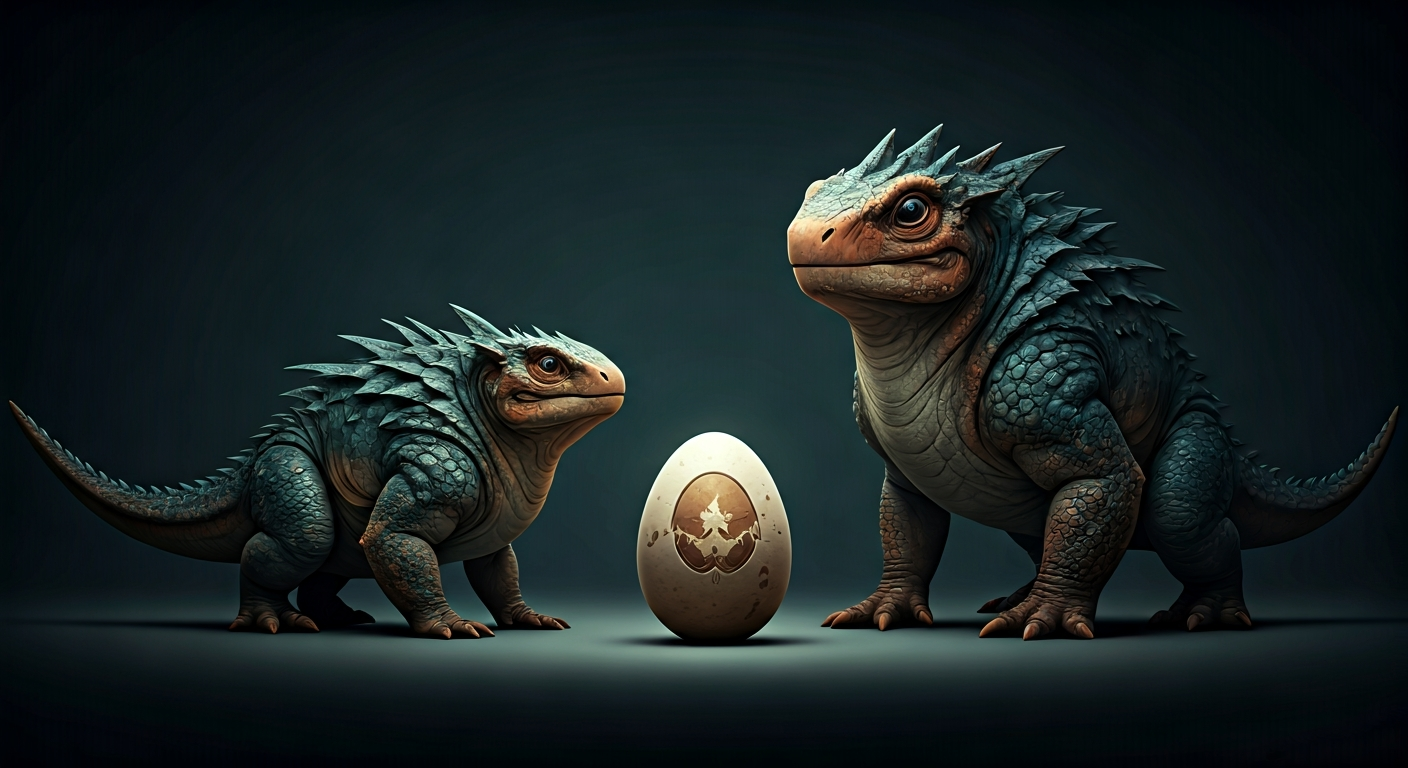
Two distinct Palworld creatures, one large and one small, standing near a glowing egg, illustrating the concept of Palworld breeding groups.

In Palworld, 'Egg Groups' functionally categorize Pals based on physical characteristics and dictate breeding compatibility. Pals must belong to the same functional egg group to produce offspring, though the specific names of these groups are not explicitly displayed in-game. Understanding these compatibility rules is crucial for strategic breeding, allowing players to plan pairings to inherit desired passive skills or create specific powerful Pal combinations.
20 Found This Helpful
Read Guide
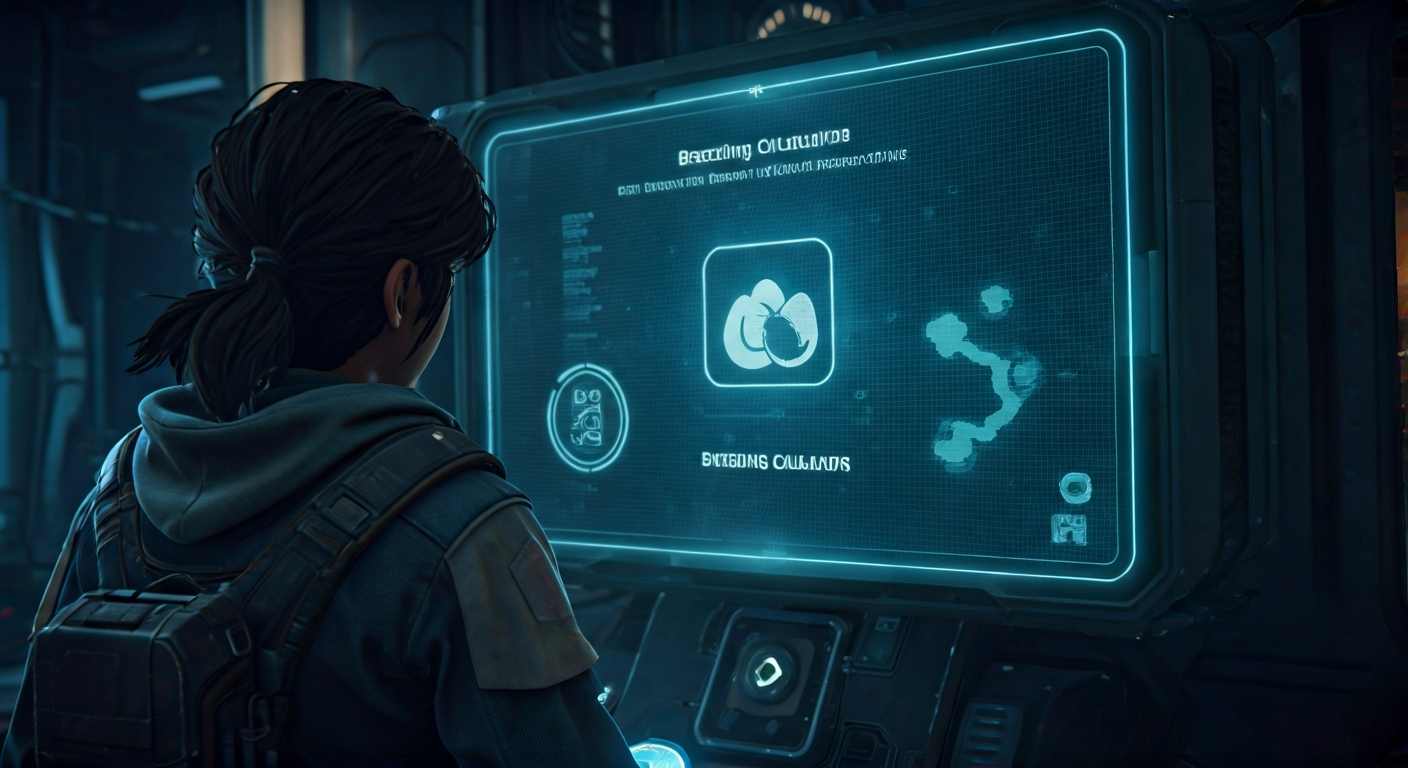
A Palworld player using a holographic breeding calculator to predict offspring.

A Palworld breeding calculator is an external online tool or spreadsheet that uses community-collected in-game data to predict the specific Pal species that will result from breeding two parent Pals. It works by applying the game's hidden breeding formulas, which combine the "breeding power" or unique IDs of parents, to forecast offspring and assist players in optimizing their Pal breeding strategies for desired traits or rare Pals.
19 Found This Helpful
Read Guide
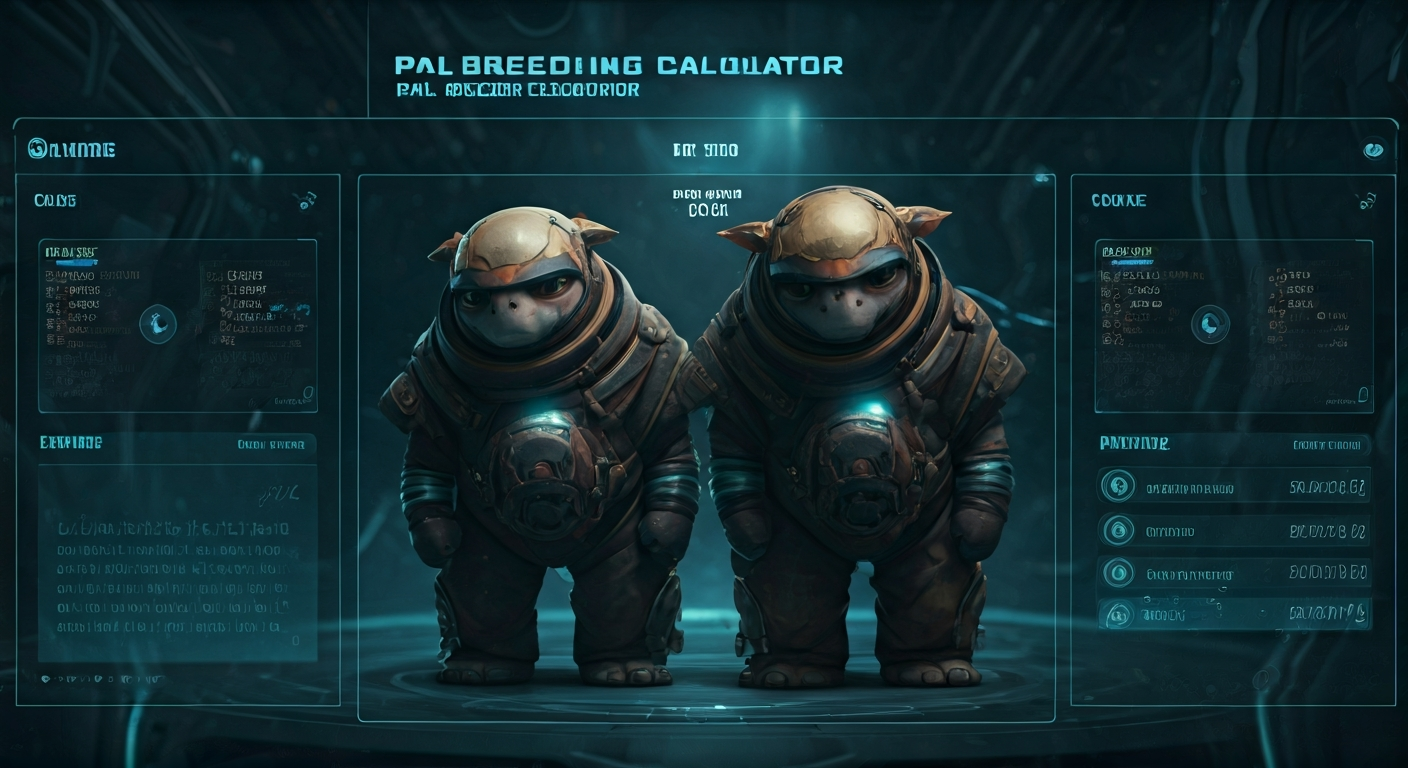
A digital screen displaying a Palworld breeding calculator interface, with images of parent Pals and their potential offspring, overlaid with the text 'Pal Breeding Calculator'.

To master Palworld breeding, utilize an online breeding calculator to predict offspring, their potential passive skills, and efficient combinations. Input your desired parent Pals, and the calculator will display possible child Pals and inherited traits, saving significant time and resources in optimizing your Pal roster for combat, base work, or traversal.

6 Found This Helpful
Read Guide
BroadMatters LogoBroadMatters

Clear, simple guides and everyday explanations to help you solve common problems with confidence.

Stay Updated

Get our latest guides and simple tips delivered directly to your inbox.

By joining, you agree to our Terms and Privacy Policy.

© 2026 BroadMatters Help Center. All rights reserved.

contact@broadmatters.com