
What You’ll Learn in This Guide
Dust mites, allergens, and odors can build up in your mattress over time. Steam cleaning is a fantastic way to deep clean and sanitize your bed, but many people worry about getting the mattress too wet, leading to mold or mildew. This guide will teach you exactly how to steam clean a mattress without making it wet, ensuring a fresh, hygienic sleeping surface without any moisture-related risks. You’ll gain the confidence to tackle this cleaning task effectively and safely, extending the life of your mattress and improving your sleep environment.
Why This Method is Recommended
Traditional wet cleaning methods can leave your mattress damp for hours, sometimes even days. This creates a perfect breeding ground for mold, mildew, and bacteria, which defeats the purpose of cleaning. Our recommended method focuses on using the power of hot steam to sanitize and refresh without oversaturating the fabric. By using quick passes and minimal moisture, you harness the high temperature of the steam to kill dust mites, neutralize allergens, and eliminate odors. This approach is not only safer for your mattress but also more efficient, allowing for quicker drying times and reducing the risk of internal damage. Learning how to steam clean a mattress without making it wet protects your investment and promotes a healthier sleep space.
Tools and Requirements
- Handheld steam cleaner with an upholstery or fabric attachment
- Distilled water (to prevent mineral buildup in your steamer)
- Clean, dry microfiber towels or cloths
- Vacuum cleaner with an upholstery attachment
- Fan or dehumidifier for drying
- Gloves (optional, for comfort)
Quick Steps Overview
- Thoroughly vacuum the entire mattress surface.
- Fill your steam cleaner with distilled water and let it heat up.
- Apply steam in quick, light passes across the mattress, section by section.
- Immediately wipe away any visible moisture with a clean microfiber towel.
- Allow the mattress to air dry completely, using fans or a dehumidifier.
Detailed Step-by-Step Guide
Step 1: Prepare Your Mattress by Vacuuming
Before you even think about steam, it’s crucial to remove all loose dirt, dust, crumbs, and dead skin cells. Use your vacuum cleaner with an upholstery attachment. Go over the entire mattress surface, including the sides, top, and any crevices. Pay special attention to seams and tufts where debris can accumulate. A thorough vacuuming ensures that the steam can penetrate more effectively and prevents you from turning surface dust into muddy residue when moisture is introduced. This initial step is vital for achieving a truly clean mattress.
Step 2: Prepare Your Steam Cleaner
Fill your handheld steam cleaner with distilled water. This prevents mineral deposits from tap water from clogging your machine or leaving residue on your mattress. Follow your manufacturer’s instructions for filling and heating. Once the steam cleaner is ready and producing consistent steam, test it on an inconspicuous spot on the mattress or a similar fabric to ensure it doesn’t cause discoloration or excessive wetness. This is a critical check to ensure you know how to steam clean a mattress without making it wet safely. If you want to learn more about how to effectively use a steam cleaner for mattresses, a related guide offers deeper insights.
Step 3: Apply Steam in Quick, Controlled Passes
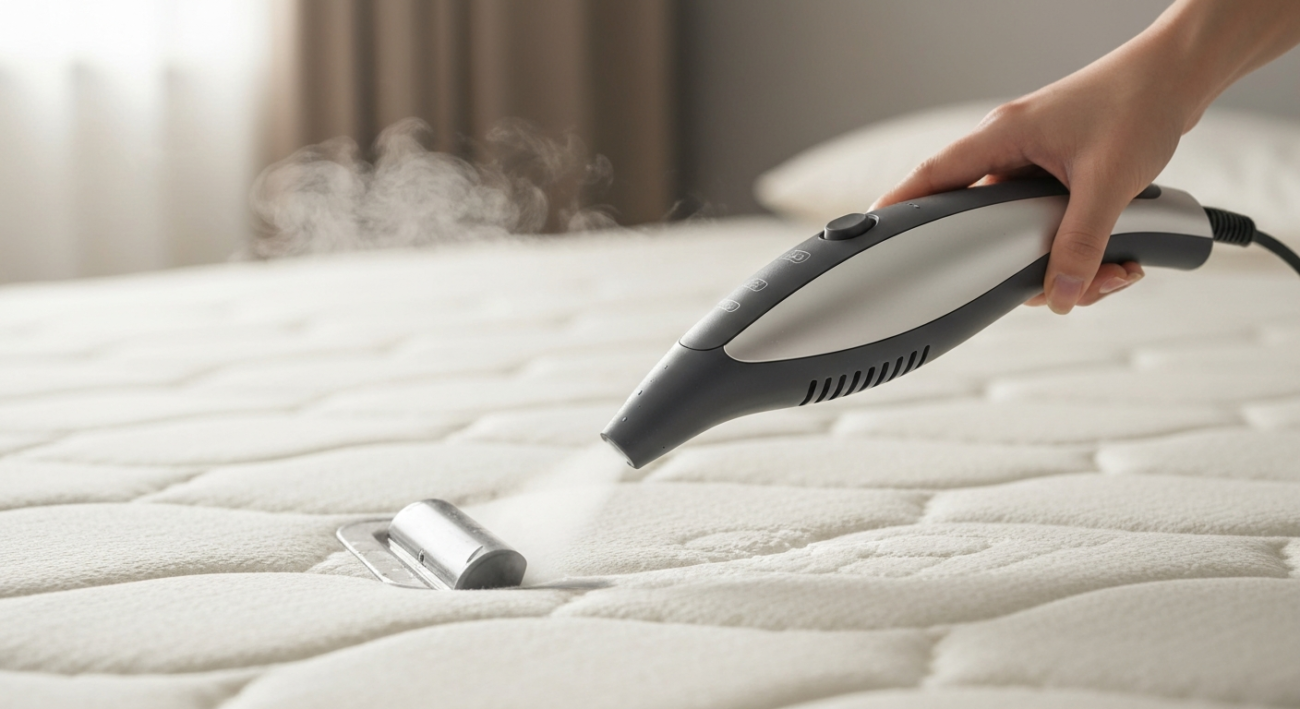
Attach the upholstery or fabric attachment to your steam cleaner. Begin steaming in small sections, working from one end of the mattress to the other. Hold the steamer a few inches away from the surface and make quick, overlapping passes. The goal is to sanitize with hot steam, not soak the fabric. You should see a fine mist, not heavy water droplets. Move continuously and avoid lingering in one spot. This technique is key to successfully learning how to steam clean a mattress without making it wet, as it maximizes heat exposure while minimizing moisture.
Step 4: Immediately Wipe and Blot Any Moisture
As you complete each small section, immediately follow up with a clean, dry microfiber towel. Gently wipe or blot the steamed area to absorb any residual moisture. This step is crucial in preventing water from seeping deeper into the mattress layers. Continue working section by section, steaming and then immediately wiping, using fresh parts of your towel as needed. If you notice a towel becoming too damp, switch it out for a new, dry one. This quick absorption ensures your efforts to steam clean a mattress without making it wet are successful.
Step 5: Ensure Thorough Drying and Ventilation
Once you’ve steam cleaned and blotted the entire mattress, it’s vital to allow it to air dry completely. Open windows, turn on a ceiling fan, or use a portable fan directed at the mattress. A dehumidifier can also significantly speed up the drying process. For best results, try to clean your mattress earlier in the day so it has plenty of time to dry before you need to sleep on it. You can even prop the mattress up against a wall to allow airflow to both sides. Thorough drying is the final, essential step to prevent mold and ensure your mattress is fresh and hygienic after you steam clean it.
Troubleshooting Common Issues
The mattress feels too wet after steaming.
You might be moving the steamer too slowly or holding it too close. Make quicker passes and ensure you’re immediately blotting with a dry microfiber towel. Increase ventilation with fans and open windows to speed up drying.
Steam cleaner is leaving water spots or spitting water.
Ensure your steam cleaner is fully heated before use; it often spits water when not at optimal temperature. Also, only use distilled water, as tap water minerals can build up and cause issues. Clean the nozzle if it’s clogged.
Odors persist after cleaning.
For stubborn odors, consider pre-treating with baking soda. Sprinkle a generous layer, let it sit for several hours (or overnight), then vacuum thoroughly before steaming. The steam will then work on a cleaner, less odorous surface.
Common Mistakes to Avoid
- Using tap water in your steam cleaner, which can lead to mineral buildup and damage your machine or leave residue on your mattress.
- Oversaturating the mattress by holding the steamer in one spot for too long, leading to excessive wetness and potential mold growth.
- Not vacuuming the mattress thoroughly beforehand, which can turn surface dust into a muddy mess when combined with steam.
- Failing to allow adequate drying time, which is crucial for preventing moisture-related problems like mildew and musty smells.
- Skipping the spot test in an inconspicuous area, risking damage or discoloration to your mattress fabric.
Expert Pro-Tips
- Always use distilled water in your steam cleaner to protect your appliance and avoid leaving mineral stains on your mattress.
- Work in small, manageable sections. This allows you to steam and blot effectively without allowing moisture to sit for too long.
- Ensure maximum ventilation during and after cleaning. Open windows, use fans, and consider a dehumidifier to significantly speed up drying.
- Consider a mattress protector after cleaning. This will help shield your mattress from spills, allergens, and dust mites, keeping it fresh for longer.
- Clean your mattress on a sunny day if possible. Natural sunlight can help with drying and has additional sanitizing properties.
The Final Result
After following these steps, you will have a mattress that feels incredibly fresh, clean, and sanitized. You won’t have to worry about the lingering dampness that often accompanies other cleaning methods. Instead, you’ll enjoy a bed free from common allergens, dust mites, and odors, all achieved safely without making your mattress wet. Your sleep environment will be noticeably healthier, contributing to better sleep quality and overall well-being.
Concluding Summary
Effectively learning how to steam clean a mattress without making it wet is a skill that pays off in a healthier home environment. By combining thorough vacuuming, precise steaming techniques, immediate blotting, and diligent drying, you can deep clean and sanitize your mattress without the risks of oversaturation. This method ensures that dust mites, allergens, and odors are tackled using the powerful heat of steam, leaving your mattress fresh and hygienic. Embrace these steps to protect your investment, extend the life of your mattress, and enjoy a cleaner, more comfortable night’s sleep for years to come.
