
What You’ll Learn
Sweet potatoes are incredibly versatile, nutritious, and absolutely delicious. They’re a fantastic addition to almost any meal, whether you’re mashing them, adding them to stews, or simply enjoying them as a side dish. But getting them just right can sometimes be a puzzle, especially knowing exactly how long to boil sweet potatoes for that perfect tenderness. This guide will walk you through the simple steps to achieve perfectly cooked sweet potatoes every time, ready for whatever culinary adventure you have planned. You’ll learn the best way to prepare them, the ideal cooking times, and handy tips to avoid common mistakes. Get ready to master this essential cooking skill!
Why This Method is Recommended
Boiling sweet potatoes is arguably one of the simplest and most forgiving cooking methods, especially when compared to baking or roasting. It’s fantastic for achieving a soft, tender texture that’s ideal for mashing, puréeing, or adding to recipes where you want them to break down easily. Unlike roasting, which can sometimes dry them out, boiling keeps them moist and ensures even cooking throughout. It also requires minimal specialized equipment – just a pot, water, and your sweet potatoes. This method is incredibly efficient for meal prepping, allowing you to cook a large batch quickly. Plus, it’s a healthy cooking option, preserving many of the sweet potato’s natural nutrients. When you want to boil sweet potatoes without fuss, this is the way to go.
What You Need
- 1-2 pounds sweet potatoes
- Large pot with a lid
- Sharp knife
- Cutting board
- Colander
- Water
- Salt (optional)
Quick Steps Overview
- Wash and peel the sweet potatoes.
- Cut sweet potatoes into even-sized pieces.
- Place cut sweet potatoes in a pot and cover with cold water.
- Bring water to a boil, then reduce heat and simmer.
- Boil for 15-20 minutes until fork-tender.
- Drain well and serve immediately or use in recipes.
Detailed Step-by-Step Guide
Step 1: Prepare Your Sweet Potatoes
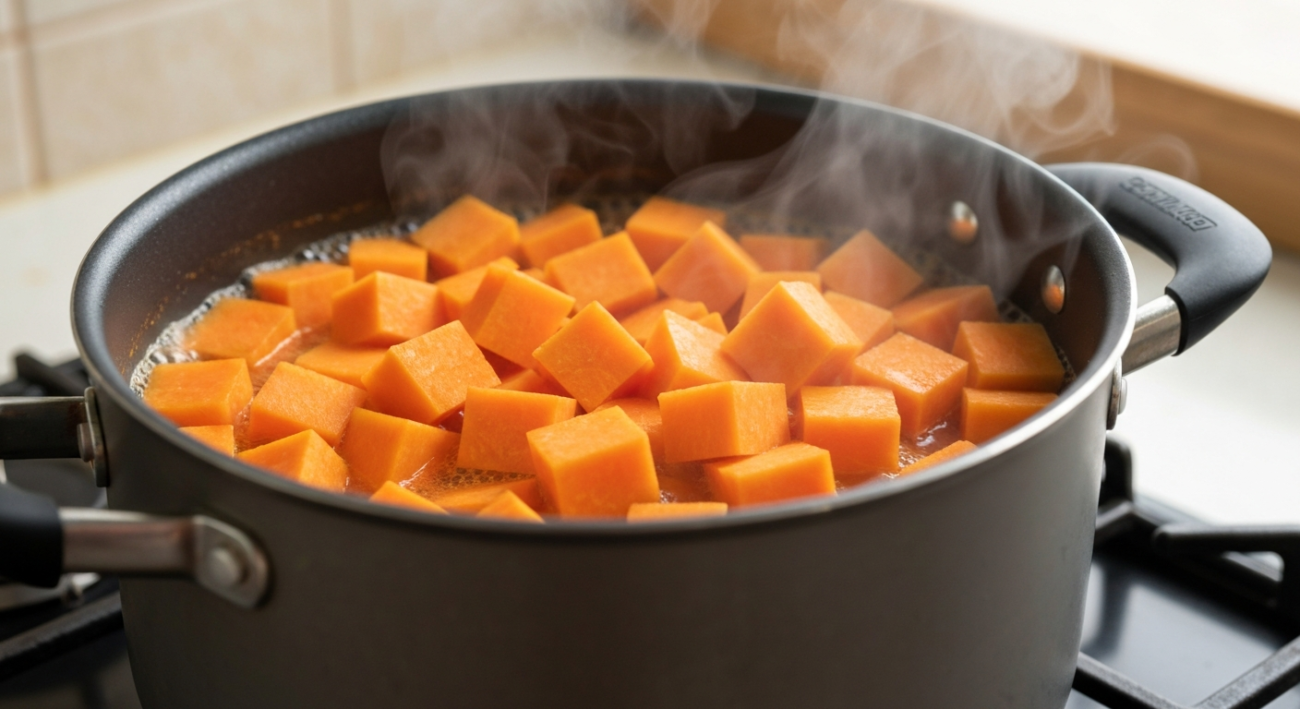
Start by giving your sweet potatoes a good wash under cold running water to remove any dirt. You can choose to peel them or leave the skin on, depending on your preference and how you plan to use them. For mashing or puréeing, peeling is usually best. If you’re leaving the skin on, ensure they are thoroughly scrubbed. Next, cut the sweet potatoes into even-sized pieces. Uniformity is key here. If you’re boiling small cubes, they’ll cook much faster than large chunks or whole potatoes. Aim for 1-inch to 1.5-inch cubes or slices for consistent cooking. This step is crucial for making sure every piece cooks at the same rate, preventing some pieces from being mushy while others are still hard. Properly preparing them makes all the difference when you boil sweet potatoes.
Step 2: Place in Pot and Cover with Water
Transfer your prepared sweet potato pieces into a large pot. It’s important to use a pot that’s large enough so the sweet potatoes aren’t too crowded; this allows for even heat distribution. Now, cover the sweet potatoes with cold water. The water level should be about an inch or two above the potatoes. Starting with cold water ensures that the sweet potatoes cook more evenly as the water gradually heats up. If you start with hot water, the outside might cook too quickly while the inside remains firm. This gentle heating helps them cook through without getting mushy exteriors. For an extra boost of flavor, you can add a pinch of salt to the water at this stage. Salt not only enhances the taste of the sweet potatoes but also helps them cook a bit more efficiently.
Step 3: Boil and Simmer Until Tender
Place the pot on the stovetop over high heat and bring the water to a rolling boil. Once it’s boiling vigorously, reduce the heat to medium-low, cover the pot with a lid, and let the sweet potatoes simmer gently. This is where knowing how long to boil sweet potatoes becomes important. For 1 to 1.5-inch cubes, they will typically need to boil for about 15 to 20 minutes. If you’re boiling larger pieces, such as halves or quarters, it could take 20 to 30 minutes. Whole sweet potatoes, depending on their size, might require 30 to 45 minutes or even longer. The best way to check for doneness is to pierce a piece with a fork or the tip of a sharp knife. If it slides in easily with little to no resistance, they’re ready. Don’t overcook them, or they’ll become too mushy!
Step 4: Drain and Serve
Once your sweet potatoes are perfectly tender, carefully remove the pot from the heat. Place a colander in your sink and carefully pour the entire contents of the pot into the colander, allowing all the hot water to drain away. Give the colander a gentle shake to remove any excess moisture. You can also let them sit in the colander for a minute or two to allow any remaining steam to escape, which helps prevent waterlogged potatoes, especially if you plan to mash them. Your perfectly boiled sweet potatoes are now ready! You can serve them immediately as a simple side dish, mash them with butter and seasonings, or incorporate them into your favorite recipes. Enjoy the fruits of your labor!
Troubleshooting Common Issues
Sweet potatoes are still hard after recommended cooking time.
They are likely undercooked. Continue boiling for another 5-10 minutes, checking for tenderness every few minutes. Ensure your heat isn’t too low during simmering.
Sweet potatoes are mushy and falling apart.
They have been overcooked. Next time, reduce the cooking time and start checking for doneness a few minutes earlier. Uniform cutting also helps prevent this.
Some pieces are cooked, while others are still firm.
This usually means the sweet potato pieces were not cut into uniform sizes. Try to cut them as evenly as possible next time to ensure consistent cooking.
Common Mistakes to Avoid
- Not cutting sweet potatoes into uniform pieces: This leads to uneven cooking, with some pieces getting mushy while others are still hard.
- Starting with hot water: Always use cold water when boiling root vegetables to ensure they cook evenly from the outside in.
- Overcrowding the pot: Too many sweet potatoes in a small pot can lead to uneven cooking and longer cooking times.
- Not salting the water: A pinch of salt enhances the flavor of the sweet potatoes, making them taste much better.
Pro Tips
- Add a bay leaf or a garlic clove to the boiling water for extra flavor.
- For incredibly creamy mashed sweet potatoes, mash them immediately after draining while they’re still hot.
- If boiling whole sweet potatoes, pierce them several times with a fork before boiling to prevent them from bursting.
- Cook a larger batch and store leftovers in the fridge for quick meal prep during the week. They’re great in salads or warmed up as a side.
- Try different varieties of sweet potatoes; some are sweeter or have a different texture, offering a slightly different experience when you boil sweet potatoes.
Final Result
After following these steps, you will have a batch of perfectly tender, flavorful sweet potatoes that can be easily pierced with a fork. They will be soft throughout, with a vibrant color, ready to be enjoyed as a wholesome side dish, mashed to perfection, or incorporated into a variety of your favorite recipes. You’ve mastered how to boil sweet potatoes!
Summary
Boiling sweet potatoes doesn’t have to be complicated. By simply washing, peeling, and cutting your sweet potatoes into even pieces, then covering them with cold water, bringing them to a boil, and simmering until tender, you can achieve consistently delicious results. Remember that knowing how long to boil sweet potatoes depends on their size – typically 15-20 minutes for cubes. With these tips and a little practice, you’ll always have perfectly cooked sweet potatoes ready for any dish. Enjoy the simple pleasure and nutritional benefits of this fantastic root vegetable, cooked just right every time!
