
Prepare for Your Metal Roofing Project: What You’ll Learn
Planning a metal roof installation can seem daunting, but getting accurate measurements is key to success. This guide will walk you through the entire process of how to measure a roof for metal roofing. You’ll learn simple, effective methods to ensure you order the right amount of materials, preventing costly errors and delays. By following these steps, you’ll gain the confidence to tackle your roofing project efficiently and effectively, saving both time and money.
Why Precision Matters for Metal Roofing
Measuring a roof for metal roofing requires more precision than traditional shingle roofs. Metal panels are typically custom-cut and interlocking, meaning even small errors can lead to significant waste or difficult installations. Our recommended method emphasizes systematic measurement and verification. This approach minimizes guesswork, ensuring all panels, trim, and flashing fit perfectly. It also accounts for common roof complexities, giving you a comprehensive plan before you even cut the first piece.
Essential Tools for Accurate Roof Measurement
- A long, sturdy tape measure (at least 50-100 feet)
- Safety gear: harness, non-slip shoes, gloves
- Pencil and notepad or a digital measuring app
- Chalk line (optional, for marking straight lines)
- Calculator
- Camera or smartphone for reference photos
- Ladder with proper stabilization
- A helper for large or complex roofs
Your Quick Roof Measurement Checklist
- Prioritize safety before starting any work on the roof.
- Draw a detailed sketch of your roof’s layout, including all planes and features.
- Measure the length and width of each distinct roof section.
- Determine the roof’s slope or pitch.
- Account for overhangs, gables, and any penetrations like chimneys or skylights.
- Double-check all your measurements to ensure accuracy.
Detailed Step-by-Step Guide: How to Measure a Roof for Metal Roofing
Step 1: Prioritize Safety and Prepare Your Workspace
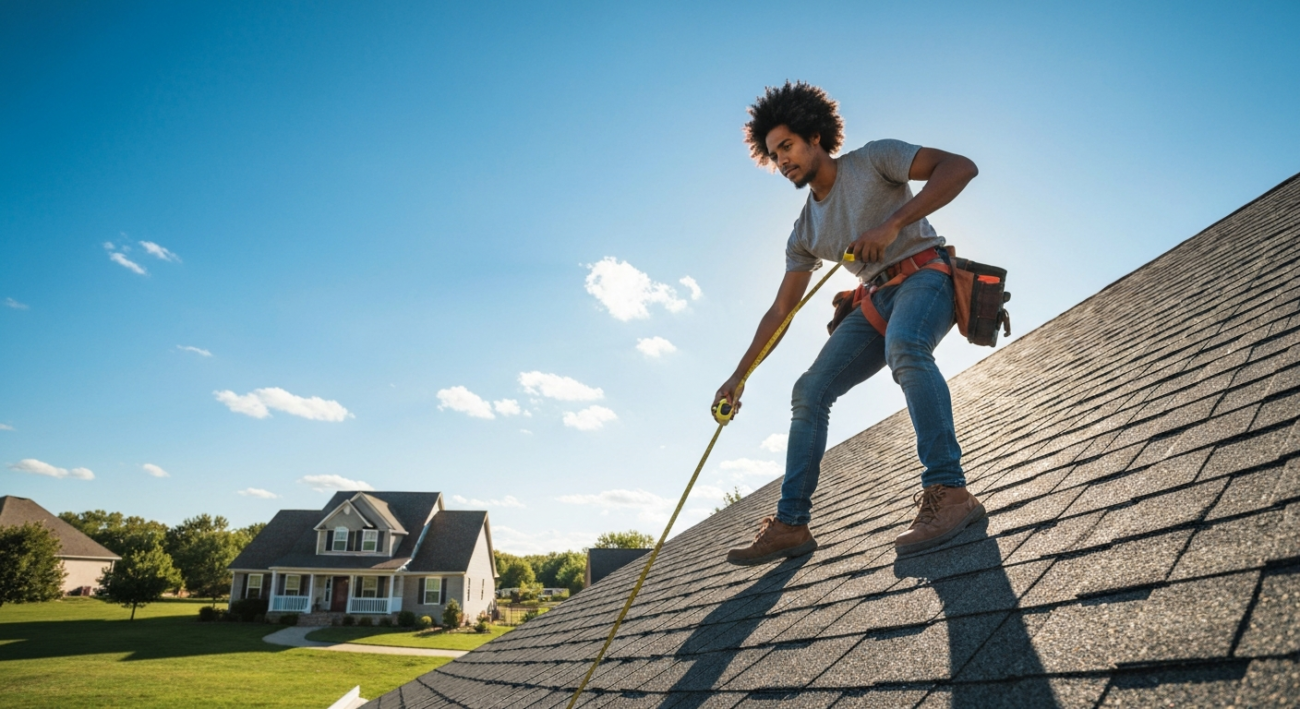
Before you begin any measurements, safety is paramount. Ensure you have the right safety equipment, including a sturdy ladder, non-slip shoes, and ideally, a safety harness, especially for steep roofs. Clear the area around your ladder and the roof of any debris. Having a helper is highly recommended, not just for safety, but also for holding the end of the tape measure on larger spans. Take a moment to visually inspect the roof for any weak spots or hazards before you start walking on it. A secure environment allows for focused and accurate work.
Step 2: Sketch Your Roof Layout
Begin by creating a detailed sketch of your roof. Don’t worry about artistic skill; focus on accuracy. Draw each distinct roof plane, noting down ridges, valleys, hips, dormers, and any obstructions like chimneys, skylights, or vents. Label each section (e.g., “Front Main,” “Garage,” “Dormer 1”). This sketch will serve as your blueprint for recording measurements and will be crucial when you calculate materials. Understanding the different sections will make the process of how to measure a roof for metal roofing much clearer.
Step 3: Measure Length and Width of Each Section
Now, use your long tape measure to find the length and width of each individual roof plane you sketched. For rectangular sections, measure from end to end. Always measure to the furthest point, including any overhangs, as these will affect panel length. For irregular shapes, break them down into simpler rectangles and triangles. Record all measurements directly onto your sketch. Precision here is vital for calculating the number of metal panels needed. Remember to account for eaves and rake edges, as these will require specific trim pieces.
Step 4: Determine the Roof Slope (Pitch)
The roof slope, or pitch, is critical for metal roofing. It affects panel length, trim types, and drainage. You can measure the pitch from the ground or on the roof. One common method involves using a 12-inch level. Place the level horizontally against the roof surface. Measure vertically from the 12-inch mark on the level down to the roof surface. This vertical distance, in inches, represents the “rise” over a 12-inch “run.” For example, if it’s 4 inches, you have a 4/12 pitch. This measurement is essential for calculating the true surface area and ordering the correct length of panels.
Step 5: Account for Penetrations and Features
Don’t forget to measure around any roof penetrations and special features. This includes chimneys, skylights, dormers, and vent pipes. For each, measure its length, width, and distance from the nearest ridge, hip, or eave. These measurements are crucial for ordering the correct flashing and trim pieces, and for cutting panels accurately during installation. Mark these details clearly on your roof sketch. For example, knowing the exact location of a skylight helps determine where panels will need to be cut around it.
Step 6: Double-Check and Verify All Measurements
Before you leave the roof, take the time to double-check every single measurement. Walk through your sketch and compare the numbers against the actual roof. Even better, have your helper re-measure a few key sections independently. This verification step is perhaps the most important part of how to measure a roof for metal roofing. A small error caught now can save days of frustration and hundreds, if not thousands, of dollars later. Once confident, you can move on to material calculation.
Dealing with Measurement Hurdles
Difficulty reaching high or steep sections.
Use a drone with measurement capabilities or long-range laser measures if available. Always prioritize safety over getting a precise measurement if it means putting yourself at risk. Consider hiring a professional for extremely challenging roofs.
Sketching complex rooflines accurately.
Break down the roof into simpler geometric shapes. Take multiple photos from different angles to aid in your drawing. Use grid paper for your sketch to help maintain scale.
Measuring the pitch from the ground.
Use a digital angle finder or a pitch finder app on your smartphone if you prefer not to climb onto the roof. These tools can provide a reasonably accurate pitch reading from a safe distance.
Mistakes to Steer Clear Of When Measuring
- Forgetting to include overhangs and eaves in total length measurements, leading to short panels.
- Not accounting for the roof pitch when calculating material needs, which can result in ordering insufficient lengths.
- Neglecting to measure around all penetrations, causing issues with flashing and water sealing.
- Relying on old blueprints or estimations instead of actual on-site measurements, as homes settle and additions change layouts.
- Working alone on large or steep roofs, which is unsafe and often leads to less accurate measurements due to difficulty holding the tape.
Expert Pro-Tips
- Add an extra 5-10% to your final material order as a buffer for waste, miscuts, or future repairs.
- Take photos of each roof section with your sketch and measurements visible. This provides a visual record for verification.
- Consider using a laser distance measurer for quicker, more accurate long-distance measurements from the ground or safer positions on the roof.
- Clearly label all measurements on your sketch, indicating units (e.g., feet, inches) and which edge they correspond to.
- For extremely complex roofs, consider using aerial mapping services or professional estimators who specialize in metal roofing.
Achieving Your Accurate Roof Measurement
After diligently following these steps, you will have a comprehensive and accurate set of measurements for your entire roof. Your detailed sketch, complete with all dimensions and roof pitch, will be a reliable blueprint. This information is now ready for your metal roofing supplier or installer. They will use it to precisely calculate the number of panels, trim pieces, fasteners, and flashing required for your specific project. You’ll have the confidence that your materials will fit, reducing waste and ensuring a smooth installation process.
Your Path to a Successful Metal Roof
Learning how to measure a roof for metal roofing is a fundamental step toward a successful installation. By prioritizing safety, meticulously sketching your roof, accurately measuring each section’s length, width, and pitch, and accounting for all penetrations, you lay the groundwork for a smooth project. Double-checking your work and avoiding common mistakes will save you time and money in the long run. With these precise measurements in hand, you’re well-prepared to order materials and move forward with confidence, knowing your new metal roof will be exactly as you envisioned.
