
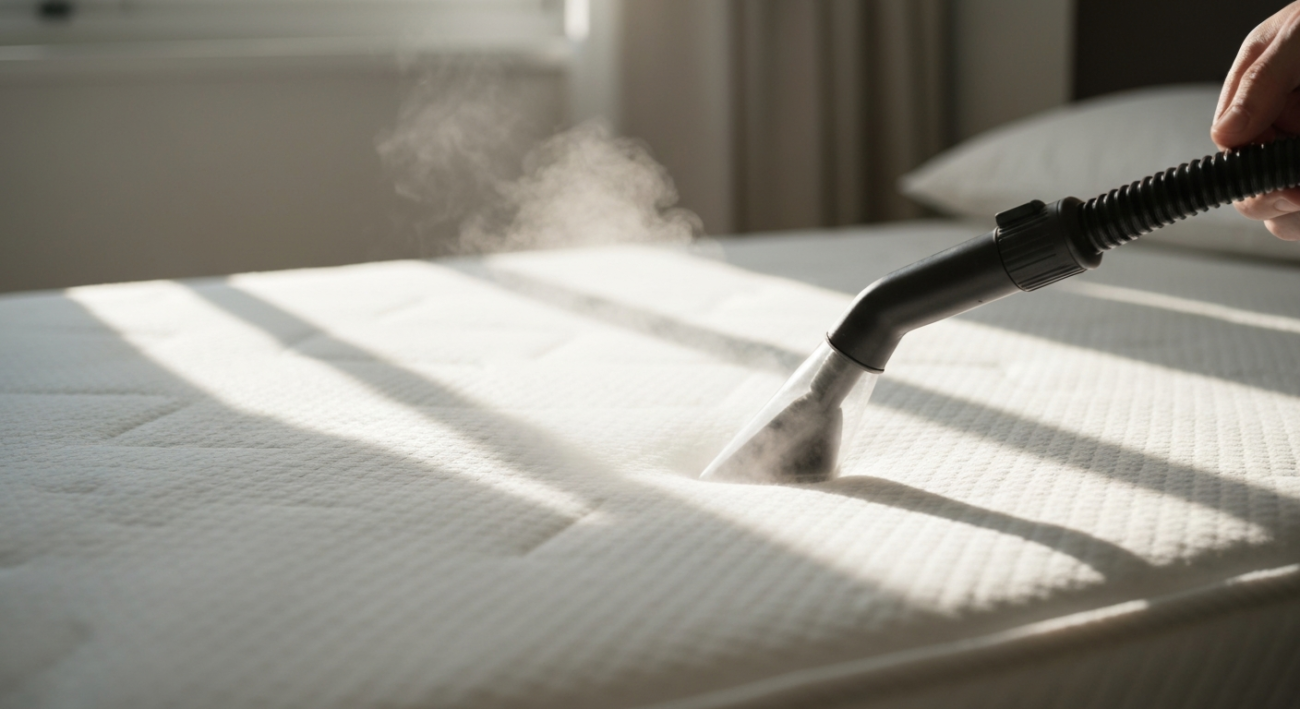
A mattress may look clean on the surface, but over time it quietly collects dust mites, sweat, dead skin cells, body oils, bacteria, and allergens. Even with regular sheet washing, these particles build up inside the mattress layers, which can affect sleep quality, allergies, and overall hygiene.
One method many people consider for deep cleaning is steam cleaning. Steam cleaning is popular because it uses heat instead of chemicals, but mattresses are not designed like hard floors or tiles. Using steam the wrong way can cause moisture damage, trapped humidity, or even mold.
This guide explains how steam cleaning a mattress actually works, when it is safe to do, how to do it properly, and what mistakes to avoid so you do not shorten the life of your mattress.
Is Steam Cleaning a Mattress Actually Safe?
Steam cleaning can be safe for a mattress, but only when it is done with controlled heat and minimal moisture. The biggest risk is not heat alone, but moisture being pushed deep into the mattress layers where it cannot dry properly.
Some mattress materials, especially memory foam and hybrid designs, are more sensitive to both heat and moisture. Using the wrong equipment or technique can cause foam breakdown, lingering odors, or internal dampness.
Is Steam Cleaning a Mattress Safe?
What Steam Cleaning Can and Cannot Remove
Steam cleaning works best for surface-level hygiene issues. High-temperature steam helps loosen dirt and reduce bacteria and allergens without leaving chemical residue.
Steam cleaning is effective for:
- Dust mites and common allergens
- Bacteria on the fabric surface
- Sweat buildup and body oils
- Light odors caused by bacteria
However, steam cleaning is not a complete solution for every problem. Deep biological stains, strong urine odors, and severe infestations may require additional treatment methods.
Does Steam Cleaning Kill Bed Bugs and Dust Mites?
Step-by-Step: How to Steam Clean a Mattress Properly
1. Vacuum Thoroughly Before Using Steam
Always vacuum the mattress first. Vacuuming removes loose dust, hair, and debris that can block steam from reaching the fabric evenly. Skipping this step reduces the effectiveness of steam cleaning.
2. Identify Your Mattress Type
Before steaming, check whether your mattress is memory foam, latex, hybrid, or traditional spring-based. Foam layers are especially sensitive to moisture and heat.
How Much Heat Can a Mattress Handle?
3. Use the Right Steam Cleaner
Avoid heavy carpet steamers or machines designed to soak surfaces. These release too much water and can push moisture deep into the mattress.
Low-moisture steam cleaners with controlled output are safer for mattress use.
Do You Need a Special Steam Cleaner for Mattresses?
4. Steam Lightly and Keep Moving
Use light passes and keep the steam head moving at all times. Do not hold steam in one place. The goal is surface sanitation, not soaking the mattress.
- Use short, controlled passes
- Avoid visible wet patches
- Let heat do the work, not moisture
5. Allow Full Drying Time
Drying is the most important part of the process. A mattress that feels dry on the surface can still trap moisture inside if airflow is poor.
How Often Should a Mattress Be Steam Cleaned?
For most households, steam cleaning every three to six months is enough. People with allergies, pets, or heavy sweating may benefit from more frequent surface cleaning, but overuse of steam can reduce mattress lifespan.
How Often Should You Steam Clean a Mattress?
Common Steam Cleaning Mistakes to Avoid
- Using too much steam in one area
- Skipping vacuuming before steaming
- Not allowing enough drying time
- Steaming mattresses not designed for heat
Can Steam Cleaning Ruin a Mattress?
Steam Cleaning vs Other Mattress Cleaning Methods
Steam cleaning is only one option. Depending on the problem, alternatives like regular vacuuming, baking soda treatments, enzyme cleaners, or professional services may be more suitable.
Steam Cleaner vs Vacuum for Mattress Cleaning
Can You Clean a Mattress Without a Steam Cleaner?
Odors, Stains, and Special Situations
Steam can help reduce odors caused by bacteria and sweat, but strong smells or deep stains often require a combination of methods. Steam should be part of a broader cleaning approach rather than the only solution.
Can Steam Cleaning Remove Urine, Sweat, and Stains?
Keeping a Mattress Clean After Steam Cleaning
Once a mattress is clean, good habits help keep it that way longer.
- Use a breathable mattress protector
- Wash sheets weekly
- Vacuum the mattress monthly
- Maintain low indoor humidity
How to Keep a Mattress Clean Longer After Steam Cleaning
Steam cleaning can refresh and sanitize a mattress when used carefully. Controlled heat, light moisture, and proper drying are the keys to safe and effective results.
