
The Power of Steam: Tackling Unwanted Pests
Pests like bed bugs and dust mites can make your home feel less comfortable. Bed bugs are notorious for their itchy bites and ability to hide, while dust mites can trigger frustrating allergies, causing sneezing, runny noses, and even asthma symptoms. Many people want a solution that doesn’t involve harsh chemicals, especially in areas like bedrooms where we spend so much time. This is where steam cleaning comes in as a powerful, non-toxic option. The big question often asked is: Does steam cleaning kill bed bugs and dust mites effectively? This guide will dive into how steam works, its benefits, and how you can use it to reclaim your home from these tiny invaders, offering a cleaner, healthier living space.
Why Bed Bugs and Dust Mites Thrive
- Bed bugs are tiny hitchhikers. They often enter your home by clinging to luggage, clothing, or used furniture. Once inside, they quickly find refuge in mattresses, bed frames, and cracks, reproducing rapidly.
- Dust mites are microscopic creatures that love warm, humid environments. They feed on shed human skin cells, making bedding, upholstered furniture, and carpets their ideal homes. They are a major trigger for indoor allergies.
- Lack of regular, deep cleaning provides an undisturbed breeding ground. For bed bugs, clutter offers more hiding spots. For dust mites, infrequent vacuuming and washing of bedding allows their populations to explode.
Essential Tools for Effective Steam Cleaning
- High-temperature steam cleaner: Look for one that produces dry vapor steam, ideally reaching temperatures of 200°F (93°C) or higher at the nozzle.
- Appropriate attachments: A nozzle or brush attachment for targeting small areas, seams, and crevices.
- Vacuum cleaner with a HEPA filter: Essential for pre-cleaning and post-cleaning to remove dead pests and debris.
- Protective gear: Wear heat-resistant gloves and safety glasses to protect yourself from hot steam and splashing water.
- Clean cloths or towels: For wiping up any excess moisture after steaming, especially on surfaces that could be damaged by over-wetting.
- A stiff brush: Useful for agitating surfaces like carpets or mattresses before steaming to dislodge pests.
Your Step-by-Step Guide to Steam Cleaning Pests Away
- Prepare the area: Start by thoroughly vacuuming the entire infested area, including mattresses, carpets, and around baseboards. Use a vacuum with a HEPA filter if possible to trap allergens and tiny pests. This step helps remove loose debris and some pests, making the steam treatment more effective.
- Set up your steam cleaner: Fill your steam cleaner with water according to the manufacturer’s instructions. Allow it to heat up completely. Most machines will indicate when they’ve reached the optimal temperature, which is crucial for killing pests. Remember, for effective results, the steam temperature needs to be very high.
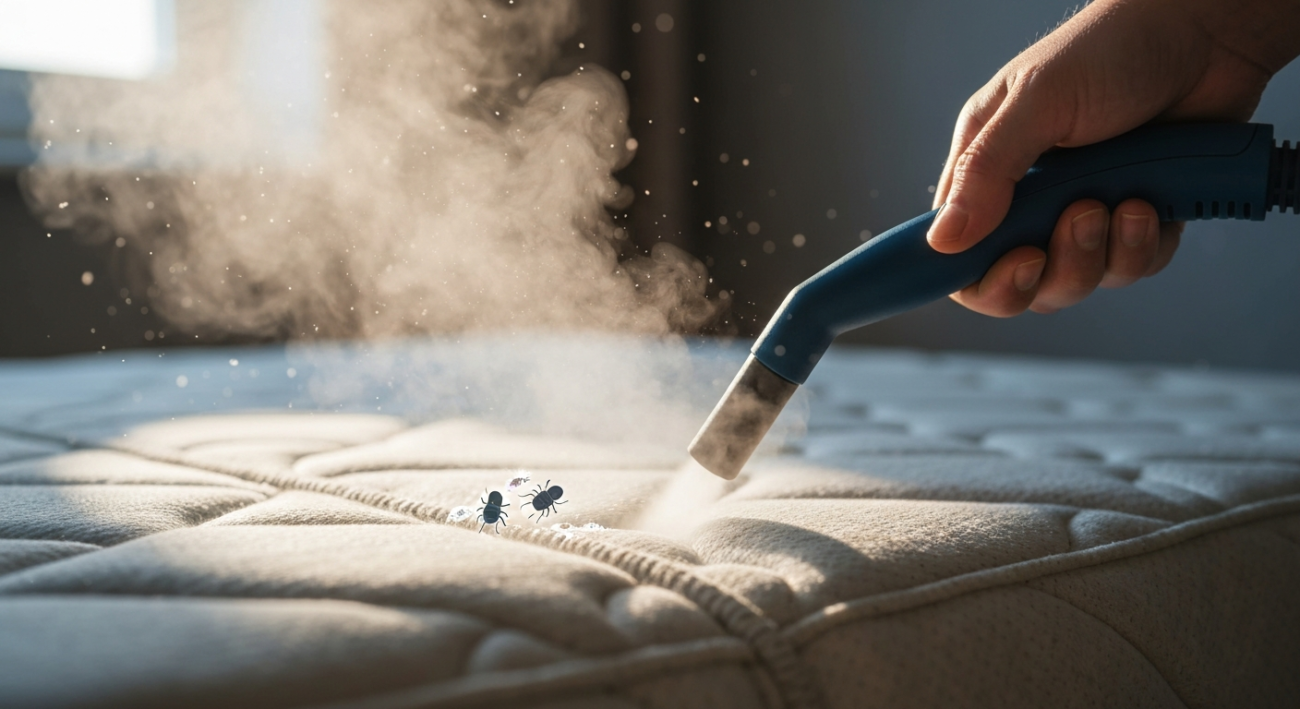
- Target mattresses and upholstered furniture: When it comes to how to clean a mattress with steam cleaner, focus on seams, tufts, and crevices. Move the steam nozzle slowly, about one inch per second, to ensure the heat penetrates thoroughly. Don’t forget to steam all sides of the mattress and box spring. You might be wondering if you need a special steam cleaner for mattresses; generally, a high-quality household steam cleaner is sufficient.
- Address carpets and rugs: For carpets, use a floor attachment and move it slowly over the affected areas. Pay extra attention to edges and areas under furniture where pests might hide. Be careful not to oversaturate the carpet, as this can lead to mold or mildew.
- Treat cracks and crevices: Use a nozzle attachment to direct steam into small cracks in walls, floorboards, and furniture. Bed bugs are excellent at hiding in these tight spaces, so direct heat is essential. Ensure the steam reaches deep into these hidden spots.
- Repeat and monitor: For bed bugs, a single steam treatment might not be enough to eradicate all eggs, which are more resistant to heat. Plan to repeat the treatment every few days for several weeks to catch newly hatched bugs. For dust mites, regular steaming combined with other cleaning practices offers the best long-term control. Consistent effort is key to ensure steam cleaning kills bed bugs and dust mites effectively over time.
Important Safety Tips
- Always read your steam cleaner’s manual before use. Familiarize yourself with its specific operation, safety features, and maintenance requirements.
- Wear protective gear, including heat-resistant gloves and safety glasses, to prevent burns from hot steam or accidental splashes.
- Test a small, inconspicuous area first before applying steam to a large surface. This helps ensure that the material won’t be damaged, discolored, or warped by the heat and moisture.
- Avoid over-wetting fabrics, wood, or electrical components. Too much moisture can cause damage, promote mold growth, or create electrical hazards.
- Ensure good ventilation in the area you are cleaning. Open windows and doors to allow moisture to escape and prevent humidity buildup.
- Keep children and pets away from the immediate area during steam cleaning. The hot steam and surfaces can cause serious burns.
- Be aware that surfaces will be hot after steaming. Allow them to cool completely before touching or sitting on them to avoid accidental burns.
When to Seek Expert Help
- If you have a severe bed bug infestation that seems widespread or impossible to control with DIY methods. Professionals have access to stronger treatments and techniques.
- For large or complex areas, such as entire homes or commercial properties, where thorough DIY steam cleaning might be too time-consuming or physically demanding.
- If you have persistent allergies despite regular cleaning efforts and suspect high levels of dust mites. A professional might offer specialized cleaning or treatment plans.
- When you lack the proper high-temperature steam cleaning equipment or are unsure how to use it safely and effectively.
- If you’re concerned about potential damage to delicate furniture, antique items, or electronics. Professionals can assess risks and use appropriate methods.
The Final Word on Steam and Pests
Ultimately, the answer to the question, Does steam cleaning kill bed bugs and dust mites? is a resounding yes, provided it’s done correctly and consistently. High-temperature steam is a powerful, chemical-free weapon against these common household pests, offering a safe and effective way to sanitize your home. While it requires careful attention to technique and safety, integrating steam cleaning into your routine can significantly reduce pest populations and allergy triggers. Remember to prepare your space, use the right equipment, and target all potential hiding spots. For ongoing success, combine steaming with other good hygiene practices. If an infestation is overwhelming, don’t hesitate to consult a professional for expert assistance. A proactive approach with steam can lead to a healthier, pest-free home environment.
Frequently Asked Questions
How hot does steam need to be to effectively kill bed bugs and dust mites?
For bed bugs, the surface temperature must reach at least 130°F (54°C) to kill them and their eggs. For dust mites, temperatures between 130°F (54°C) and 140°F (60°C) are effective. Ideally, your steam cleaner should produce steam at the nozzle that is 200°F (93°C) or higher to ensure these lethal temperatures are achieved at the contact surface.
Can steam cleaning prevent future infestations of bed bugs or dust mites?
Steam cleaning is an excellent treatment method for existing bed bug and dust mite populations, but it’s not a preventative measure on its own. To prevent future infestations, especially for bed bugs, you need to be vigilant about checking used furniture and luggage, and sealing cracks. For dust mites, regular steaming, vacuuming with a HEPA filter, using allergen-proof covers, and controlling humidity are crucial for ongoing prevention.
Is steam cleaning safe for all types of furniture and fabrics?
While generally safe, steam cleaning isn’t suitable for all materials. Delicate fabrics like silk, rayon, or velvet, as well as unsealed wood, can be damaged by heat and moisture. Always test an inconspicuous area first. Avoid using steam on items with water-sensitive finishes or electronics. For valuable or sensitive items, consult a professional cleaner or refer to the item’s care instructions.
